


schweben
to float / hover
To move or remain in the air or in water, seemingly weightless and without visible effort or support.
EXAMPLE
Ein Heißluftballon schwebte langsam über die Stadt.
A hot-air balloon floated slowly over the city.
to float / hover
Loading your saved state.
to float / hover
To move or remain in the air or in water, seemingly weightless and without visible effort or support.
Ein Heißluftballon schwebte langsam über die Stadt.
A hot-air balloon floated slowly over the city.

to hang over
To be in an undecided, uncertain, or open state. Often used for dangers, proceedings, or questions.
Über der Firma schwebt die Gefahr der Insolvenz.
The danger of insolvency hangs over the company.

to be on cloud nine
To be in a particular, usually pleasant or euphoric, emotional state.
Nach dem Heiratsantrag schwebte sie auf Wolke sieben.
After the marriage proposal, she was on cloud nine.
Although 'schweben' (to float / hover) describes a kind of movement, the perfect tense is always formed with 'haben' (to have), not with 'sein' (to be).
Die Raumstation hat jahrelang im All geschwebt.
The space station floated in space for years.
The meaning of 'schweben' (to float / hover) depends on the subject. Physical things like a cloud or a feather literally float. Abstract things like a danger or a question hang in a figurative sense.
Eine einzelne Feder schwebte langsam zu Boden.
A single feather floated slowly to the ground.
In the abstract meaning of 'being uncertain', 'schweben' (to hang over) is often used with the preposition 'über' + dative to express what or who is affected.
Über dem Projekt schwebt die ständige Sorge der Finanzierung.
The constant concern about funding hangs over the project.
The idiom 'auf Wolke sieben schweben' (to be on cloud nine) is a fixed expression for great happiness or being in love.
Seit sie die Zusage für den Job hat, schwebt sie auf Wolke sieben.
Ever since she got the job offer, she has been on cloud nine.
to drive / drift
“Treiben” emphasizes that the wind or a current moves something passively, usually without a clear direction. “Schweben,” on the other hand, emphasizes that something remains or moves in the air or water, seemingly weightless. Both words can fit a balloon, but they focus on different aspects.
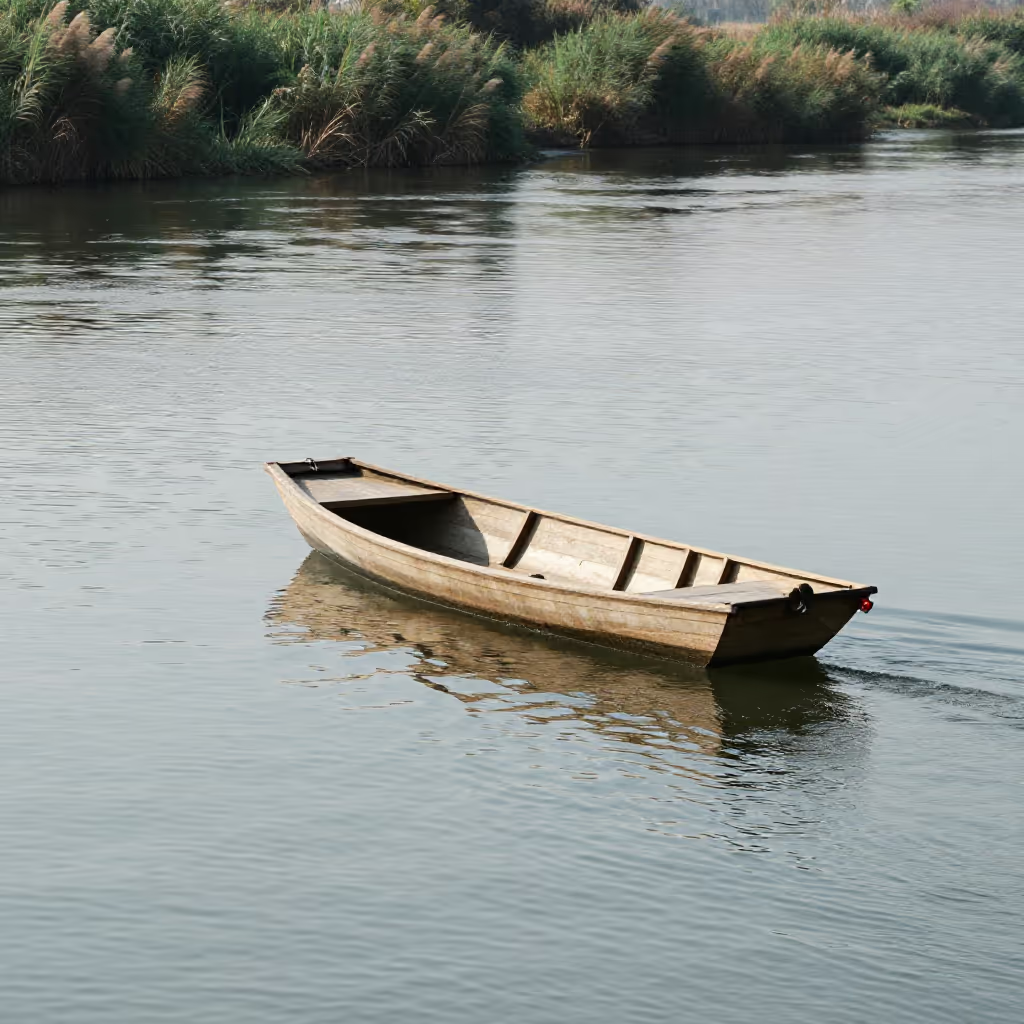
Der Ballon schwebt beinahe reglos über dem Feld.
The balloon hovers almost motionless above the field.
Der Ballon treibt ohne klares Ziel mit dem Wind nach Osten.
The balloon drifts east with the wind, without a clear destination.