
A department or specialist area within a larger organization, for example a university, hospital, or association.
example
Er leitet die Sektion für Kardiologie in der Uniklinik.
He heads the cardiology section at the university hospital.
Usage tips
Word formation
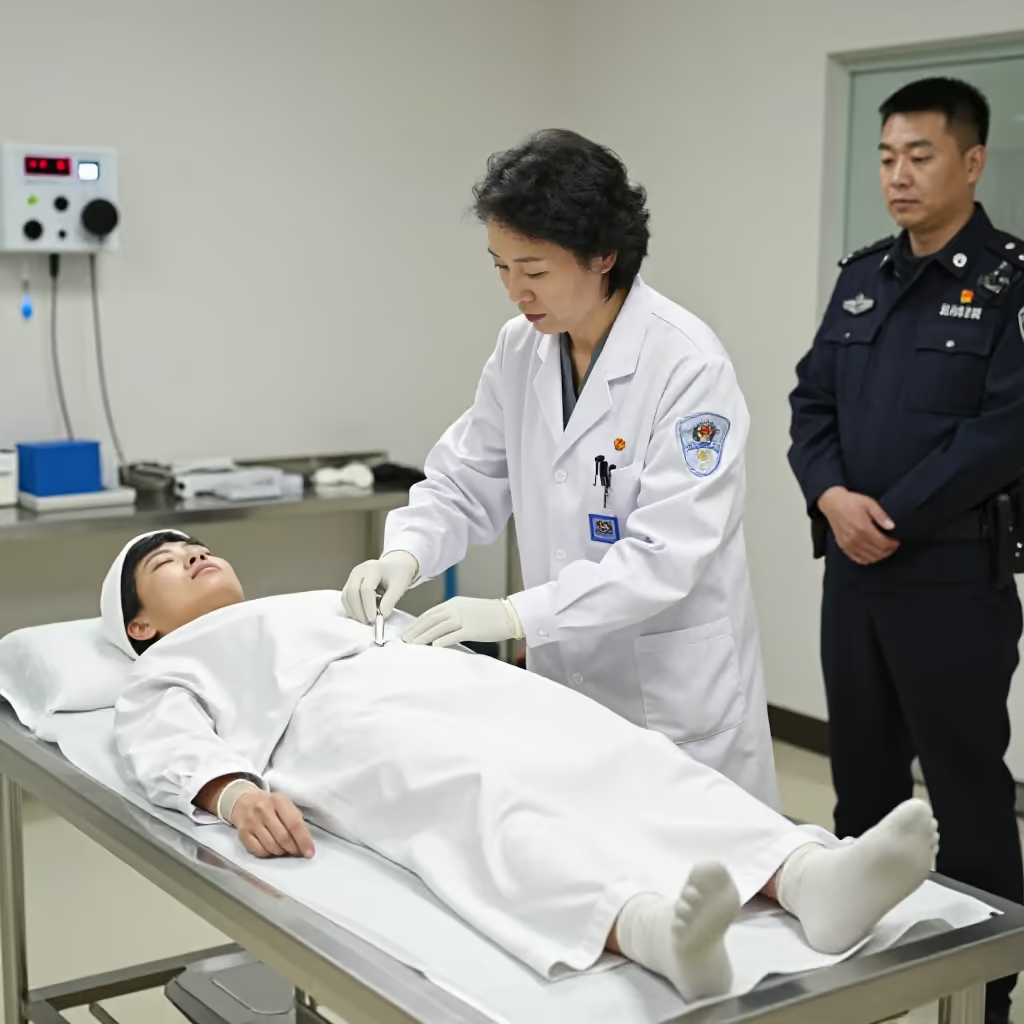
The word 'Sektion' (section/autopsy) comes from the Latin 'sectio', meaning 'cutting' or 'cut'. This explains the connection between the meanings: a department is a 'cut-off' part of an organization, and an autopsy is a medical 'cut'.
EXAMPLE
Die Firma ist in mehrere Sektionen unterteilt.
The company is divided into several sections.
Context clues
The context makes the meaning clear. In a hospital or university, it refers to a department. In connection with the police or death, it refers to an autopsy. In music or art, it refers to a group of instruments or a part of a work.
EXAMPLE
Die Sektion für Chirurgie hat einen neuen Leiter.
The surgery section has a new head.
Register
In the meaning 'Autopsie' (autopsy), 'Sektion' is a technical term from medicine and law. You often hear or read it in the news, crime novels, or official reports.
EXAMPLE
Der Bericht der Sektion bestätigte die Todesursache.
The autopsy report confirmed the cause of death.
Compare with
near_synonym
Sektion vs Teil
part
'der Teil' and 'die Sektion' can both mean an area within something larger. 'Teil' is the general word and fits almost everywhere. 'Sektion' sounds more precise and somewhat more formal. It is often used when an area is clearly separated, for example in a text, a group, or an organization. In many everyday situations, 'Teil' sounds more natural. 'Sektion' fits better when a division is made deliberately and in an orderly way.
Sektion
Im Bericht steht die wichtigste Information in der letzten Sektion.
In the report, the most important information is in the last section.
Teil
Bei der Arbeit prüfen wir morgen den wichtigsten Teil des Geräts.
At work tomorrow, we'll check the most important part of the device.