Working professionally on one's own account and responsibility, not in an employment relationship.
example
Nach einigen Jahren in der Agentur hat sie sich als Designerin selbstständig gemacht.
After a few years at the agency, she became self-employed as a designer.
Usage tips
Word structure
The word is made up of 'selbst' (self) and 'ständig' (constant/standing). 'Ständig' is derived from 'stehen' (to stand). So 'selbstständig' (self-employed / independent) literally means that someone 'stands on their own two feet' and is not dependent on others.
EXAMPLE
Er wollte immer schon selbstständig sein und seine eigenen Entscheidungen treffen.
He had always wanted to be independent and make his own decisions.
Fixed expression
To express that someone starts their own business, the fixed expression 'sich selbstständig machen' (to become self-employed) is used. It is a reflexive verb.
EXAMPLE
Sie plant, sich nächstes Jahr mit einem kleinen Café selbstständig zu machen.
She is planning to become self-employed next year with a small café.
Typical usage
When naming the profession of a self-employed person, you often use the structure 'als [Beruf] selbstständig sein' (to be self-employed as a [profession]) or 'selbstständig arbeiten' (to work independently / be self-employed).
EXAMPLE
Mein Bruder arbeitet als selbstständiger Fotograf.
My brother works as a self-employed photographer.
Context clue
In the meaning 'unabhängig' (independent), 'selbstständig' often describes a personal quality or ability, especially in children or learners. It emphasizes that someone manages without help.
EXAMPLE
Die Kinder sind schon alt genug, um selbstständig zur Schule zu gehen.
The children are already old enough to go to school independently.
Technical context
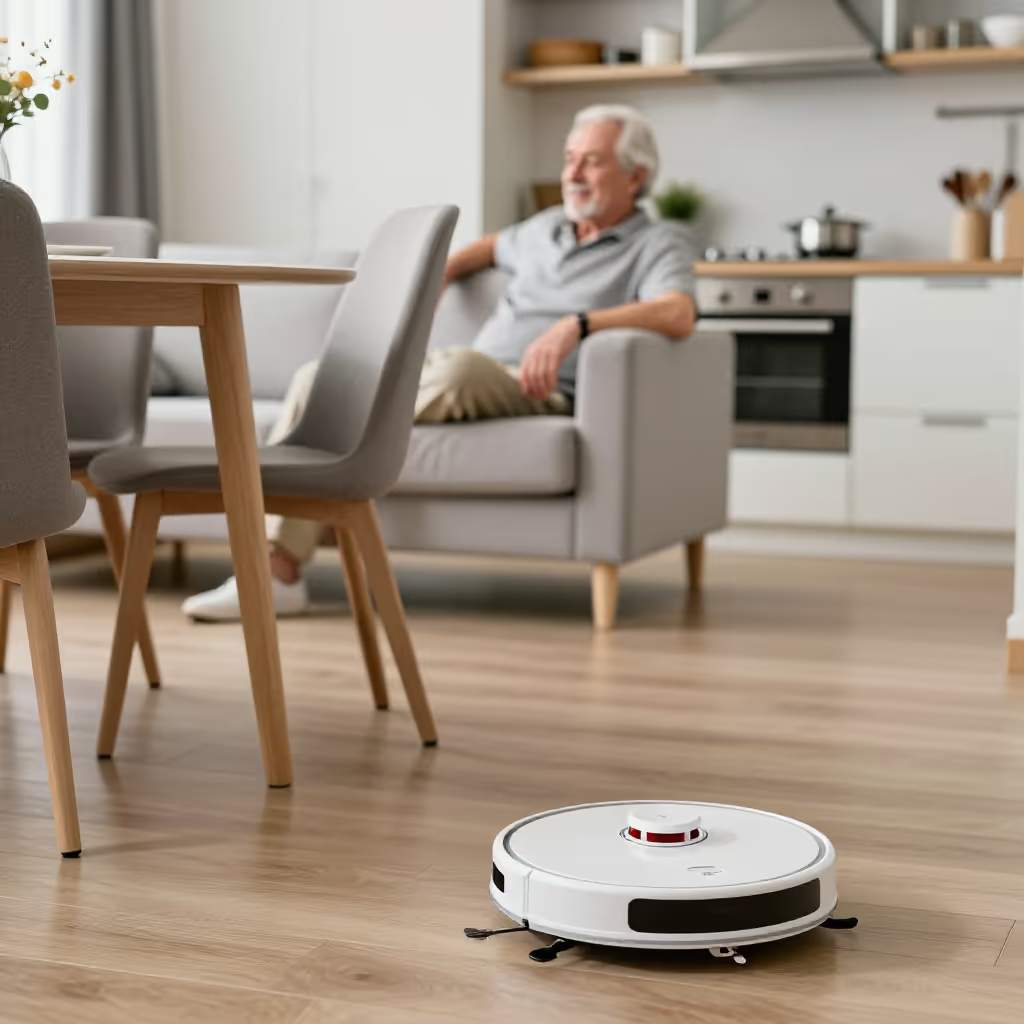
This meaning is typical in technical contexts. It describes machines, programs, or processes that function without human control.
EXAMPLE
Der Staubsaugerroboter reinigt die Wohnung völlig selbstständig.
The robot vacuum cleans the apartment completely autonomously.
Compare with
near_synonym · confusable
selbstständig vs allein
alone / only
'allein' and 'selbstständig' can both mean that someone does something without help. The difference is in the focus: 'allein' mainly says that no other person is helping or present. 'selbstständig' says more about a person's ability: they can plan and do something independently. Learners may confuse the words because both fit situations without help. If you only want to say that no one is helping, 'allein' fits. If you want to emphasize that someone can act independently and confidently, 'selbstständig' is more precise.
selbstständig
Nach ein paar Wochen arbeitet der neue Kollege schon sehr selbstständig.
After a few weeks, the new colleague is already working very independently.
allein
Meine Freundin baut das Regal allein auf, weil niemand Zeit hat.
My friend is putting the shelf together on her own because no one has time.