

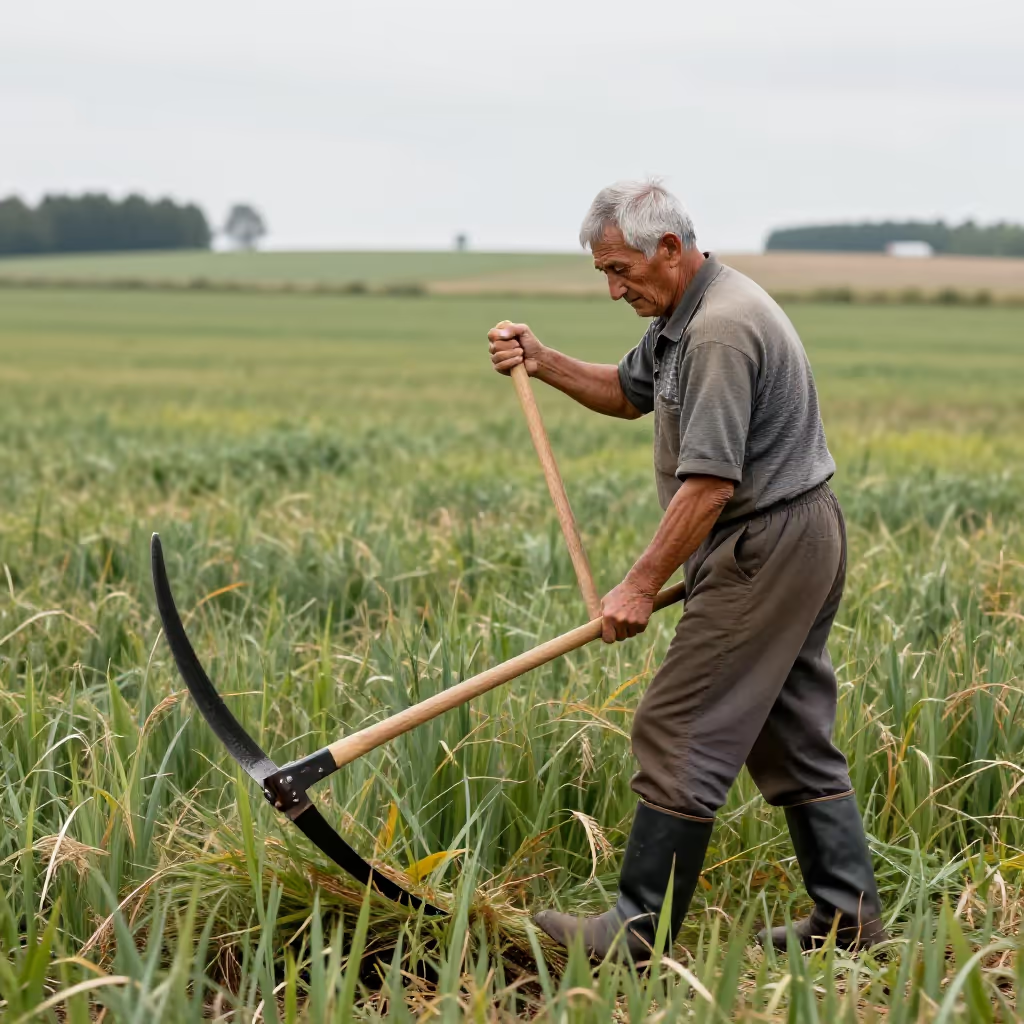
die Sense
scythe
An agricultural tool with a long handle and a long, curved blade for mowing grass or grain by hand.
EXAMPLE
Früher mähte der Bauer die Wiese mit der Sense.
In the past, the farmer mowed the meadow with a scythe.
scythe
Loading your saved state.
scythe
An agricultural tool with a long handle and a long, curved blade for mowing grass or grain by hand.
Früher mähte der Bauer die Wiese mit der Sense.
In the past, the farmer mowed the meadow with a scythe.
scythe
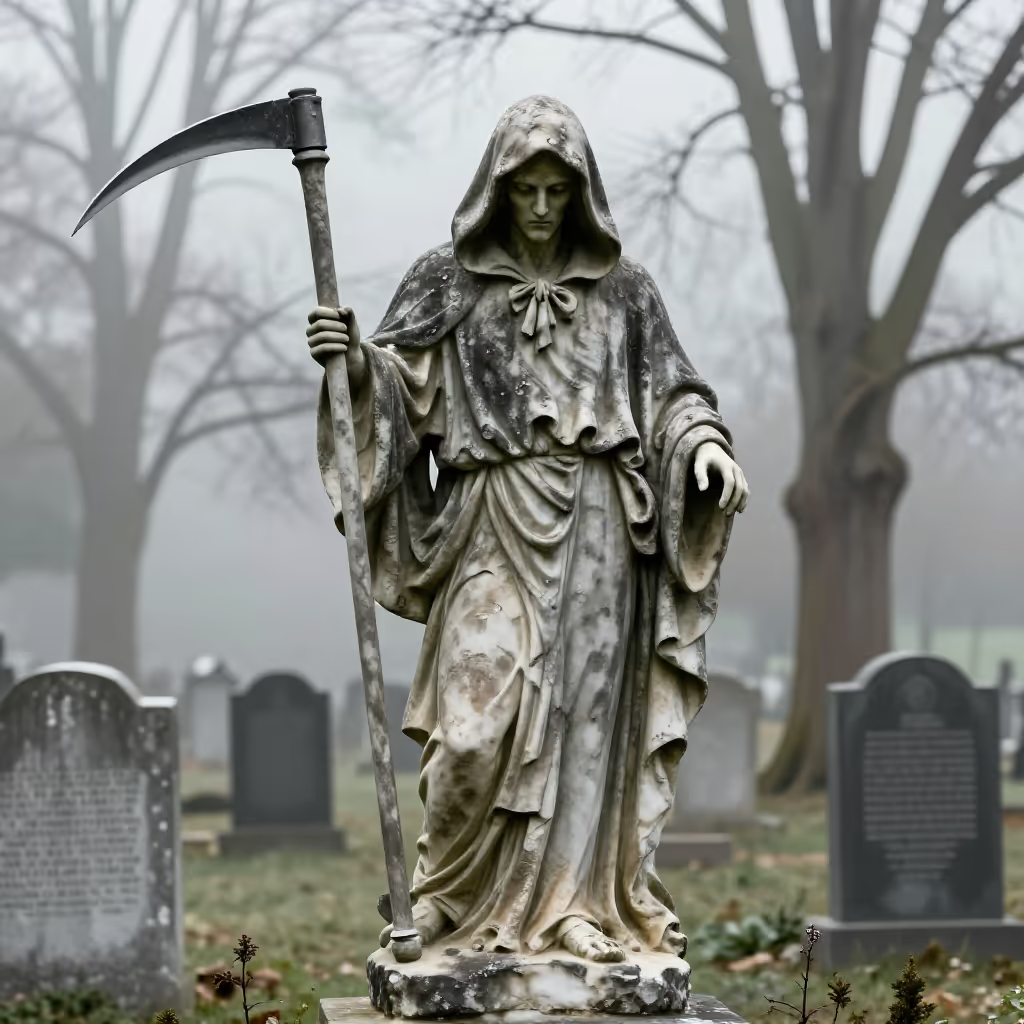
As a symbol of death, often depicted as an attribute of the Grim Reaper.
In alten Darstellungen trägt der Tod oft eine Sense über der Schulter.
In old depictions, Death often carries a scythe over his shoulder.
Careful, 'die Sense' (the scythe) is a false friend! It does not mean 'Sinn' (meaning/sense) or 'Gefühl' (feeling) like the English word 'sense'. The German word refers to the long, curved mowing tool.
Der Bauer schärfte die Klinge seiner Sense.
The farmer sharpened the blade of his scythe.
The typical verb used with 'Sense' (scythe) is 'mähen' (to mow). The fixed collocation is 'mit der Sense mähen' (to mow with a scythe).
Mein Großvater hat mir gezeigt, wie man Gras mit der Sense mäht.
My grandfather showed me how to mow grass with a scythe.
As a symbol, the scythe is inseparably linked with the figure of the 'Sensenmann' (Grim Reaper). In this role, it represents death, which 'mows down' life.
In dem alten Märchen erscheint der Tod als Mann mit einer Sense.
In the old fairy tale, Death appears as a man with a scythe.