

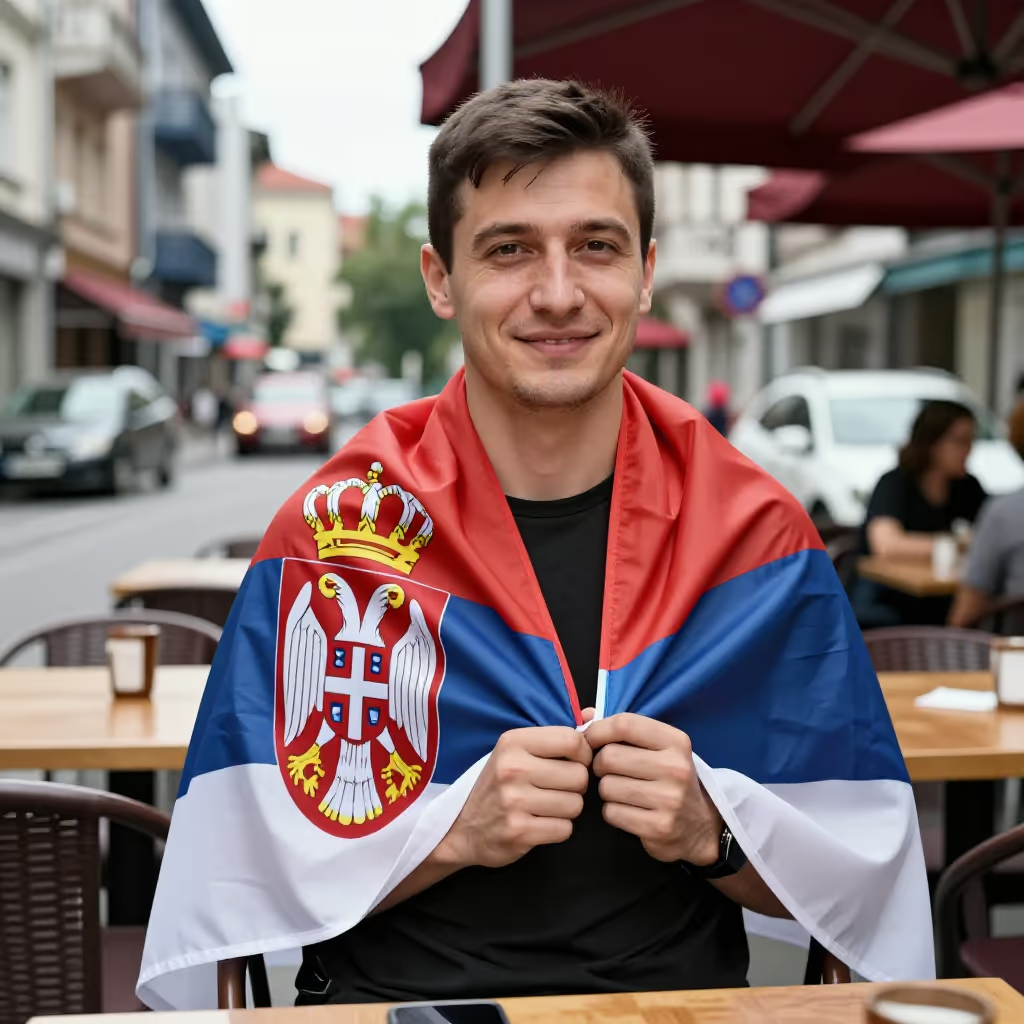
der Serbe
Serb
A male person who comes from Serbia or has Serbian citizenship.
EXAMPLE
Der Tennisspieler Novak Djokovic ist ein berühmter Serbe.
The tennis player Novak Djokovic is a famous Serb.
Serb
Loading your saved state.
Serb
A male person who comes from Serbia or has Serbian citizenship.
Der Tennisspieler Novak Djokovic ist ein berühmter Serbe.
The tennis player Novak Djokovic is a famous Serb.
This word belongs to the N-declension. This means it takes the ending '-n' in all cases except the nominative singular. This is a common mistake among learners.
Ich habe gestern einen Serben kennengelernt.
Yesterday I met a Serb.
The word 'Serbe' (Serb) is part of a word family. The country is called 'Serbien' (Serbia), the female form is 'die Serbin' (female Serb), and the adjective is 'serbisch' (Serbian).
Die Hauptstadt von Serbien ist Belgrad.
The capital of Serbia is Belgrade.
When describing nationality as a characteristic or profession, no article is often used. You say 'Er ist Serbe' (He is a Serb), similar to 'Er ist Lehrer' (He is a teacher).
Mein Nachbar ist Serbe und lebt seit zehn Jahren in Deutschland.
My neighbor is a Serb and has lived in Germany for ten years.