

serbisch
Serbian
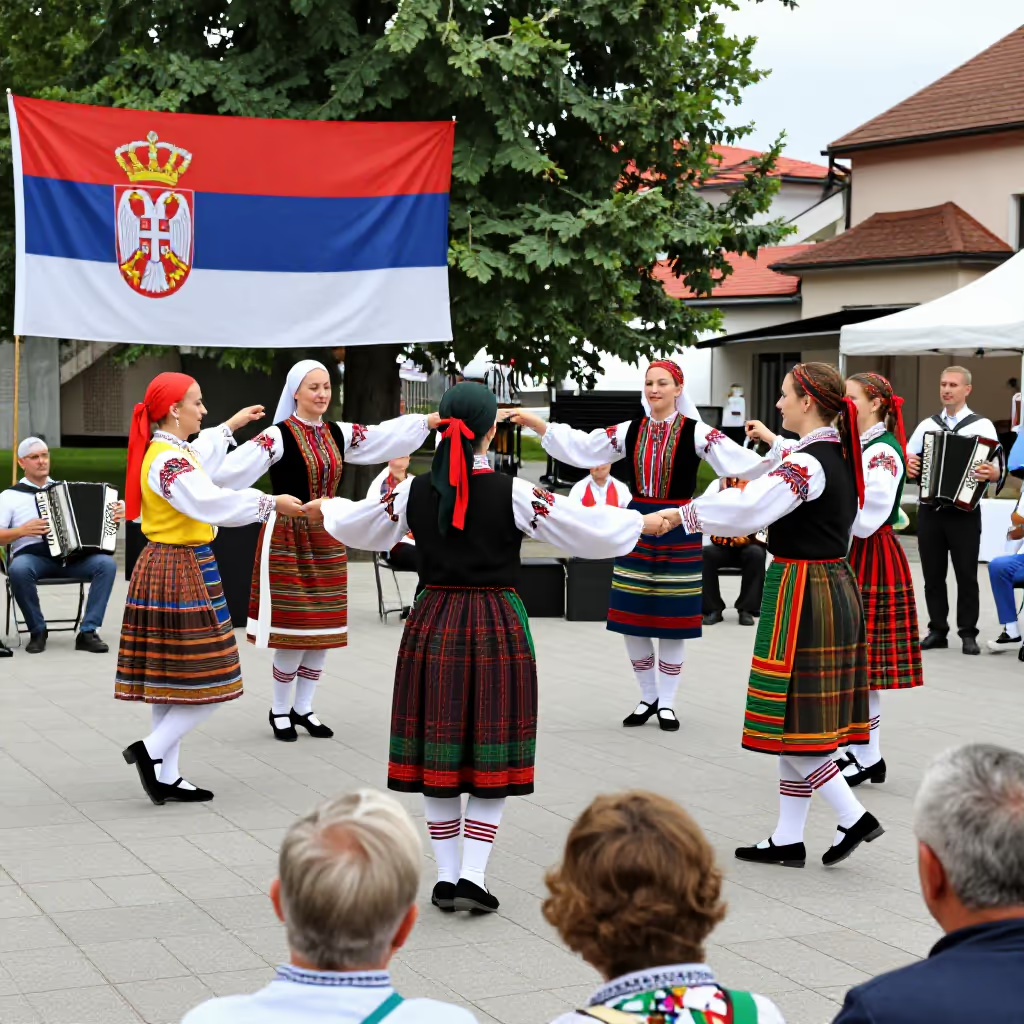
Relates to Serbia, its people, its culture, or its language.
EXAMPLE
Sie spricht fließend Serbisch, da ihre Mutter aus Belgrad kommt.
She speaks fluent Serbian because her mother comes from Belgrade.
Serbian
Loading your saved state.
Serbian
Relates to Serbia, its people, its culture, or its language.
Sie spricht fließend Serbisch, da ihre Mutter aus Belgrad kommt.
She speaks fluent Serbian because her mother comes from Belgrade.
The ending '-isch' is often used in German to form an adjective from a country or region (here: Serbia). Other examples are 'spanisch' (Spanish) or 'italienisch' (Italian).
Die serbische Hauptstadt ist Belgrad.
The Serbian capital is Belgrade.
When 'serbisch' (Serbian) refers to the language, it is capitalized and used as a noun: 'Serbisch' (Serbian). It is usually used without an article.
Mein Kollege lernt gerade Serbisch für seine nächste Reise.
My colleague is currently learning Serbian for his next trip.
The word can stand before a noun as an adjective or describe an activity as an adverb. As an adverb, it remains unchanged.
Ich mag die serbische Musik sehr.
I really like Serbian music.