


sichtlich
visibly
Clearly recognizable or obvious. Used to describe an emotion or state that can be seen in someone.
EXAMPLE
Nach der guten Nachricht war sie sichtlich erleichtert.
After the good news, she was visibly relieved.
visibly
Loading your saved state.
visibly
Clearly recognizable or obvious. Used to describe an emotion or state that can be seen in someone.
Nach der guten Nachricht war sie sichtlich erleichtert.
After the good news, she was visibly relieved.
The adverb 'sichtlich' (visibly) is derived from the noun 'die Sicht' (view/sight), which is related to the verb 'sehen' (to see). So it literally means 'in such a way that one can see it' or 'visible'.
Der Redner war sichtlich nervös, als er auf die Bühne ging.
The speaker was visibly nervous when he went onto the stage.
'Sichtlich' (visibly) is almost always used to describe an emotion or state that is recognizable to others. Common combinations are: to be visibly relieved, pleased, proud, annoyed, or surprised.
Die Eltern waren sichtlich stolz auf die Leistung ihrer Tochter.
The parents were visibly proud of their daughter's achievement.
As an adverb, 'sichtlich' (visibly) typically comes directly before the adjective or participle it describes. It emphasizes that the state is clearly recognizable from the outside.
Nach der langen Wanderung war die Gruppe sichtlich erschöpft.
After the long hike, the group was visibly exhausted.
clear / clearly
Deutlich and sichtlich can both describe a recognizable state or emotion. Deutlich is more general and can emphasize the clarity of a statement; sichtlich ties the statement more closely to signs that can be seen in a person. Use sichtlich especially for observable feelings or states.
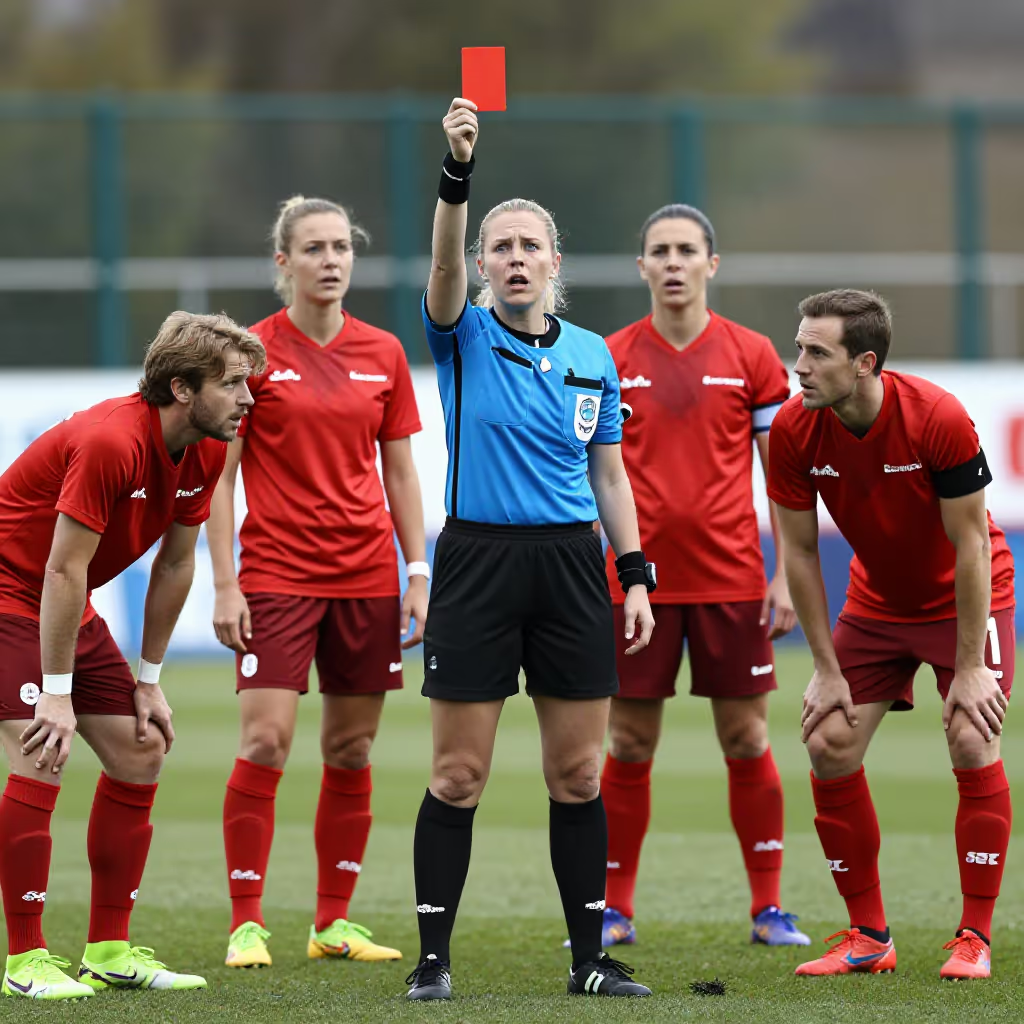
Nach der langen Reise war er sichtlich müde und rieb sich ständig die Augen.
After the long journey, he was visibly tired and kept rubbing his eyes.
Nach der langen Reise war er deutlich müde.
After the long journey, he was clearly tired.