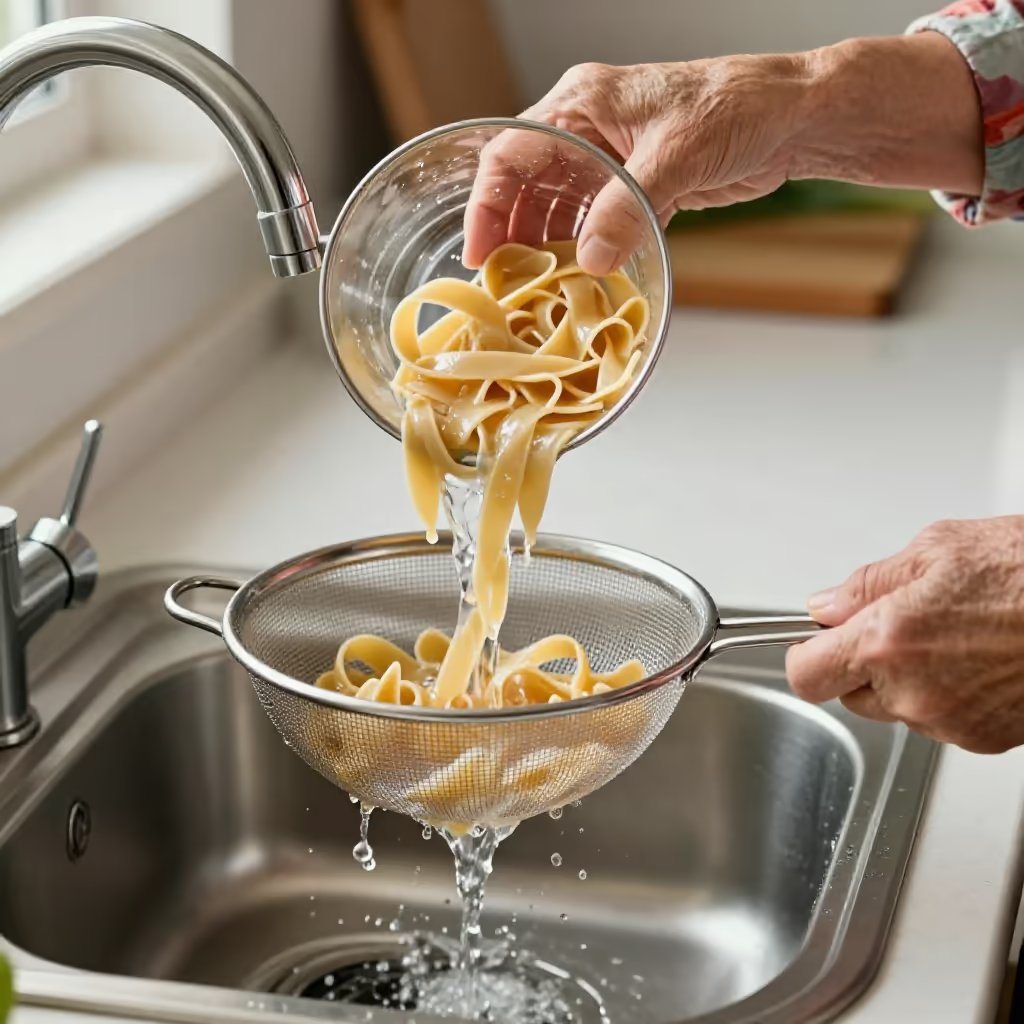
A kitchen utensil with a mesh or perforated surface used to separate solids from liquids or fine particles from coarser ones.
example
Um Klümpchen zu vermeiden, sollte man das Mehl durch ein Sieb in den Teig geben.
To avoid lumps, you should add the flour to the batter through a sieve.

Usage tips
Word family
'Das Sieb' (the sieve) is the tool for the activity 'sieben' (to sift). When you 'sieben' (sift) flour or powdered sugar, you use 'ein Sieb' (a sieve).
EXAMPLE
Für den Kuchen musst du zuerst das Mehl sieben.
For the cake, you first have to sift the flour.
Context clue
The literal meaning refers to a kitchen utensil. You can recognize the figurative meaning from abstract nouns like 'Gedächtnis' (memory) or from a context such as sports, where it describes a weak defense.
EXAMPLE
Gib die Nudeln zum Abtropfen in ein Sieb.
Put the pasta in a strainer to drain.
Use with 'durch'
In the kitchen, an action involving a sieve is almost always described with the preposition 'durch' (through). You put, press, or pass something 'durch ein Sieb' (through a sieve).
EXAMPLE
Für eine feine Soße muss man die Tomaten durch ein Sieb streichen.
For a smooth sauce, you have to press the tomatoes through a sieve.
Fixed expressions
In the figurative meaning, there are fixed idioms. 'Ein Gedächtnis wie ein Sieb haben' (to have a memory like a sieve) means to be very forgetful. 'Die Abwehr ist ein Sieb' (the defense is a sieve) means that a sports team defends very badly.
EXAMPLE
Die gegnerische Mannschaft schoss drei Tore, unsere Abwehr war ein einziges Sieb.
The opposing team scored three goals; our defense was a complete sieve.
Compare with
near_synonym · confusable
Sieb vs Filter
filter
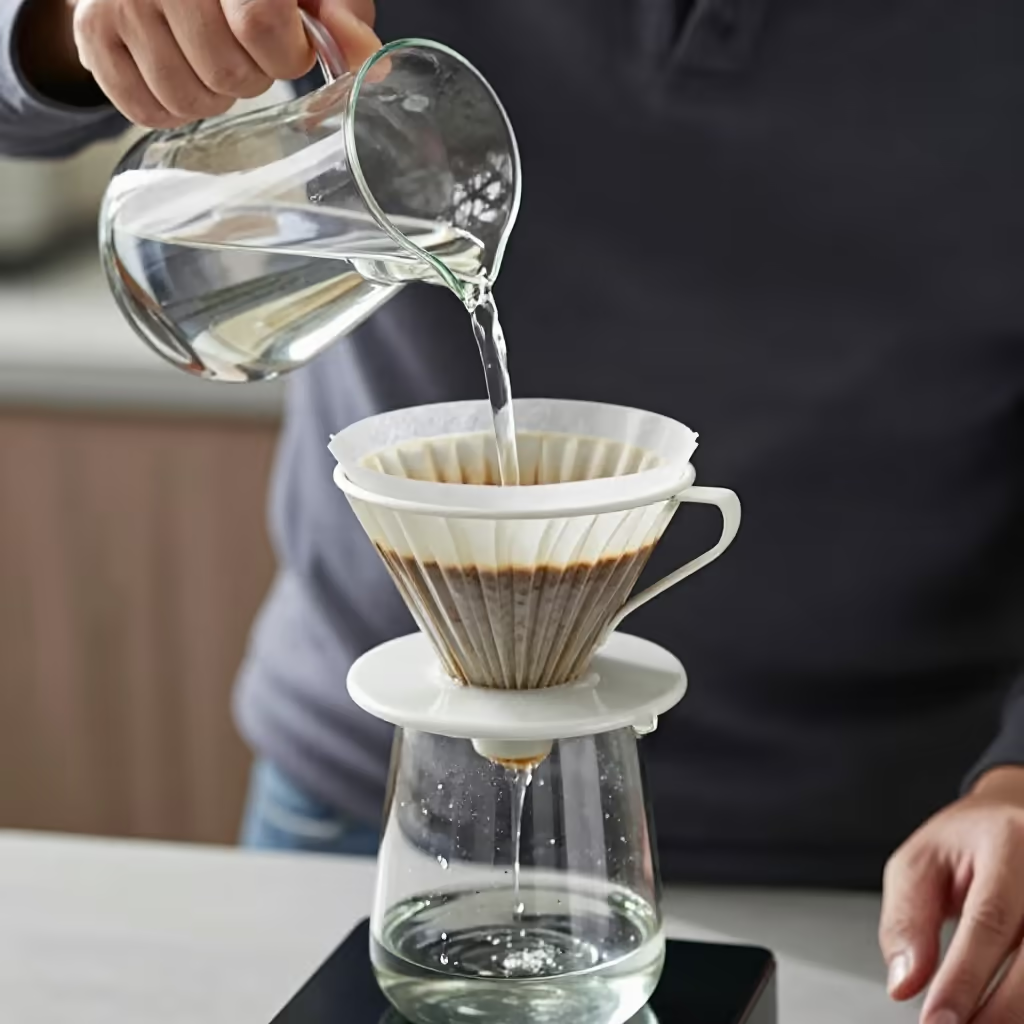
'der Filter' and 'das Sieb' can both separate substances. A sieve or strainer has visible holes or a mesh and is often used in the kitchen, for example for pasta, flour, or sand. A filter is usually finer and is meant to clean liquids or gases by holding back small particles or unwanted substances. The words can be confused because both let something through and hold something back. In practice: for coarse separation, people usually say 'Sieb'; for cleaning or very fine separation, 'Filter' is more likely.
Sieb
Nach dem Kochen gießt Lena die Nudeln durch ein Sieb.
After cooking, Lena drains the pasta through a strainer.
Filter
Für sauberes Trinkwasser benutzt Max einen kleinen Filter.