

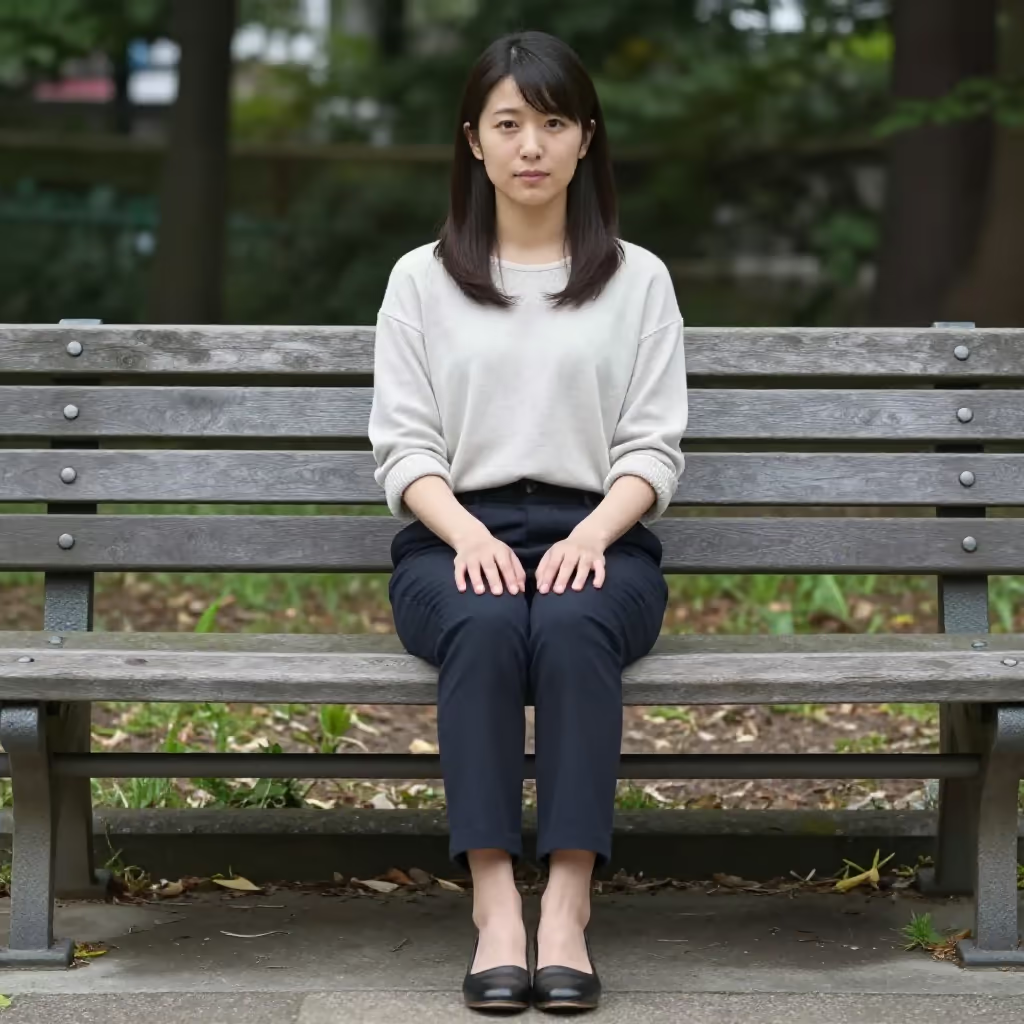
sitzend
sitting
In a position where the buttocks rest on a surface such as a chair or the floor.
EXAMPLE
Er verbrachte den ganzen Tag sitzend am Schreibtisch.
He spent the whole day sitting at his desk.
sitting
Loading your saved state.
sitting
In a position where the buttocks rest on a surface such as a chair or the floor.
Er verbrachte den ganzen Tag sitzend am Schreibtisch.
He spent the whole day sitting at his desk.
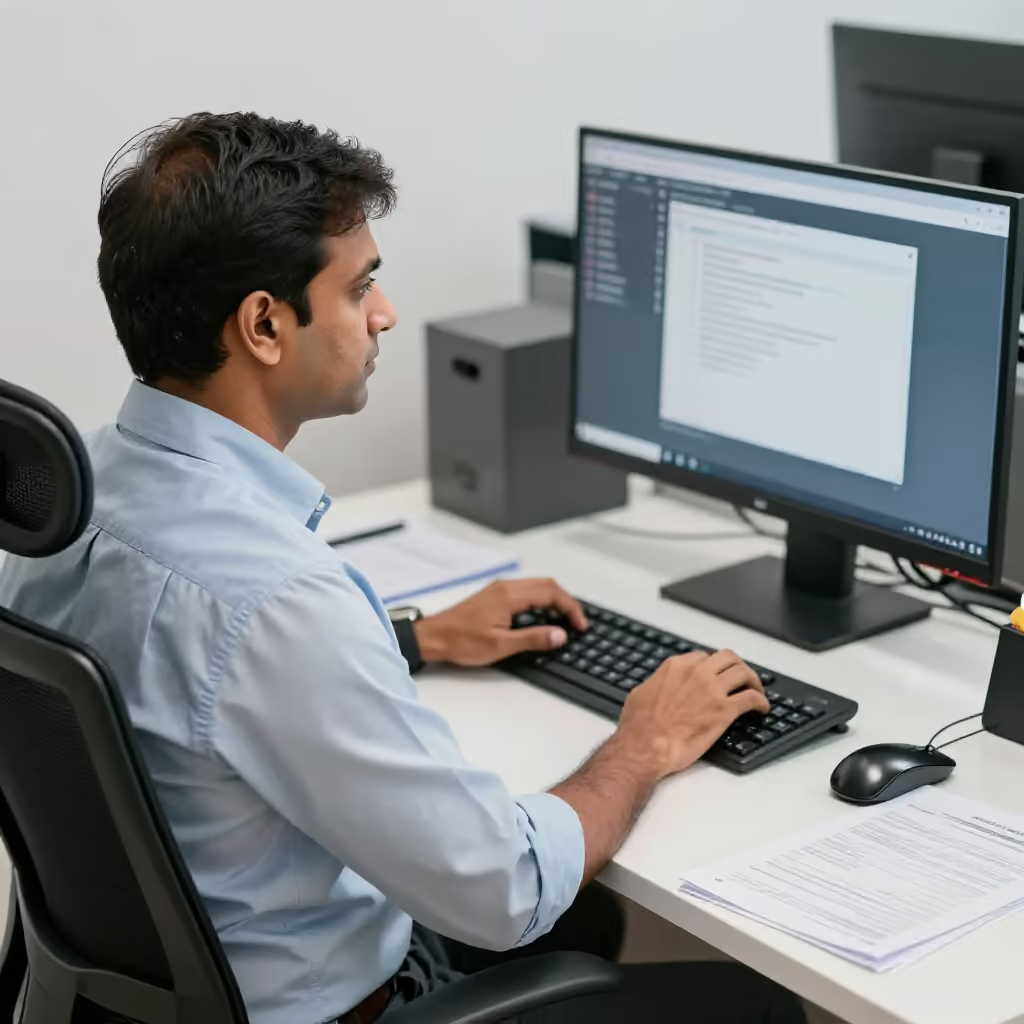
sedentary
Describes an activity or profession that is mainly carried out while sitting.
Eine sitzende Tätigkeit kann auf Dauer zu Rückenproblemen führen.
A sedentary job can lead to back problems in the long run.
'Sitzend' (sitting) is the present participle of the verb 'sitzen' (to sit). This form describes an ongoing action or a state and is used like an adjective.
Der sitzende Gast wartete auf seine Bestellung.
The seated guest waited for his order.
The word can stand as an adjective before a noun or as an adverb describing an activity. As an adverb, it describes how an action is performed.
Die sitzende Katze beobachtete die Vögel.
The sitting cat watched the birds.
In a professional context, the combination 'eine sitzende Tätigkeit' (a sedentary job/activity) is very common. It describes a job that mainly takes place at a desk or a similar workstation.
Viele Büroangestellte haben eine sitzende Tätigkeit.
Many office workers have a sedentary job.