

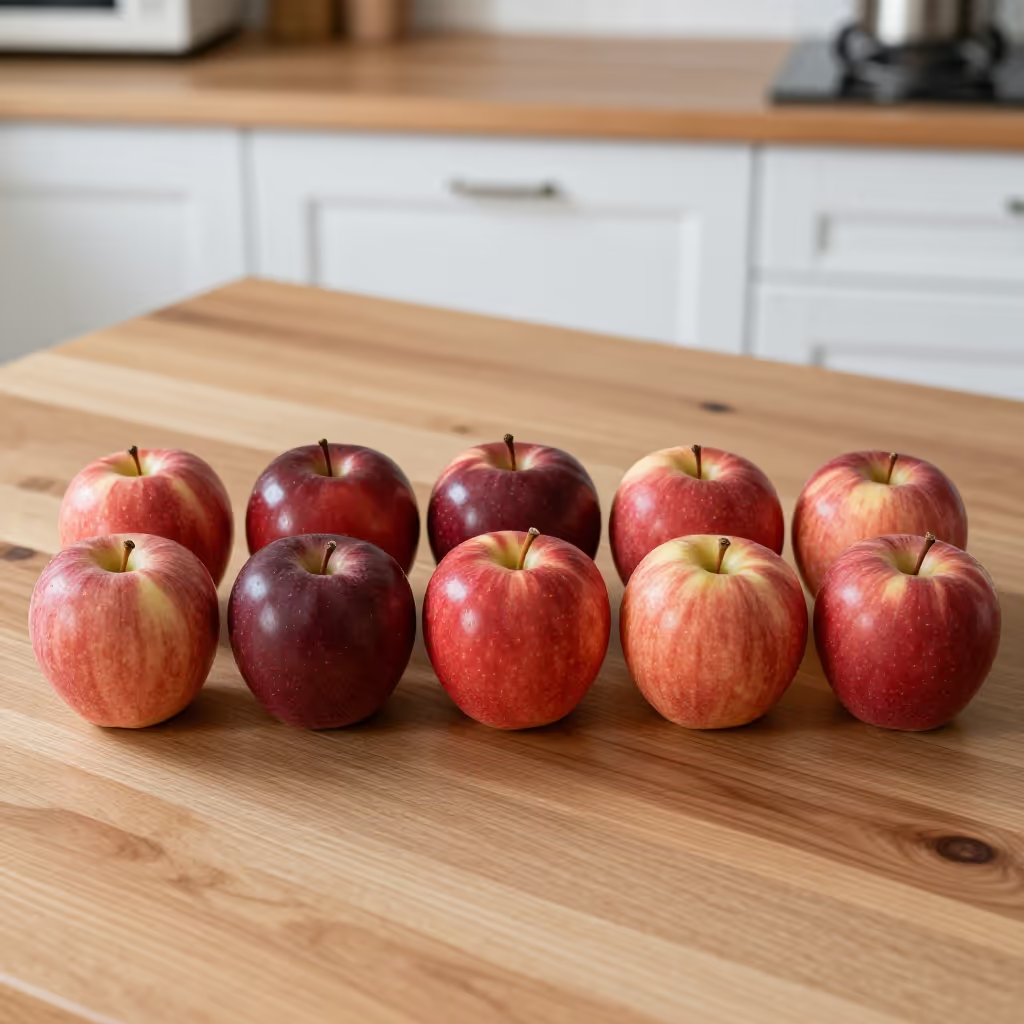
sieben
seven
The cardinal number between six and eight; the digit 7.
EXAMPLE
Eine Woche hat sieben Tage.
A week has seven days.
seven
Loading your saved state.
seven
The cardinal number between six and eight; the digit 7.
Eine Woche hat sieben Tage.
A week has seven days.
Other useful words are derived from the cardinal number 'sieben' (seven). These include the ordinal number 'der siebte' (the seventh) and the adverb 'siebtens' (seventhly).
Wir feiern heute den siebten Geburtstag meiner Tochter.
We are celebrating my daughter's seventh birthday today.
The number word 'sieben' (seven) has a homophone twin: the verb 'sieben', which means 'to put through a sieve' or 'to sift'. Only the context makes clear whether the number or the action is meant.
Der Bäcker muss das Mehl sieben, bevor er den Teig macht.
The baker has to sift the flour before he makes the dough.
The number is part of the well-known idiom 'auf Wolke sieben schweben' (to be on cloud nine). It means that someone is very happy or in love.
Seit sie den neuen Job hat, schwebt sie auf Wolke sieben.
Since she got the new job, she's been on cloud nine.
To describe a group of people, you use the construction 'zu' + number. This expresses how many people the group consists of.
Wir waren zu siebt im Urlaub.
There were seven of us on vacation.