

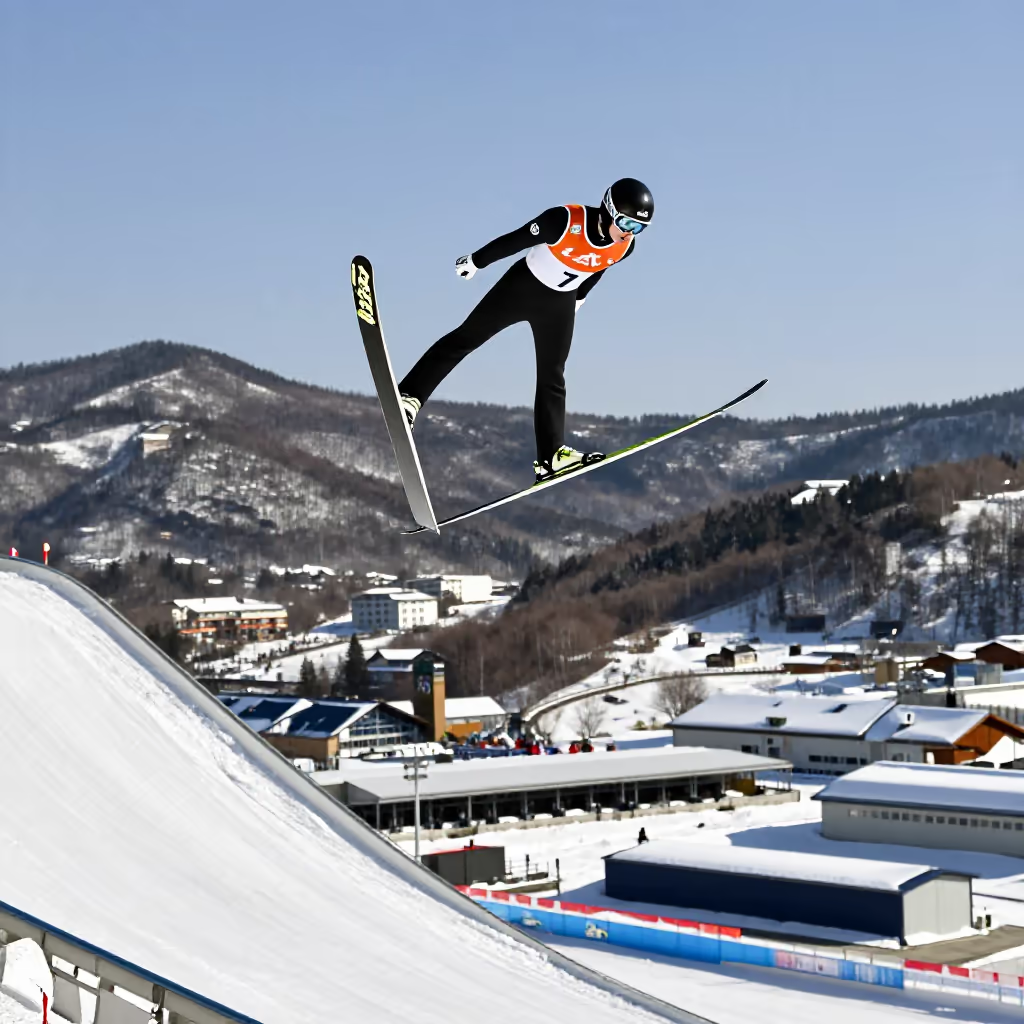
A male person who practices the winter sport of ski jumping, in which you ski down a ramp and try to jump as far as possible.
example
Der deutsche Skispringer gewann bei den Olympischen Spielen die Goldmedaille.
The German ski jumper won the gold medal at the Olympic Games.
Usage tips
Word composition
The word is made up of three parts: 'Ski' (ski), the verb 'springen' (to jump), and the ending '-er', which denotes a person. A 'Skispringer' (ski jumper) is therefore literally a person who jumps on skis.
EXAMPLE
Schon als Kind wollte er Skispringer werden.
Even as a child, he wanted to become a ski jumper.
Typical verbs
In the context of ski jumpers, specific verbs are often used, such as 'einen Rekord aufstellen' (to set a record), 'eine Medaille gewinnen' (to win a medal), or 'bei einer bestimmten Weite landen' (to land at a certain distance).
EXAMPLE
Der junge Skispringer landete sicher bei 130 Metern.
The young ski jumper landed safely at 130 meters.
Cultural context
Ski jumping is a very popular winter sport in German-speaking countries such as Germany and Austria. Ski jumpers are often well-known sports stars there.
EXAMPLE
Tausende Fans bejubelten die Skispringer an der Schanze.
Thousands of fans cheered the ski jumpers at the jump.
Compare with
near_synonym · confusable
Skispringer vs Springer
jumper / knight
'der Springer' and 'der Skispringer' can both mean an athlete who jumps. 'der Springer' is more general and can fit different sports, for example long jump, diving, or ski jumping. 'der Skispringer' is more specific and means only someone who jumps from a ski jump on skis. The words can be confused because 'Springer' is shorter and can also fit this sport. If the sport should be stated clearly, 'Skispringer' is more precise.
Skispringer
Der Skispringer landete sicher nach einem sehr weiten Sprung.
The ski jumper landed safely after a very long jump.
Springer
Der Springer trainiert jeden Tag für den Weitsprung.