

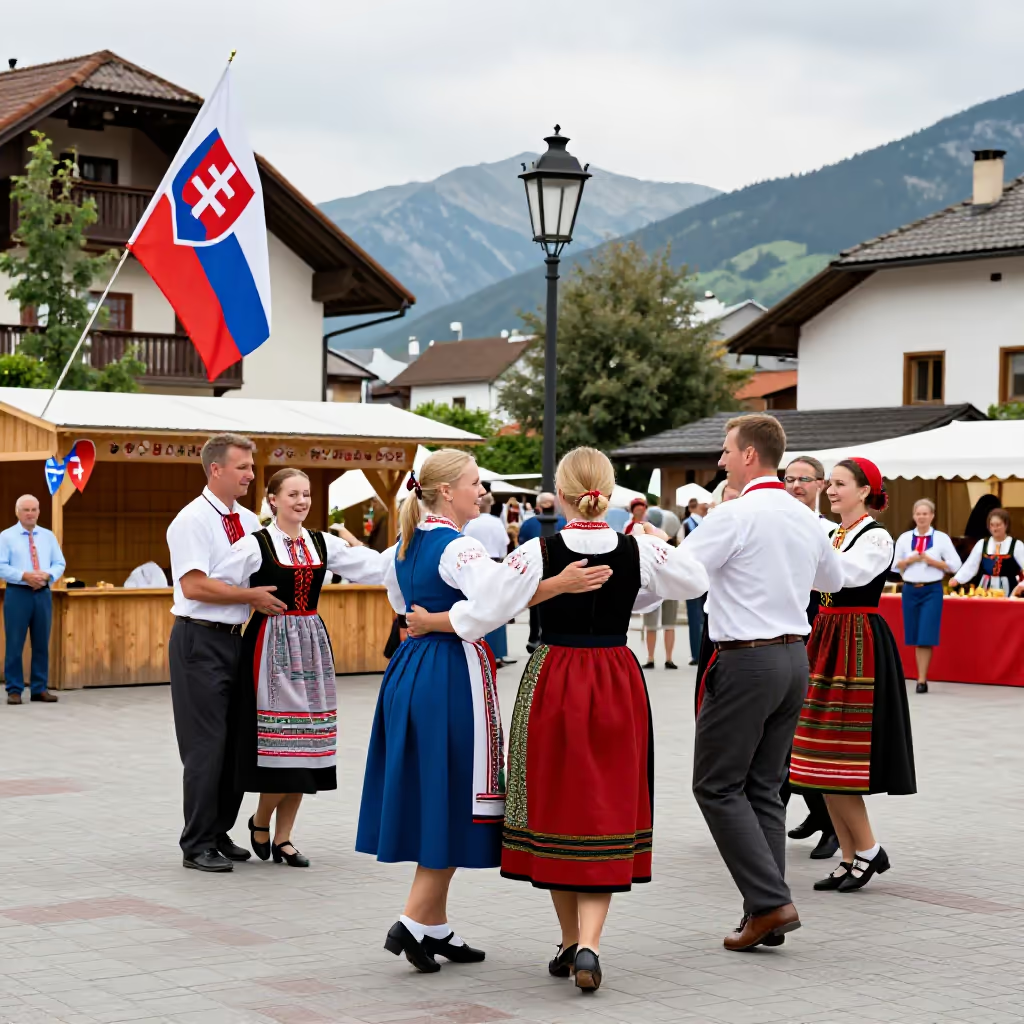
slowakisch
Slovak
Relating to Slovakia, its inhabitants, its culture, or its language.
EXAMPLE
Wir haben in einem Restaurant traditionelle slowakische Gerichte gegessen.
We ate traditional Slovak dishes in a restaurant.
Slovak
Loading your saved state.
Slovak
Relating to Slovakia, its inhabitants, its culture, or its language.
Wir haben in einem Restaurant traditionelle slowakische Gerichte gegessen.
We ate traditional Slovak dishes in a restaurant.
The ending '-isch' is a typical way to form an adjective from a country or region. 'Slowakisch' (Slovak) is derived directly from the country name 'die Slowakei' (Slovakia).
Die slowakische Landschaft ist bekannt für ihre vielen Burgen.
The Slovak landscape is known for its many castles.
As an adjective, 'slowakisch' (Slovak) is written in lowercase and describes a noun. To refer to the language, the word is used as a noun, capitalized, and with the article 'das': 'das Slowakisch' (Slovak).
Wir besuchten ein slowakisches Dorf in den Bergen.
We visited a Slovak village in the mountains.
The adjective 'slowakisch' (Slovak) is often combined with nouns from the areas of culture, geography, and politics. Typical examples include 'die slowakische Regierung' (the Slovak government), 'slowakische Volksmusik' (Slovak folk music), or 'ein slowakischer Pass' (a Slovak passport).
Die slowakische Eishockeymannschaft hat das Spiel gewonnen.
The Slovak ice hockey team won the game.
Slovenian
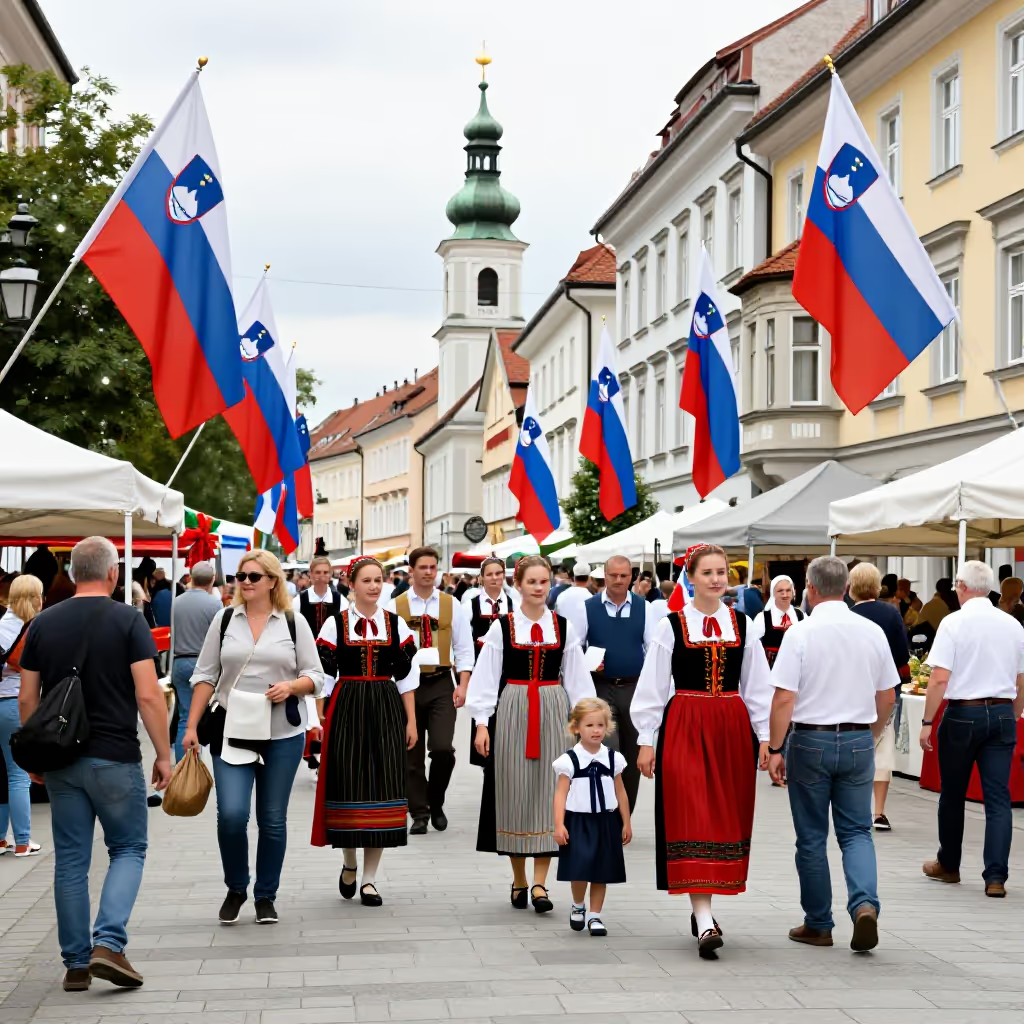
Slowenisch and slowakisch refer to two different countries and therefore also to their inhabitants, cultures, or languages. „Slowenisch“ belongs to Slovenia, while „slowakisch“ belongs to Slovakia. When describing something, always check which of these two countries is meant.
Im Urlaub probierten wir ein slowakisches Gericht aus einem Dorf in der Slowakei.
On vacation, we tried a Slovak dish from a village in Slovakia.
Im Urlaub probierten wir ein slowenisches Gericht aus einem Dorf in Slowenien.
On vacation, we tried a Slovenian dish from a village in Slovenia.