

slowenisch
Slovenian
Refers to Slovenia, its inhabitants, its culture, or the Slovenian language.
EXAMPLE
Sie lernt Slowenisch, weil ihr Partner aus Ljubljana kommt.
She is learning Slovenian because her partner is from Ljubljana.
Slovenian
Loading your saved state.
Slovenian
Refers to Slovenia, its inhabitants, its culture, or the Slovenian language.
Sie lernt Slowenisch, weil ihr Partner aus Ljubljana kommt.
She is learning Slovenian because her partner is from Ljubljana.
The word is formed with the ending '-isch', which is often used to make adjectives from countries, regions, or cities. This structure helps you recognize and understand many other adjectives of origin.
Die italienische Küche ist weltberühmt.
Italian cuisine is world-famous.
Pay attention to the difference: 'slowenisch' (lowercase) is the adjective, while 'Slowenisch' (capitalized) is the noun for the language. This is an important rule for all languages and nationalities in German.
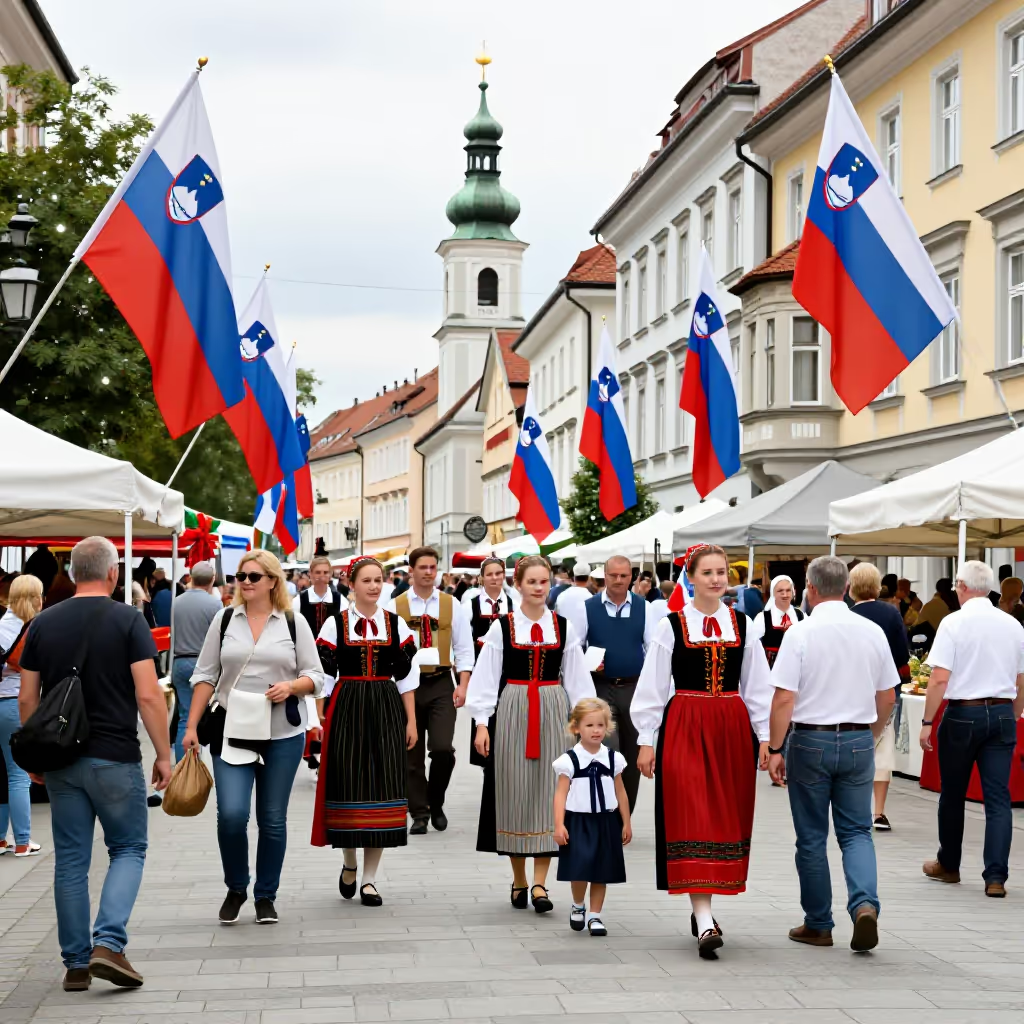
Die slowenische Flagge hat die Farben Weiß, Blau und Rot.
The Slovenian flag has the colors white, blue, and red.
The adjective 'slowenisch' (Slovenian) is often used in connection with geography, politics, and culture. Typical combinations are 'die slowenische Küste' (the Slovenian coast), 'die slowenische Regierung' (the Slovenian government), or 'slowenische Spezialitäten' (Slovenian specialties).
Wir haben unseren Urlaub an der slowenischen Adriaküste verbracht.
We spent our vacation on the Slovenian Adriatic coast.
Slovak
Slowenisch and slowakisch refer to two different countries and therefore also to their inhabitants, cultures, or languages. „Slowenisch“ belongs to Slovenia, while „slowakisch“ belongs to Slovakia. When describing something, always check which of these two countries is meant.
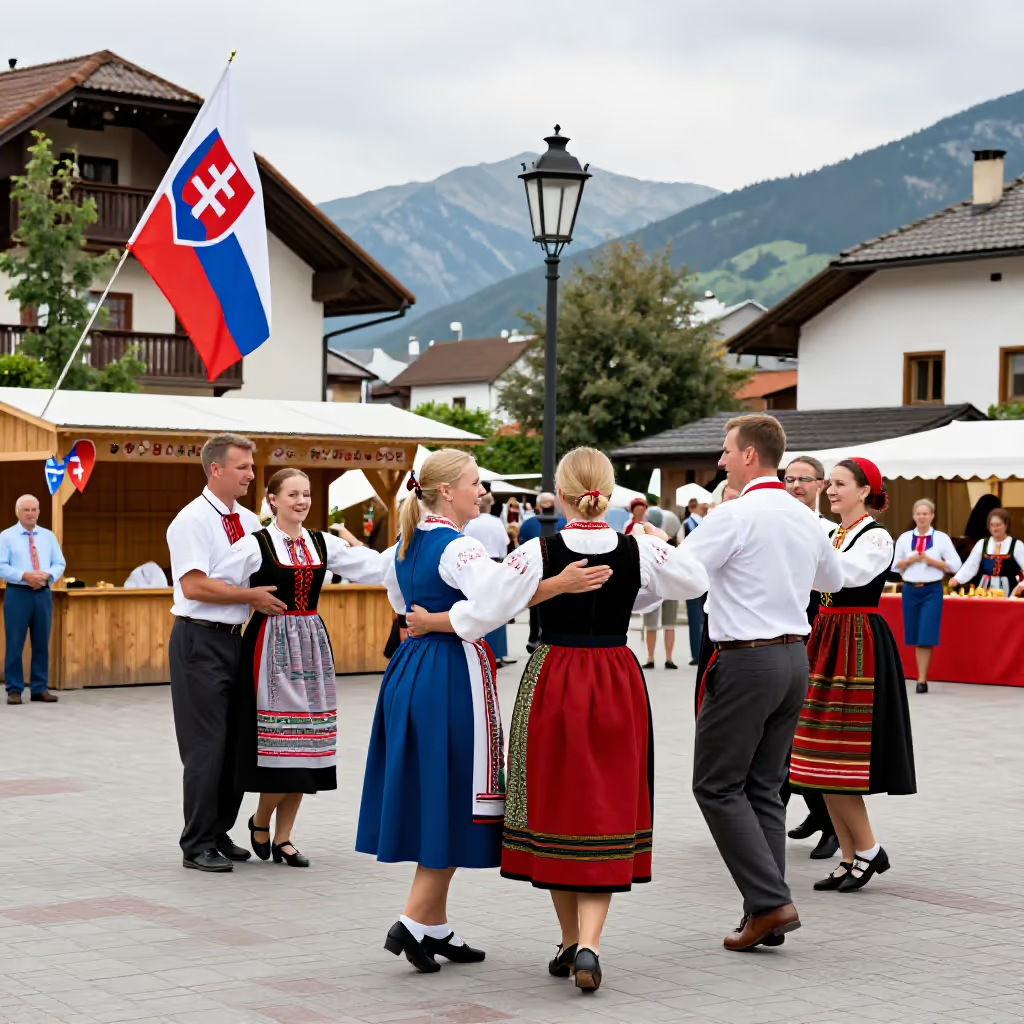
Im Urlaub probierten wir ein slowenisches Gericht aus einem Dorf in Slowenien.
On vacation, we tried a Slovenian dish from a village in Slovenia.
Im Urlaub probierten wir ein slowakisches Gericht aus einem Dorf in der Slowakei.
On vacation, we tried a Slovak dish from a village in Slovakia.