


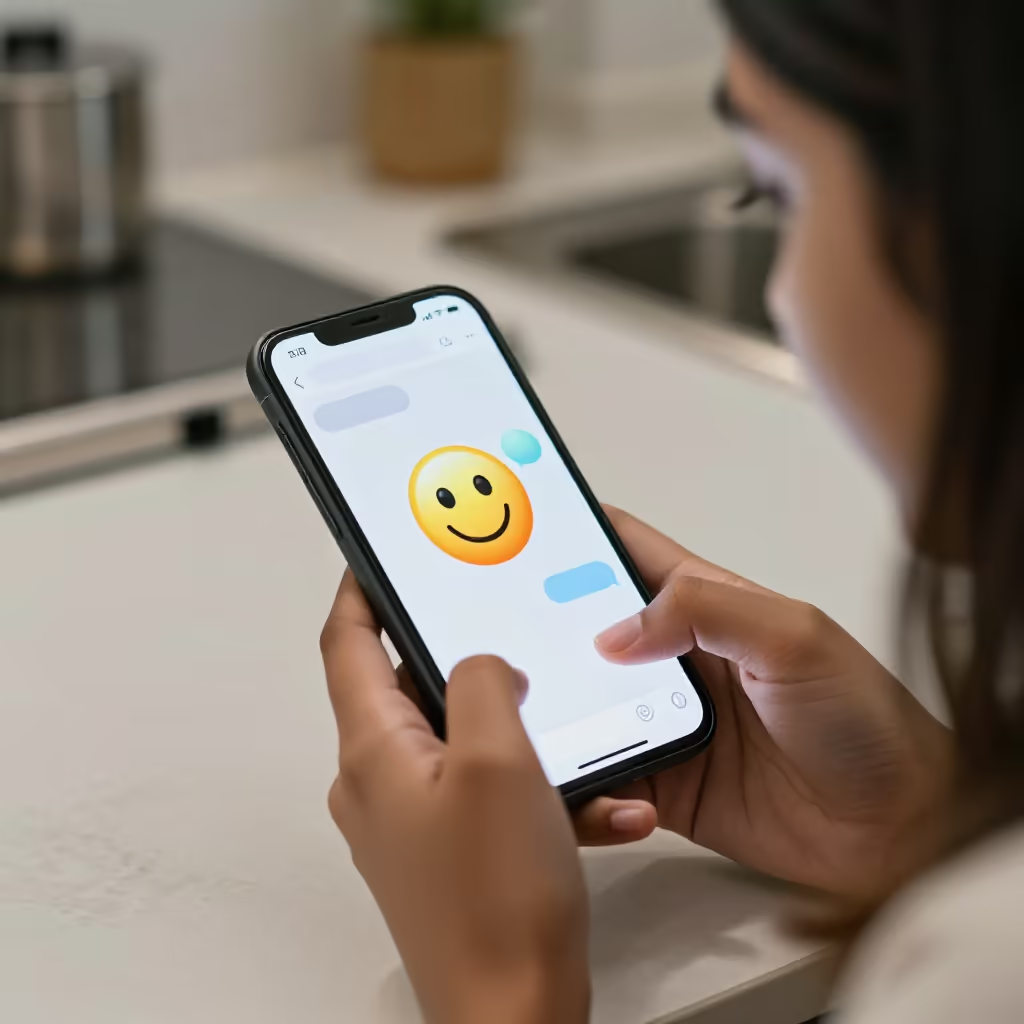
A stylized graphic representation of a smiling human face, usually consisting of a yellow circle with two dots as eyes and a curved line as a mouth. Smileys are mainly used in digital communication to express emotions.
example
Sie beendete ihre Nachricht mit einem zwinkernden Smiley.
She ended her message with a winking smiley.
Usage tips
English loanword
The word 'Smiley' is taken directly from English and is often pronounced in the English way as well. As with many Anglicisms, the plural is formed simply by adding an '-s'.
EXAMPLE
In seinen Nachrichten benutzt er immer übertrieben viele Smileys.
He always uses an exaggerated number of smileys in his messages.
Typical collocations
In the context of digital communication, 'Smiley' is often combined with verbs such as 'senden' (to send), 'einfügen' (to insert), 'benutzen' (to use), or 'machen' (to make, in the sense of typing).
EXAMPLE
Er hat am Ende seiner E-Mail einen lachenden Smiley eingefügt.
He inserted a laughing smiley at the end of his email.
Register and style
The word 'Smiley', like the graphic itself, belongs to informal language. In formal or business texts, you should use smileys and the word for them only very deliberately or not at all.
EXAMPLE
In einem offiziellen Bewerbungsschreiben solltest du keine Smileys verwenden.
You shouldn't use smileys in an official job application letter.
Compare with
confusable
Smiley vs Icon
icon
'der Smiley' and 'das Icon' are both small graphic symbols on digital devices. A smiley shows a face, usually a smiling one, and expresses a mood. An icon is a symbol for an app, file, or function that you can often click on. Learners may confuse the words because both appear as small images on the screen. A simple rule is: for feelings in messages, you are more likely to say 'Smiley'; for programs and functions, 'Icon' is more likely.
Smiley
Am Ende ihrer Nachricht setzte Lena einen Smiley.
At the end of her message, Lena added a smiley.
Icon
Ich klicke auf das Icon, um das Programm zu öffnen.