


der Sommer
summer
The warmest of the four seasons, which comes between spring and autumn.
EXAMPLE
In diesem Sommer wollen wir eine lange Fahrradtour machen.
This summer, we want to go on a long bike tour.
summer
Loading your saved state.
summer
The warmest of the four seasons, which comes between spring and autumn.
In diesem Sommer wollen wir eine lange Fahrradtour machen.
This summer, we want to go on a long bike tour.
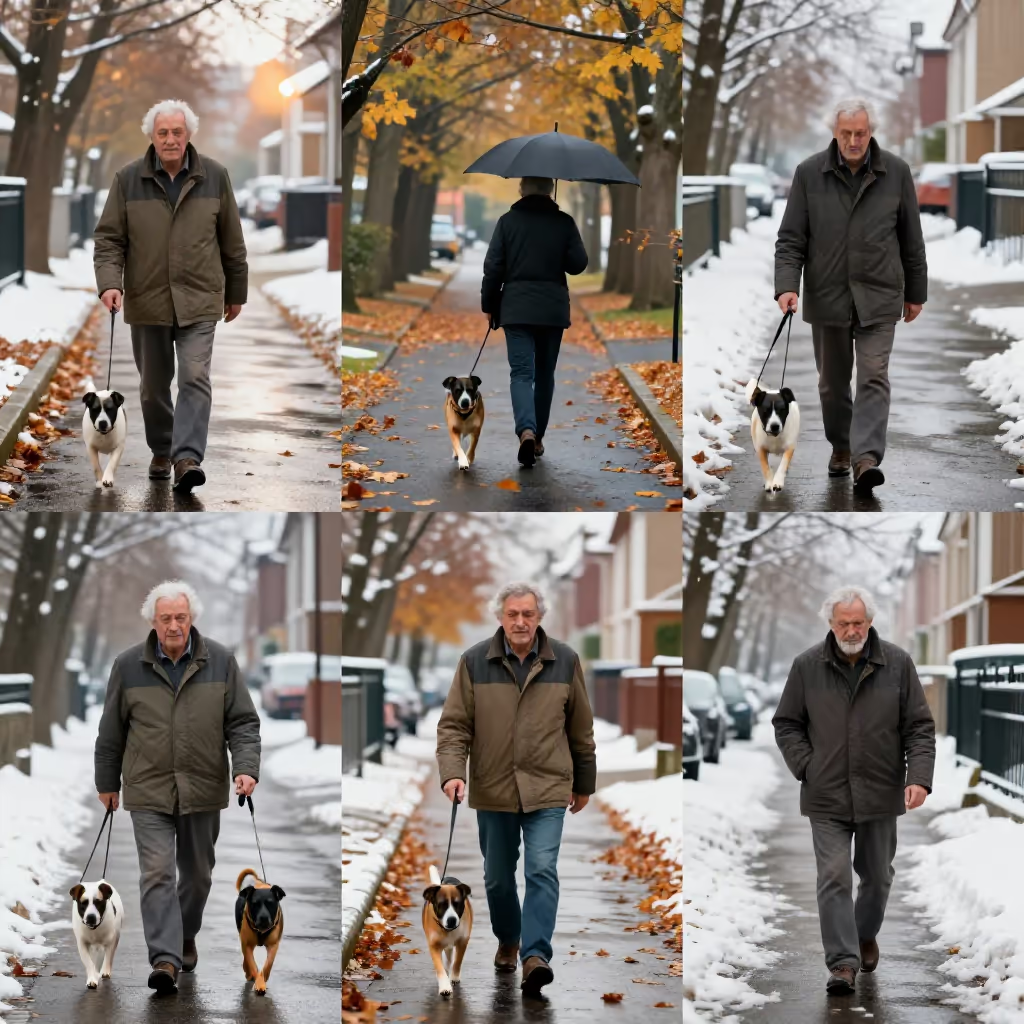
summer and winter
A fixed expression that means 'all year round' or 'in every season'.
Diese Wanderroute ist Sommer wie Winter sehr beliebt.
This hiking route is very popular summer and winter.

summer
A poetic or figurative term for the mature, advanced phase of human life.
Im Sommer ihres Lebens blickte die Künstlerin auf ein reiches Schaffen zurück.
In the summer of her life, the artist looked back on a rich body of work.
If you want to express that something happens during this season, use the preposition 'in' with the dative: 'im Sommer' (in summer).
Im Sommer gehen wir oft im See schwimmen.
In summer, we often go swimming in the lake.
The adjective 'sommerlich' (summery) is derived from the noun 'der Sommer' (summer). It describes things that are typical of summer, such as the weather or clothing.
Heute herrscht ein schönes, sommerliches Wetter.
Today we have lovely, summery weather.
The phrase 'Sommer wie Winter' (summer and winter) is a fixed expression. It means 'all year round' or 'no matter what season it is'.
Das Hotel ist Sommer wie Winter geöffnet.
The hotel is open summer and winter.
This meaning is metaphorical and belongs to a poetic or elevated style. It is used to describe the prime or high point in a person's life.
Im Sommer seines Schaffens schuf der Komponist seine berühmtesten Werke.
In the summer of his creative life, the composer created his most famous works.
daylight saving time / summertime
Sommer and Sommerzeit can both refer to the warm season. In everyday German, people usually say im Sommer. Zur Sommerzeit refers to the same period but sounds more stylistically marked and is used more often in descriptive or ceremonial texts.
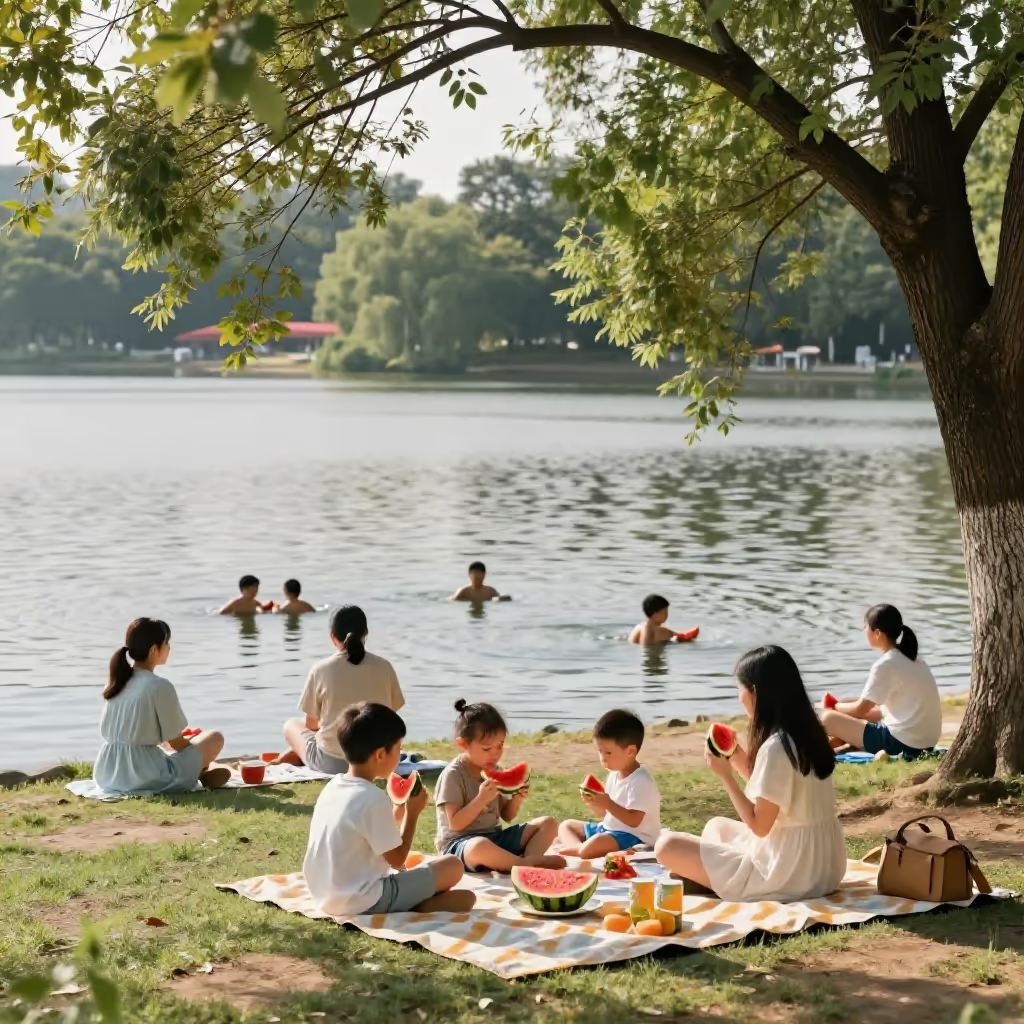
Im Sommer sitzen viele Gäste draußen im Garten.
In summer, many guests sit outside in the garden.
Zur Sommerzeit sitzen viele Gäste draußen im Garten.
In summertime, many guests sit outside in the garden.