

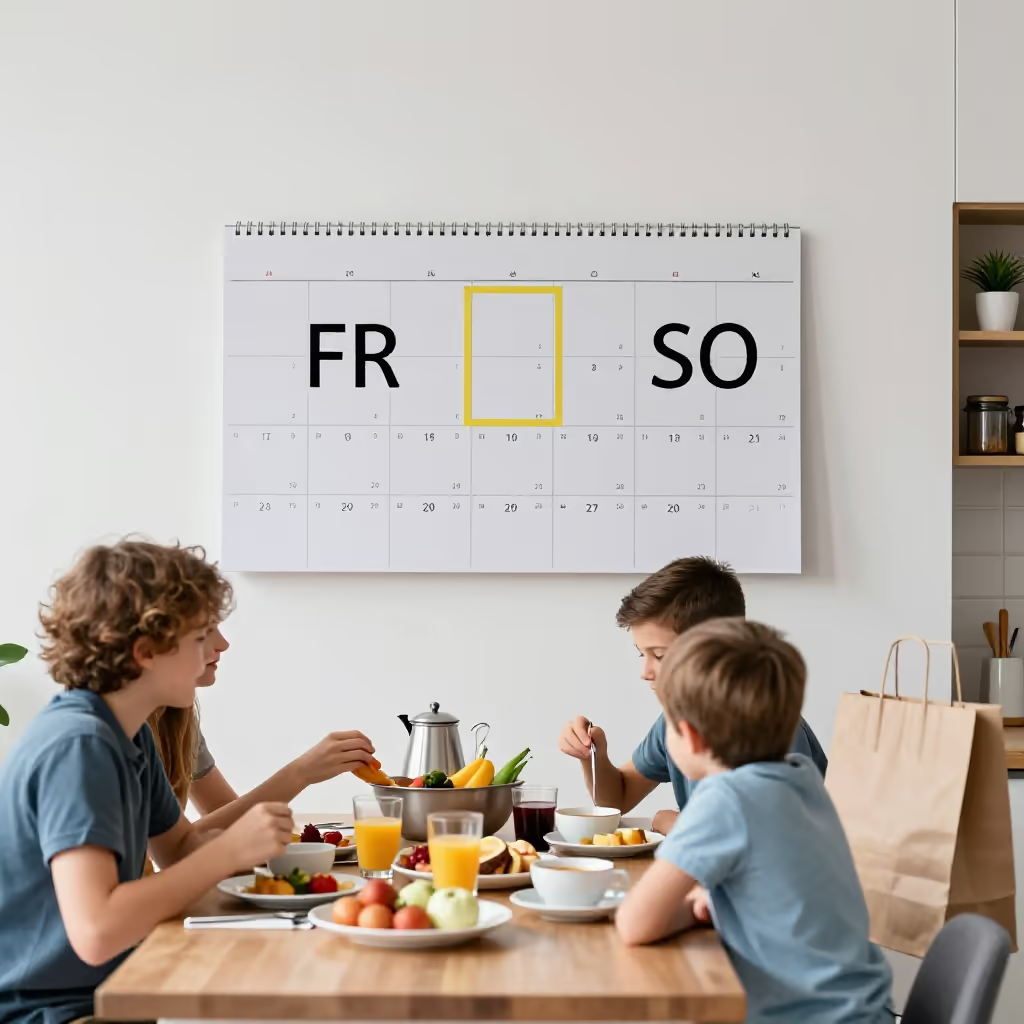
The sixth day of the week, between Friday and Sunday. This term is used mainly in northern and eastern Germany instead of 'Samstag' (Saturday).
example
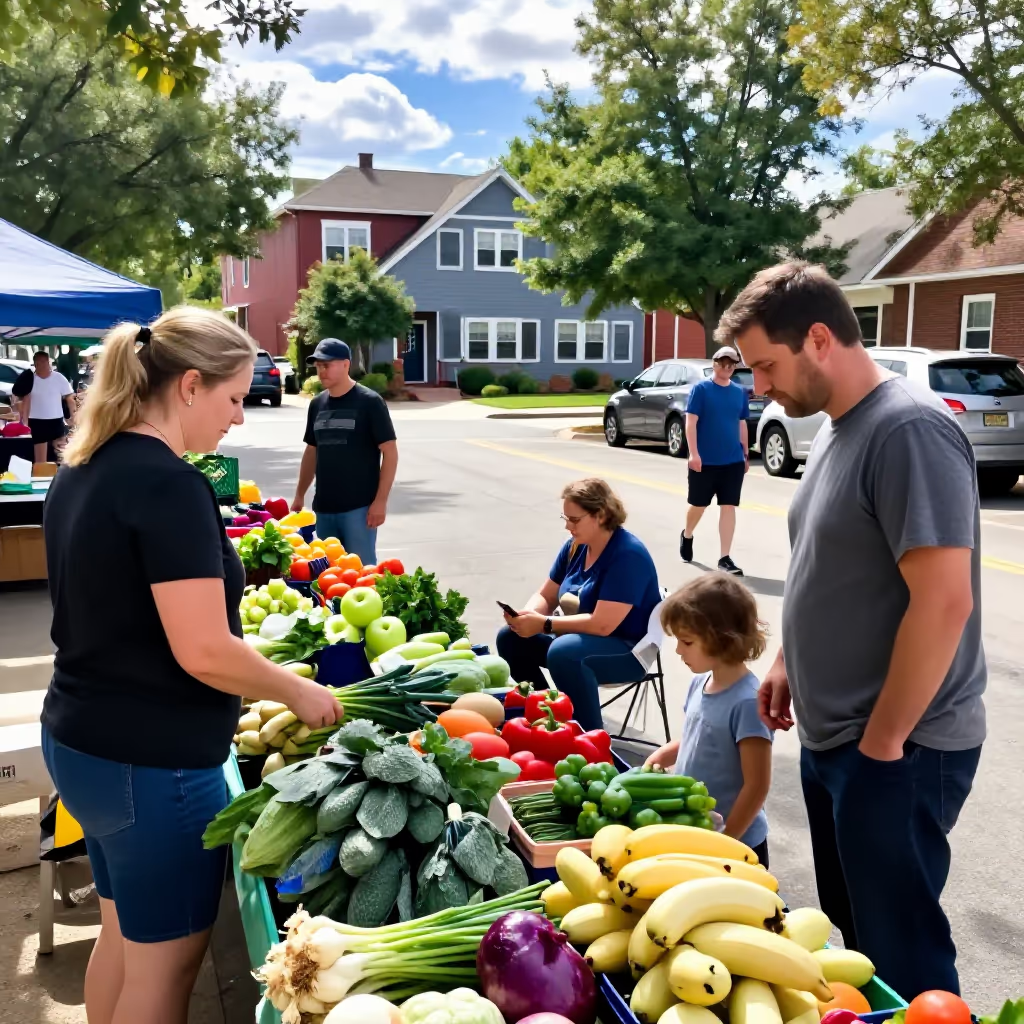
Am Sonnabend fahren wir meistens zum Einkaufen in die Stadt.
On Saturday, we usually go into town to do the shopping.
Usage tips
Word composition
The word 'Sonnabend' (Saturday) is made up of 'Sonne' (sun) and 'Abend' (evening). It originally referred to the evening before 'Sonntag' (Sunday, the day of the sun).
EXAMPLE
Wir treffen uns am Sonnabend vor dem Feiertag.
We are meeting on Saturday before the holiday.
Regional use
'Sonnabend' is a regional variant of 'Samstag' (Saturday). You hear and read this word mainly in northern and eastern Germany.
EXAMPLE
In Hamburg sagt man eher „Sonnabend“, in München eher „Samstag“.
In Hamburg people are more likely to say 'Sonnabend', while in Munich they are more likely to say 'Samstag'.
Use with 'am'
As with all days of the week, you use the preposition 'am' when talking about a specific Saturday.
EXAMPLE
Am Sonnabend habe ich leider keine Zeit.
On Saturday I unfortunately don't have time.
Compare with
confusable
Sonnabend vs Sonntag
Sunday
'der Sonntag' and 'der Sonnabend' sound similar, but they refer to two different days. 'der Sonntag' is the seventh day of the week, the day after Saturday. 'der Sonnabend' is another word for 'Samstag' (Saturday) and is used especially in northern and eastern Germany. The mix-up happens easily because both words begin with 'Sonn-'. Remember: 'Sonnabend' comes before Sunday.
Sonnabend
Am Sonnabend kaufen wir ein, weil die Läden am Sonntag geschlossen sind.
On Saturday, we do the shopping because the stores are closed on Sunday.
Sonntag
Am Sonntag schläft sie länger und frühstückt mit ihrer Familie.
On Sunday, she sleeps in and has breakfast with her family.