

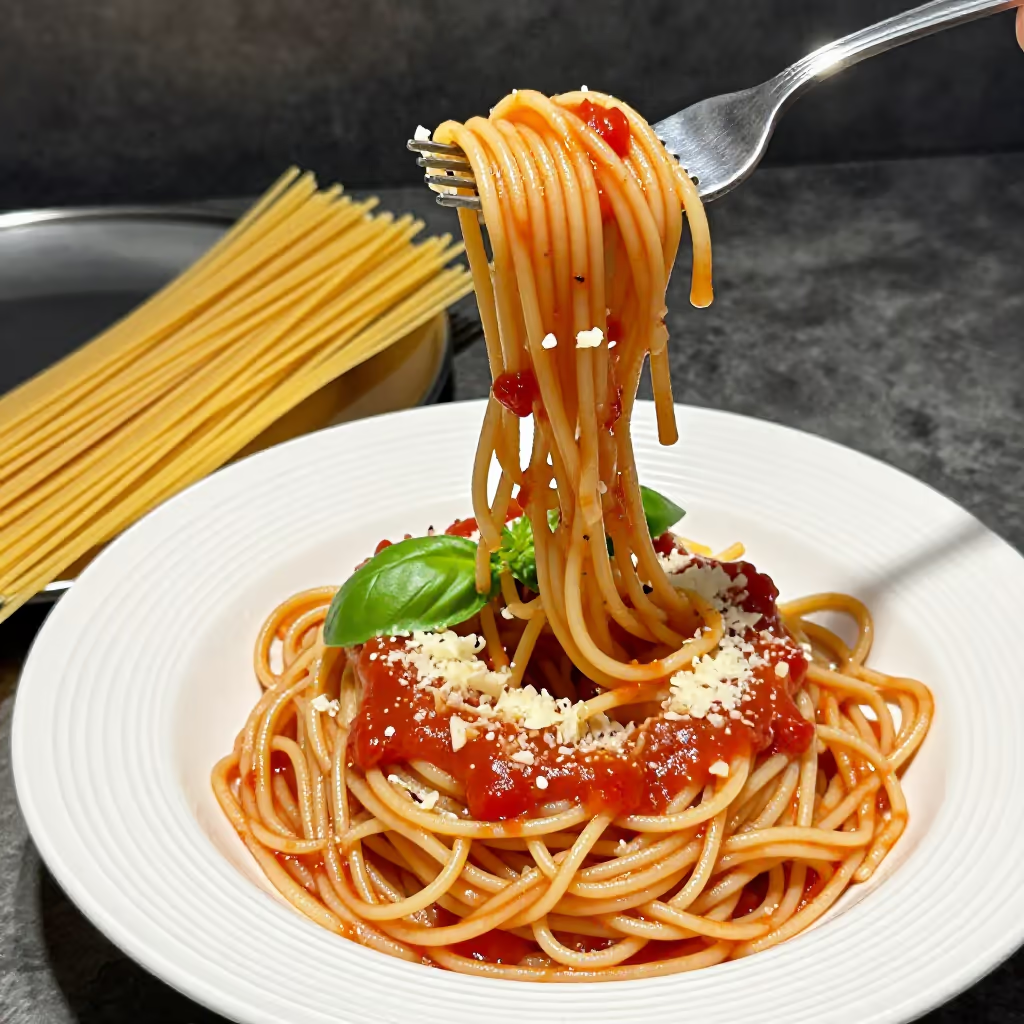
A type of long, thin, string-shaped pasta made from durum wheat semolina. The term refers both to the pasta itself and to the dish prepared from it.
example
Zum Abendessen gibt es heute Spaghetti mit Tomatensoße.
For dinner today, we're having spaghetti with tomato sauce.
Usage tips
Always plural
The word 'Spaghetti' is a plural form from Italian. Therefore, the verb in the sentence must always be plural too.
EXAMPLE
Die Spaghetti sind fertig, wir können essen!
The spaghetti is ready; we can eat!
No singular
Although there is a singular form ('der Spaghetto'), it is almost never used in German. People always speak of 'den Spaghetti' (the spaghetti), even if they mean just a single noodle.
EXAMPLE
Oh, du hast eine Spaghetti auf deinem Pullover.
Oh, you have a piece of spaghetti on your sweater.
Typical collocations
Common verbs used in connection with 'Spaghetti' are 'kochen' (to cook) and 'essen' (to eat). The type of sauce is often mentioned directly as well.
EXAMPLE
Ich koche heute Abend Spaghetti für meine Freunde.
I'm cooking spaghetti for my friends tonight.
Compare with
confusable
Spaghetti vs Nudel
noodle
'die Nudel' and 'die Spaghetti' both belong to the topic of food and can therefore be easy to confuse. 'Nudel' is the general umbrella term for many shapes of pasta, for example short, wide, or filled noodles. 'Spaghetti' are a specific type: long, thin noodles. So you can say: spaghetti are noodles, but not every noodle is spaghetti. If the shape is important, 'Spaghetti' is more precise; if the type does not matter, 'Nudeln' is enough.
Spaghetti
Am Abend gibt es Spaghetti mit Tomatensoße und frischem Basilikum.
In the evening, we're having spaghetti with tomato sauce and fresh basil.
Nudel
Ich koche heute Nudeln mit Gemüse, weil die Kinder schnell essen müssen.
Today I'm cooking pasta with vegetables because the children need to eat quickly.