

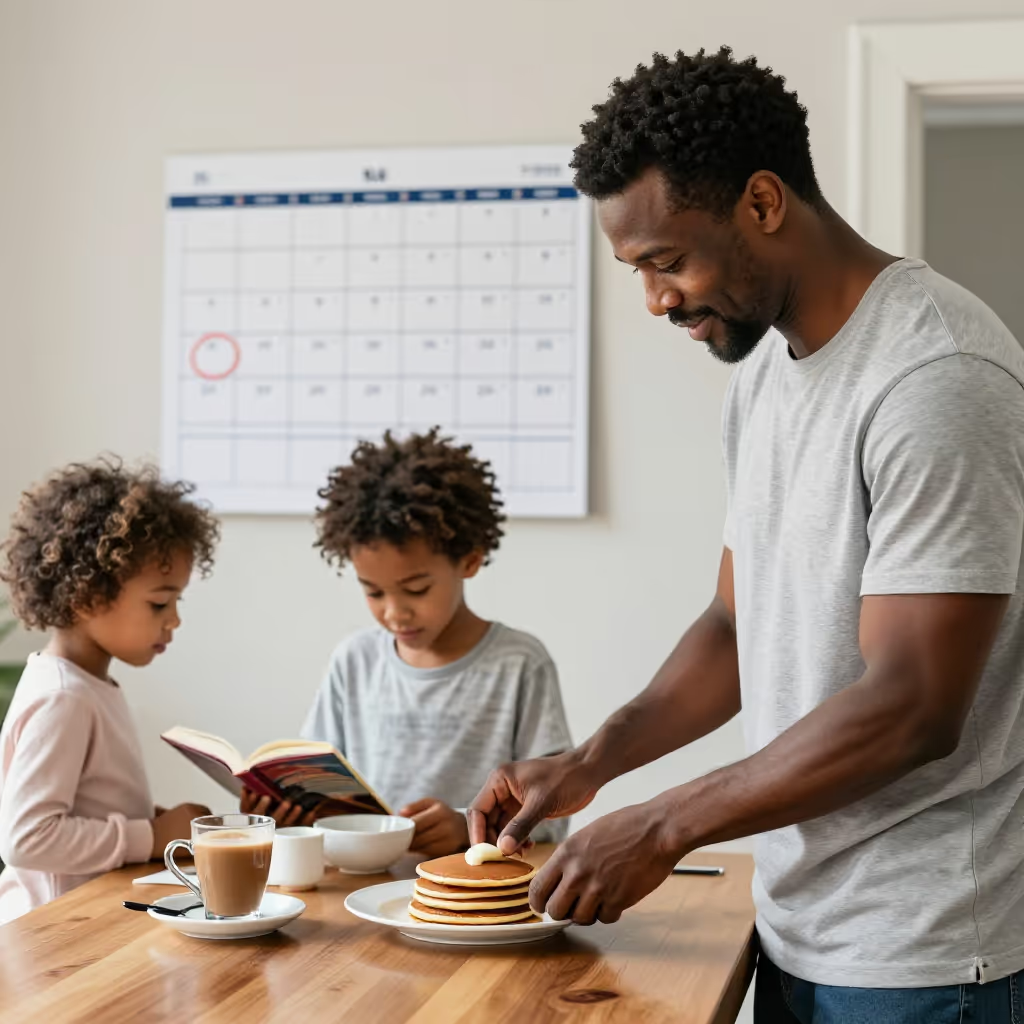
The seventh day of the week, which follows Saturday and is considered a day of rest in many cultures.
example
Am Sonntag machen wir meistens einen Ausflug mit der ganzen Familie.
On Sunday, we usually go on an outing with the whole family.
Usage tips
Compound word
The word 'Sonntag' (Sunday) is made up of 'Sonne' (sun) and 'Tag' (day). It literally means 'day of the sun', just like in English.
EXAMPLE
Der Sonntag ist für viele der schönste Tag der Woche.
Sunday is the nicest day of the week for many people.
am Sonntag vs. sonntags
Use 'am Sonntag' (on Sunday) when you are talking about a specific Sunday. Use the adverb 'sonntags' (written lowercase) to describe a regular action that happens every Sunday.
EXAMPLE
Am Sonntag gehen wir ins Kino.
On Sunday, we're going to the movies.
Time expression without a preposition
In combination with 'jeden' (every), 'diesen' (this), 'nächsten' (next), or 'letzten' (last), 'Sonntag' (Sunday) is used without a preposition. Don't say 'an diesem Sonntag', but just 'diesen Sonntag' (this Sunday).
EXAMPLE
Nächsten Sonntag besuchen wir meine Großeltern.
Next Sunday, we're visiting my grandparents.
Compare with
confusable
Sonntag vs Samstag
Saturday
'der Sonntag' and 'der Samstag' are both days on the weekend, so they are easy to mix up. 'Samstag' comes after Friday and before Sunday. 'Sonntag' comes after Saturday and, for many families or businesses, is more of a day of rest. The words are not synonyms: an appointment on Saturday is one day earlier than an appointment on Sunday. So pay special attention to the order: Friday, Saturday, Sunday.
Sonntag
Am Sonntag bleibt das Geschäft geschlossen, deshalb kaufen wir schon vorher ein.
The shop is closed on Sunday, so we do our shopping beforehand.
Samstag
Sie hat am Samstag für ihre Freunde gekocht und den ganzen Abend Musik gehört.
She cooked for her friends on Saturday and listened to music all evening.