

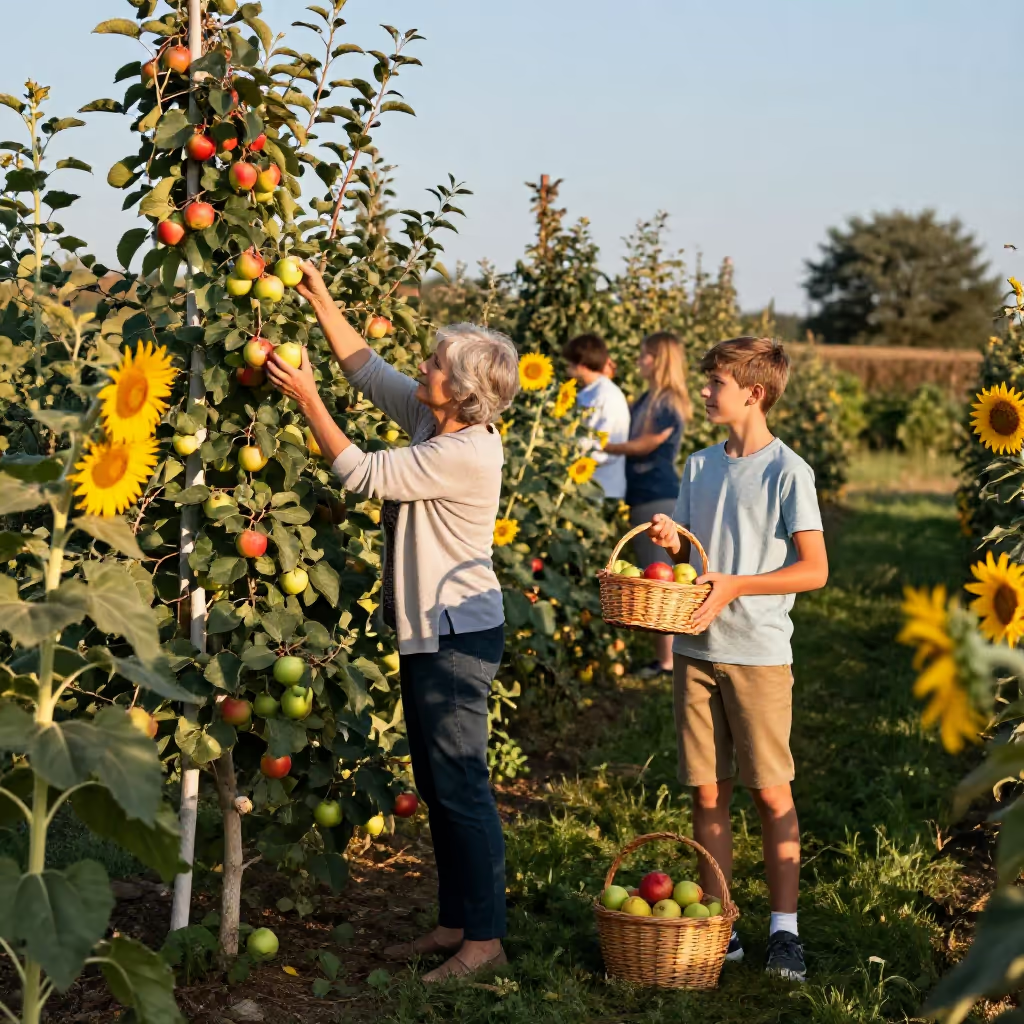
The final phase of summer, typically the period from late August to mid-September, often characterized by warm days and already cooler nights.
example
Das goldene Licht im Spätsommer ist besonders schön.
The golden light in late summer is especially beautiful.
Usage tips
Word composition
The word is a simple compound of the adjective 'spät' (late) and the noun 'der Sommer' (summer). So it literally describes 'late summer'.
EXAMPLE
Der Spätsommer ist meine liebste Jahreszeit.
Late summer is my favorite season.
Word family
The pattern 'Spät-' + time expression is very productive in German. If you know this pattern, you will also understand words like 'der Spätwinter' (late winter), 'das Spätjahr' (late year/autumn), or 'der Spätnachmittag' (late afternoon).
EXAMPLE
Am Spätnachmittag trinken wir gerne einen Kaffee.
In the late afternoon, we like to have a coffee.
Typical preposition
When referring to this period of time, German almost always uses the preposition 'in' with the dative. So the correct form is 'im Spätsommer' (in late summer).
EXAMPLE
Im Spätsommer reifen die Äpfel an den Bäumen.
In late summer, the apples ripen on the trees.
Compare with
confusable
Spätsommer vs Sommer
summer
'der Sommer' and 'der Spätsommer' both belong to the warm season. 'Sommer' means the whole season between spring and autumn. 'Spätsommer' means only the final part of summer, often from late August to mid-September. During this time, it can still be warm during the day, but the nights are already getting cooler. Learners may confuse the words because late summer is part of summer. If you mean the whole season, use 'Sommer'. If you mean the time at the end of summer, 'Spätsommer' is more precise.
Spätsommer
Im Spätsommer werden die Abende schon früher kühl.
In late summer, the evenings start getting cool earlier.
Sommer
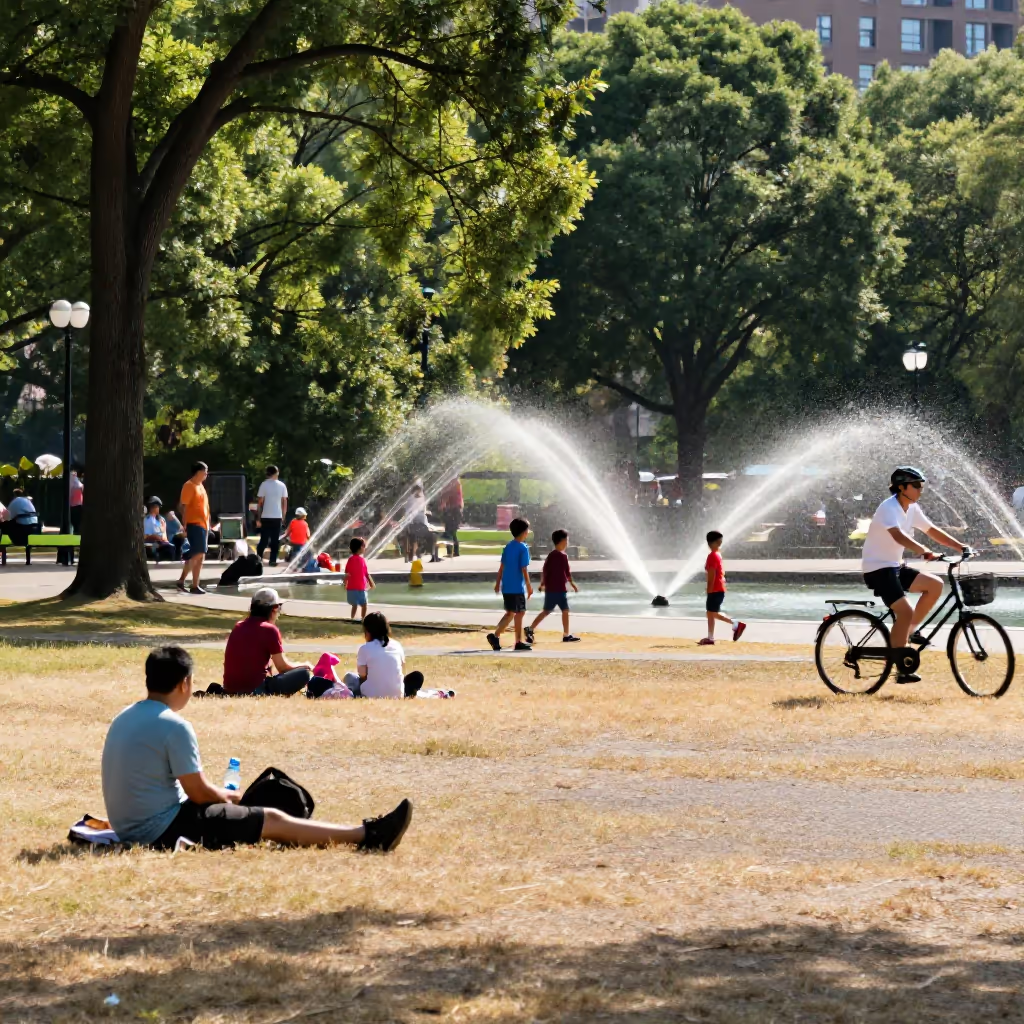
Im Sommer verbringen die Kinder viel Zeit draußen im Park.
In summer, the children spend a lot of time outside in the park.