


der Hochsommer
midsummer
The warmest part of summer, typically the months of July and August in the Northern Hemisphere.
Im Hochsommer fahren wir am liebsten ans Meer, um uns abzukühlen.
In midsummer, we prefer to go to the sea to cool off.
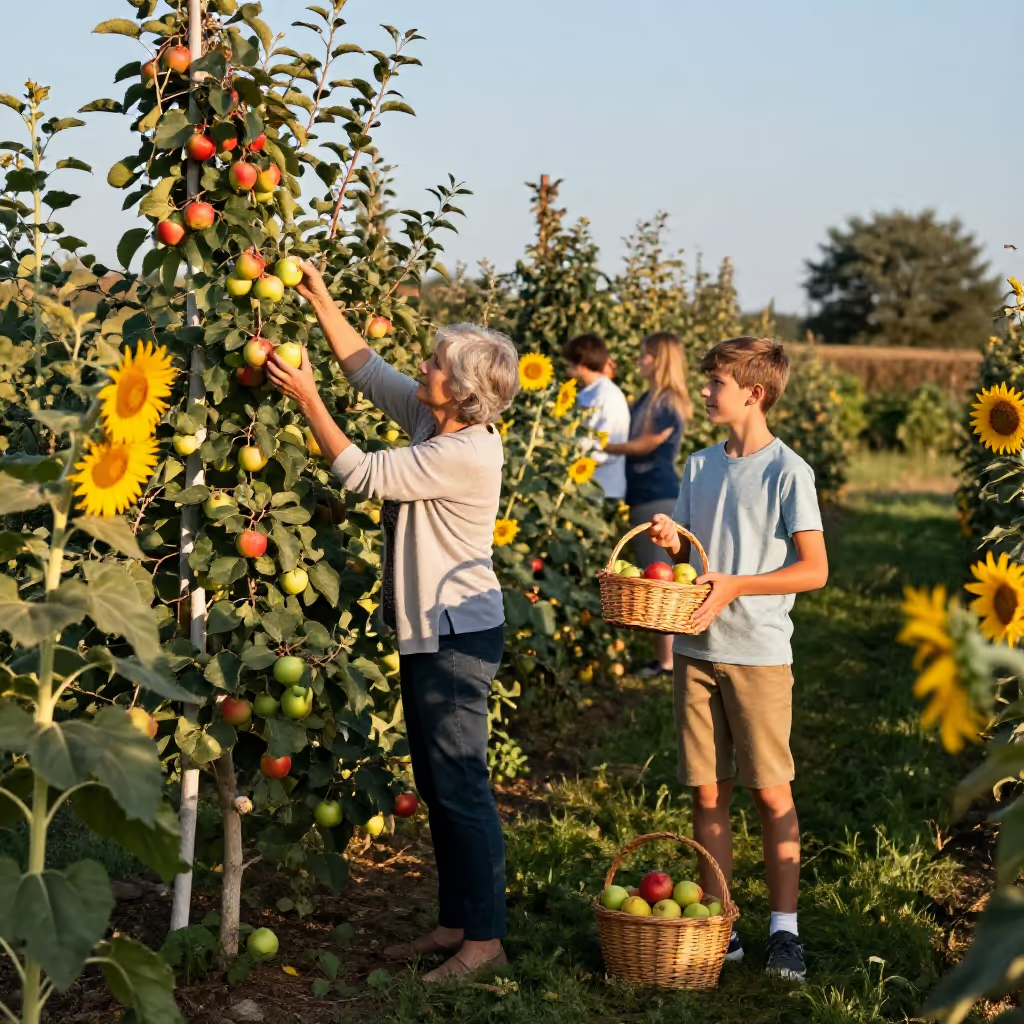
midsummer
Loading your saved state.
midsummer
The warmest part of summer, typically the months of July and August in the Northern Hemisphere.
Im Hochsommer fahren wir am liebsten ans Meer, um uns abzukühlen.
In midsummer, we prefer to go to the sea to cool off.

The word consists of 'hoch' (high) and 'Sommer' (summer). The prefix 'Hoch-' is used here to refer to the peak or most intense phase of a period of time, meaning the 'high point of summer'.
Die Zeit um den Juli gilt als der Hochsommer in Mitteleuropa.
The period around July is considered midsummer in Central Europe.
When referring to the time, you almost always use the preposition 'in' with the dative. So the correct phrase is 'im Hochsommer' (in midsummer).
Im Hochsommer sind die Tage am längsten.
In midsummer, the days are longest.
Midsummer is typically associated with intense heat, vacation time, holidays by the water, and ripe fruit and vegetables.
Die Bauern hoffen, dass es im Hochsommer genug Regen für die Ernte gibt.
The farmers hope that there will be enough rain in midsummer for the harvest.
summer
'der Sommer' and 'der Hochsommer' both refer to the warm season. 'Sommer' means the whole season between spring and autumn. 'Hochsommer' means only the hottest part of summer, usually July and August. The word is especially suitable when talking about intense heat, very warm days, or the typical holiday season. Learners may confuse the words because midsummer is part of summer. For the whole season, you say 'Sommer'; for the hottest phase, you say 'Hochsommer'.

Im Hochsommer bleibt die Wohnung auch nachts sehr warm.
In midsummer, the apartment stays very warm even at night.
Viele Schüler freuen sich schon auf den Sommer.
Many students are already looking forward to summer.