

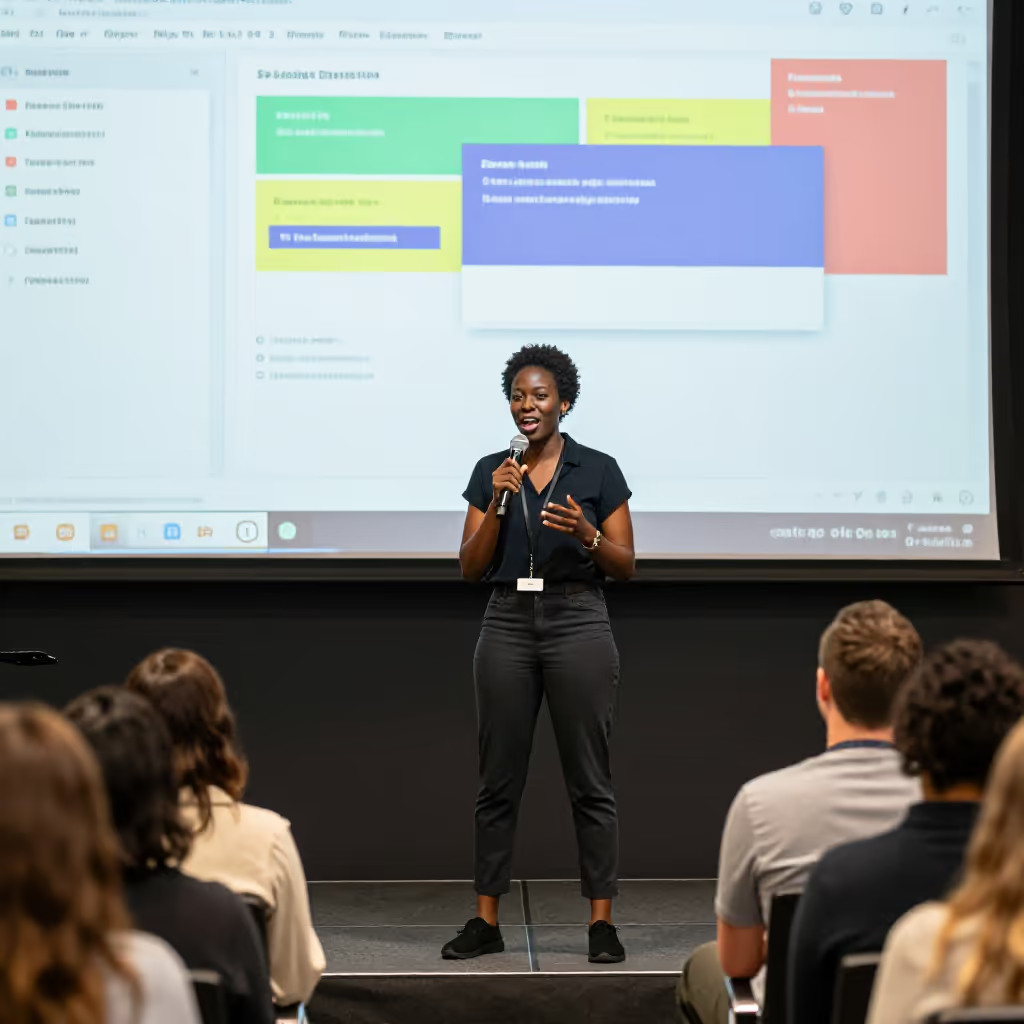
A word borrowed from English for a speech, address, or talk, often used in a modern, informal, or business context.
example
Auf der Konferenz hielt die Gründerin eine inspirierende Speech über die Zukunft der Technologie.
At the conference, the founder gave an inspiring speech about the future of technology.
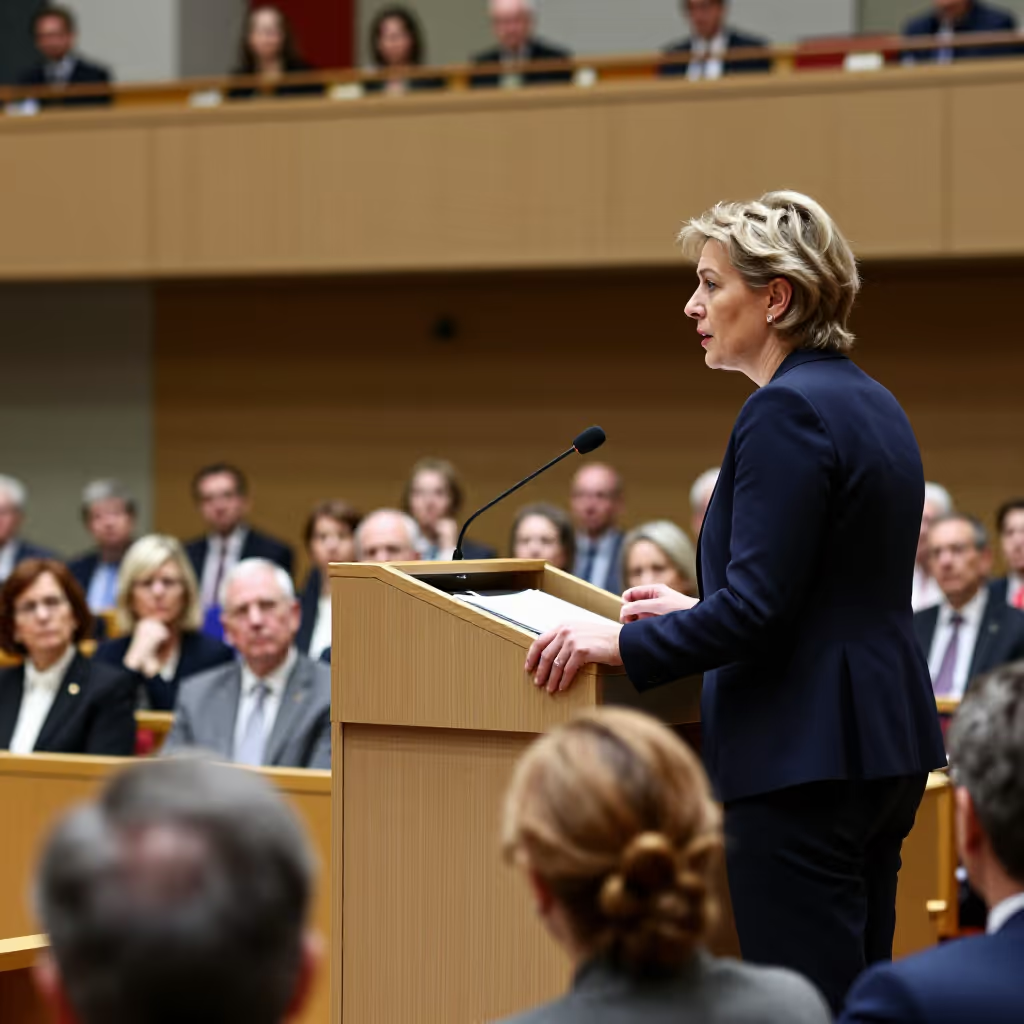
Usage tips
Register and style
'Speech' is an English loanword that is often used in modern, international, or business contexts. It sounds more dynamic and modern than traditional German words.
EXAMPLE
Der CEO hielt eine motivierende Speech vor allen Mitarbeitern.
The CEO gave a motivational speech in front of all the employees.
Typical combinations
The most common and important verb combination is 'eine Speech halten' (to give a speech). This is the fixed expression used to say that someone gives a speech.
EXAMPLE
Sie war sehr nervös, bevor sie ihre Speech halten musste.
She was very nervous before she had to give her speech.
Typical adjectives
'Speech' is often combined with adjectives that describe the effect or content, for example 'eine inspirierende Speech' (an inspiring speech), 'eine emotionale Speech' (an emotional speech), or 'eine kurze Speech' (a short speech).
EXAMPLE
Es war eine sehr emotionale Speech, die viele Zuhörer berührt hat.
It was a very emotional speech that moved many listeners.
Compare with
near_synonym · confusable
Speech vs Rede
speech / talk
'die Rede' and 'die Speech' both mean a speech or talk given in front of people. 'Rede' is the normal German word and fits in almost all situations, for example at a celebration, in politics, or at school. 'Speech' comes from English and is used more in modern, casual, or business contexts. It often sounds less traditional than 'Rede'. Learners may confuse the words because they are very similar in meaning. If you want to speak safely and neutrally, 'Rede' is usually the more natural choice.
Speech
Die Speech der Teamleiterin kam heute im Meeting sehr gut an.
The team leader's speech went over very well in today's meeting.