


die Speise
food
Food or something edible that serves as nourishment. The word is used especially in elevated or formal written language.
EXAMPLE
Wochenlang waren Brot und Wasser seine einzige Speise.
For weeks, bread and water were his only food.
food / dish
die Speise, die Speisen
Loading your saved state.
food
Food or something edible that serves as nourishment. The word is used especially in elevated or formal written language.
Wochenlang waren Brot und Wasser seine einzige Speise.
For weeks, bread and water were his only food.
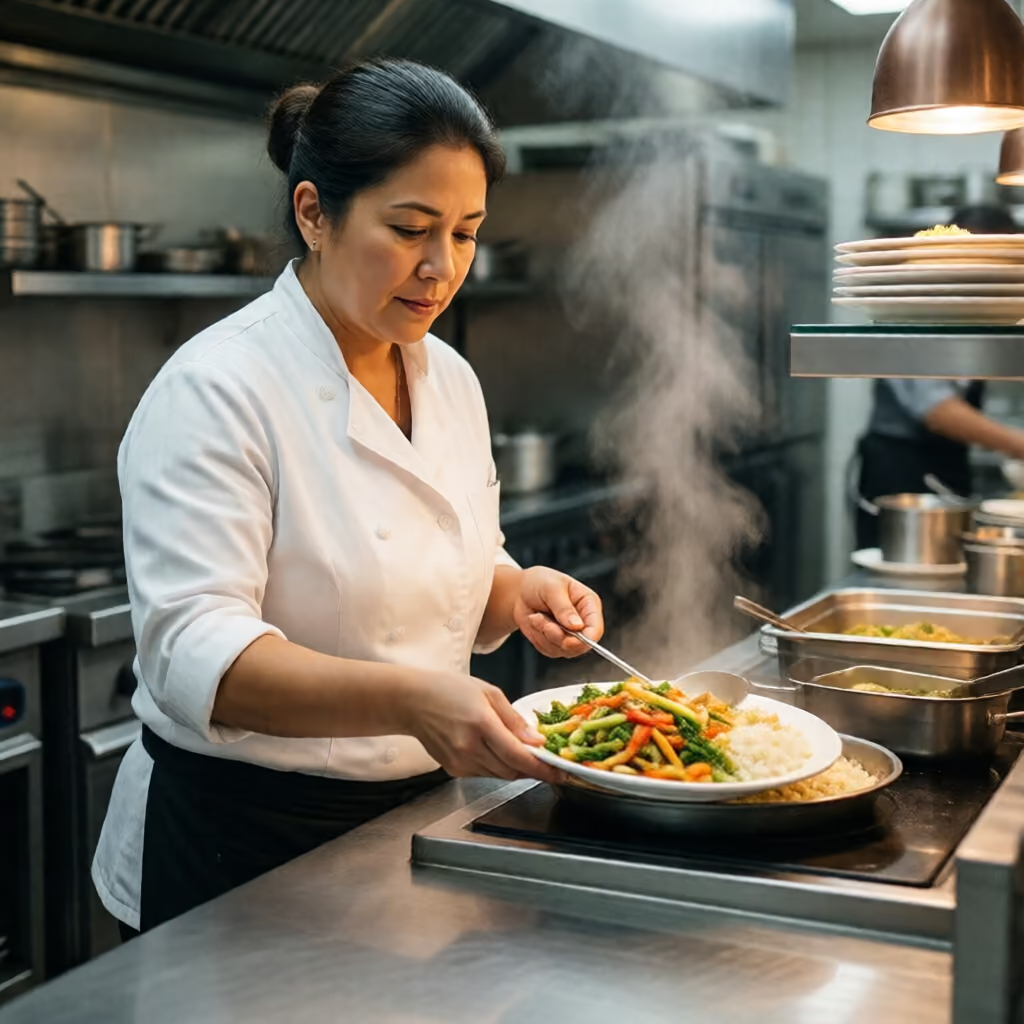
dish
A specific prepared dish or an individual course of a meal.
Als warme Speise gibt es heute Gemüse mit Reis.
Today's hot dish is vegetables with rice.
| gender | feminine die |
|---|---|
| plural | die Speisen |
| genitive | der Speise |
| singular | plural | |
|---|---|---|
| nominative | die Speise | die Speisen |
| accusative | die Speise | die Speisen |
| dative | der Speise | den Speisen |
| genitive | der Speise | der Speisen |
The article changes with the case; it is shown in colour.
In everyday life, the word is especially common in the plural “Speisen” (dishes), for example in the phrase “Speisen und Getränke” (food and drinks) on menus, bills, and notices.
Speisen und Getränke sind im Eintrittspreis enthalten.
Food and drinks are included in the admission price.
In the elevated sense of “nourishment,” “Speise” is often used in the set phrase “Speise und Trank” (food and drink). It refers to food and drink in general, especially in festive or literary texts.
Für Speise und Trank der Gäste war reichlich gesorgt.
There was plenty of food and drink for the guests.
For an individual dish or course, “Speise” is especially common in combinations such as “warme Speise” (hot dish), “kalte Speise” (cold dish), “eine Speise auswählen” (to choose a dish), and “eine Speise servieren” (to serve a dish).
Die Gäste konnten aus mehreren warmen Speisen auswählen.
The guests could choose from several hot dishes.