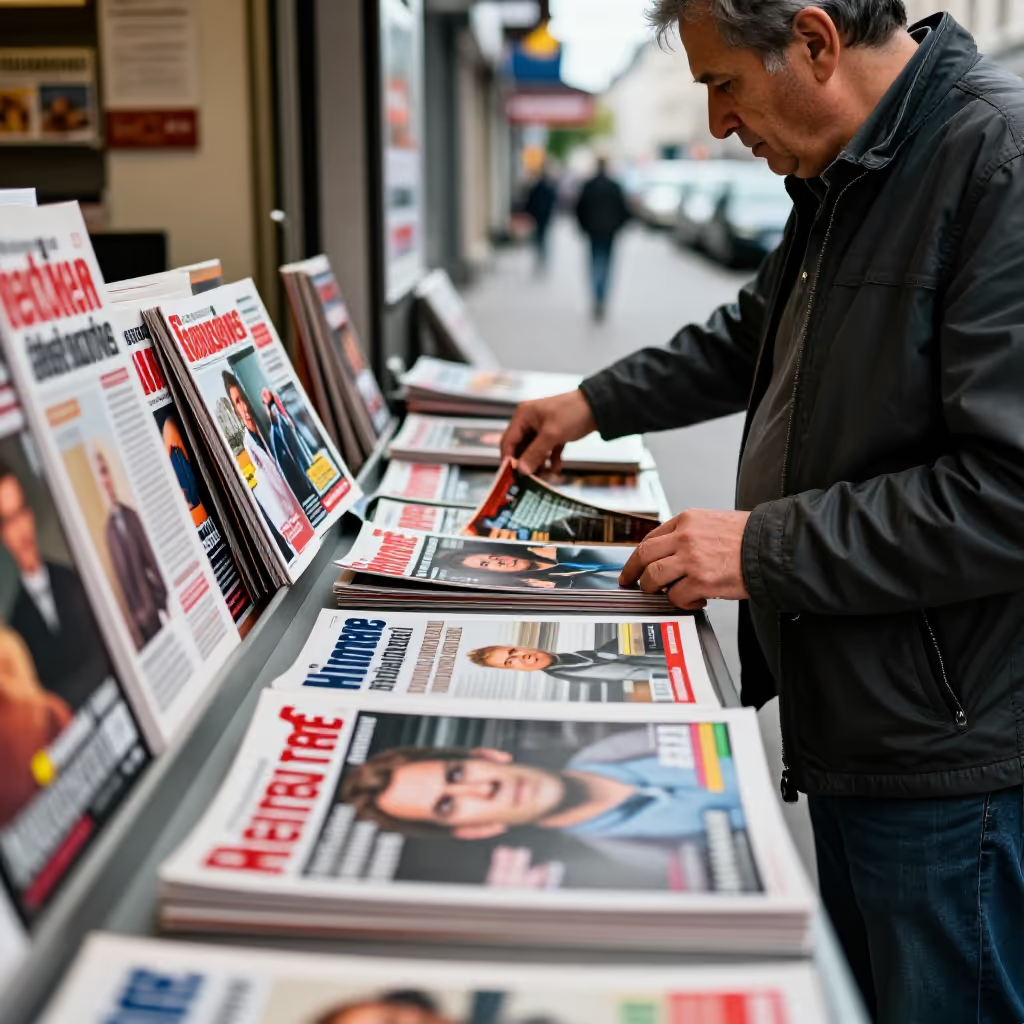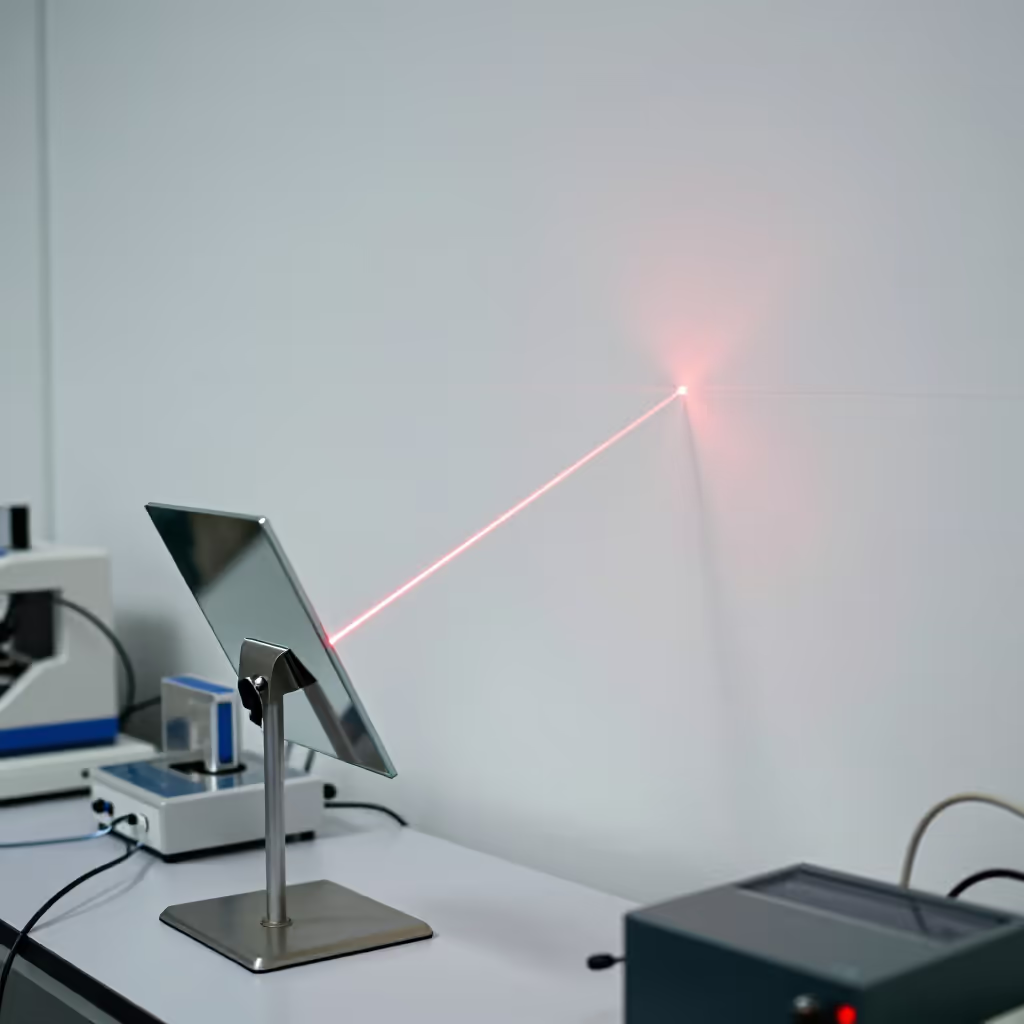
A smooth, polished surface, usually made of glass with a metal layer, that reflects light and shows an image of what is in front of it.
example
Bevor sie das Haus verlässt, schaut sie noch einmal in den Spiegel.
Before she leaves the house, she looks in the mirror one more time.

Usage tips
Word family
The noun 'der Spiegel' (mirror) is the basis for the verb 'spiegeln' (to reflect/mirror) and the reflexive verb 'sich spiegeln' (to be reflected). This connection helps you recognize the core idea of reflection in different contexts.
EXAMPLE
Die glatte Wasseroberfläche spiegelt die Wolken wider.
The smooth surface of the water reflects the clouds.
Preposition and case
When using it with 'in', the case is important. An action or direction is expressed with the accusative ('in den Spiegel' - into/in the mirror), while a state or location requires the dative ('im Spiegel' - in the mirror).
EXAMPLE
Sie blickt prüfend in den Spiegel.
She looks critically in the mirror.
Context clues
The context reveals the meaning: if it is about appearance, it is the glass mirror. If water is being discussed, it is the surface ('Wasserspiegel' - water surface/level). Verbs like 'lesen' (to read) point to the news magazine.
EXAMPLE
Kannst du mal in den Rückspiegel schauen?
Can you look in the rearview mirror for a moment?
Typical verbs
Common verbs used with the glass mirror are 'in den Spiegel schauen' (to look in the mirror), 'sich im Spiegel betrachten' (to look at oneself in the mirror), and 'in den Spiegel blicken' (to gaze/look into the mirror).
EXAMPLE
Er betrachtet sich lange im Spiegel, bevor er geht.
He looks at himself in the mirror for a long time before he leaves.
Metaphorical use
The expression 'der Spiegel von etwas sein' (to be the mirror/reflection of something) is often used metaphorically to express that something reflects a condition or quality. This use is typical of an elevated, rather formal style.
EXAMPLE
Die Bilanzen des Unternehmens sind ein Spiegel seiner wirtschaftlichen Gesundheit.
The company's balance sheets are a reflection of its economic health.
Compare with
near_synonym · confusable
Spiegel vs Ausdruck
expression / printout
'der Spiegel' and 'der Ausdruck' can both describe something that makes an inner or general situation visible. 'Spiegel' is used figuratively here: something shows a condition like a mirror, for example numbers or behavior. 'Ausdruck' means more that a feeling, will, or quality becomes visible or audible. The words can be confused because both have to do with 'showing'. A practical tip: a 'Spiegel' shows a condition from the outside or reflects it. An 'Ausdruck' comes more from inside someone or something and shows what is behind it.
Spiegel
Die vielen leeren Geschäfte sind ein Spiegel der schwierigen Lage in der Stadt.
The many empty shops are a reflection of the difficult situation in the city.
Ausdruck
Sein leises Lächeln war ein Ausdruck von Erleichterung.