

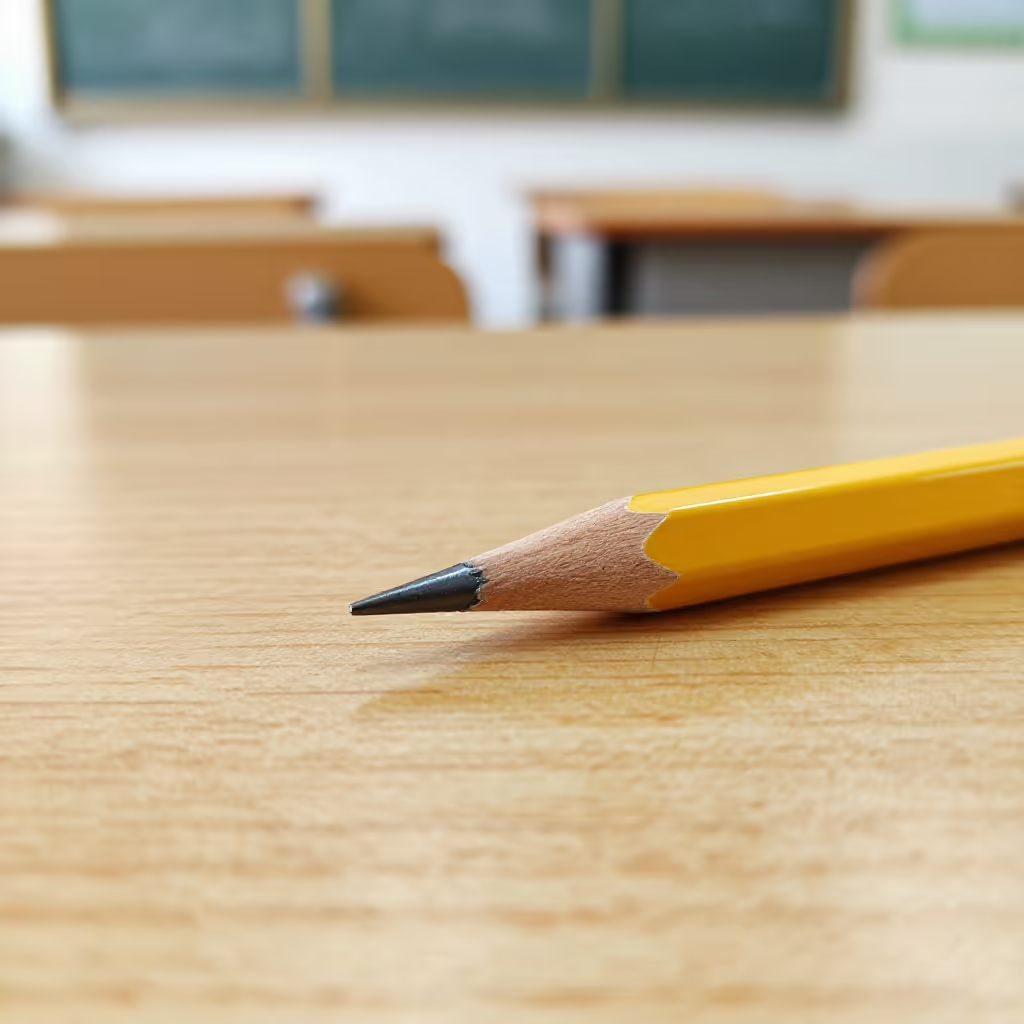
die Spitze
tip
The pointed, narrow end of an object.
EXAMPLE
Die Spitze des Bleistifts ist abgebrochen.
The tip of the pencil has broken off.
tip / top / lace
Loading your saved state.
tip
The pointed, narrow end of an object.
Die Spitze des Bleistifts ist abgebrochen.
The tip of the pencil has broken off.

top
The highest position, the leadership group, or the highest point in a hierarchy or ranking.
Nach langer harter Arbeit hat sie es an die Spitze des Unternehmens geschafft.
After long, hard work, she made it to the top of the company.
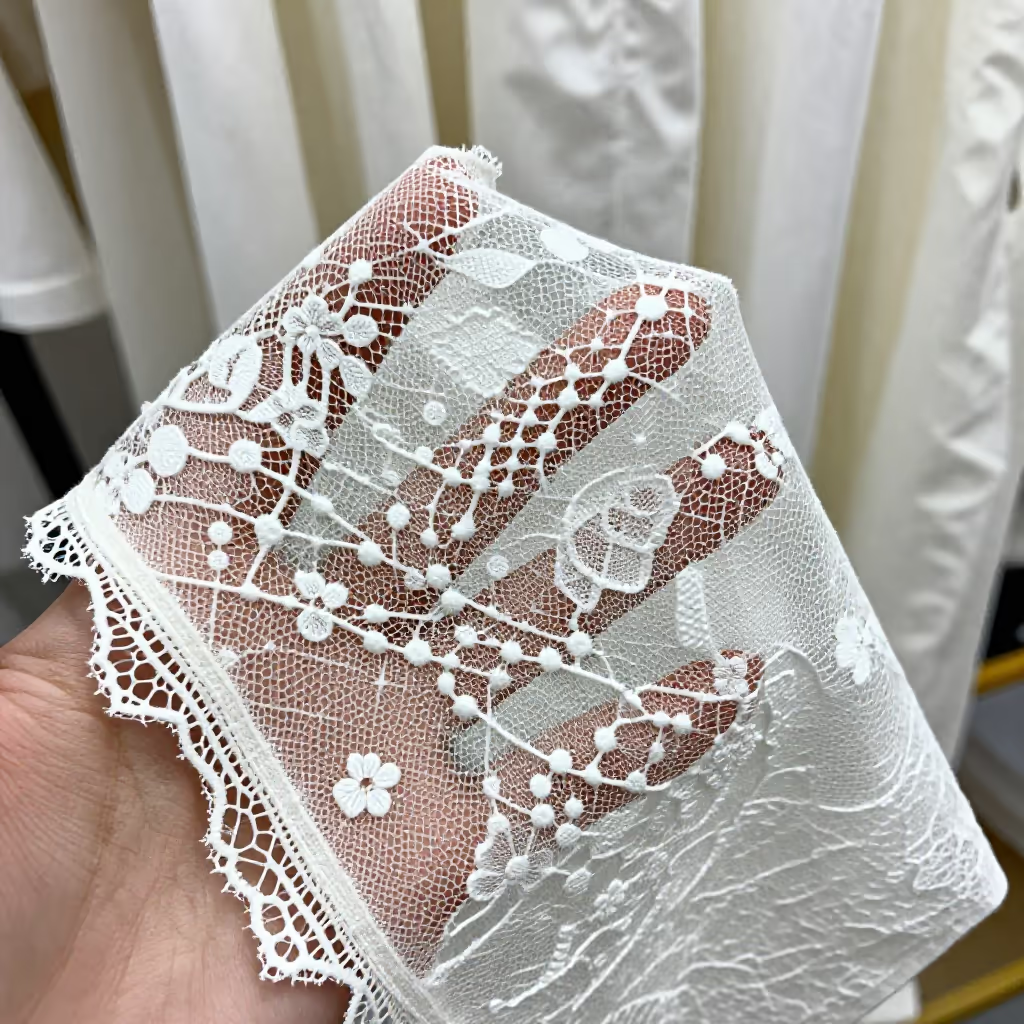
lace
A fine, openwork fabric often used as decoration for clothing or textiles.
Das Hochzeitskleid war mit handgefertigter Spitze verziert.
The wedding dress was decorated with handmade lace.
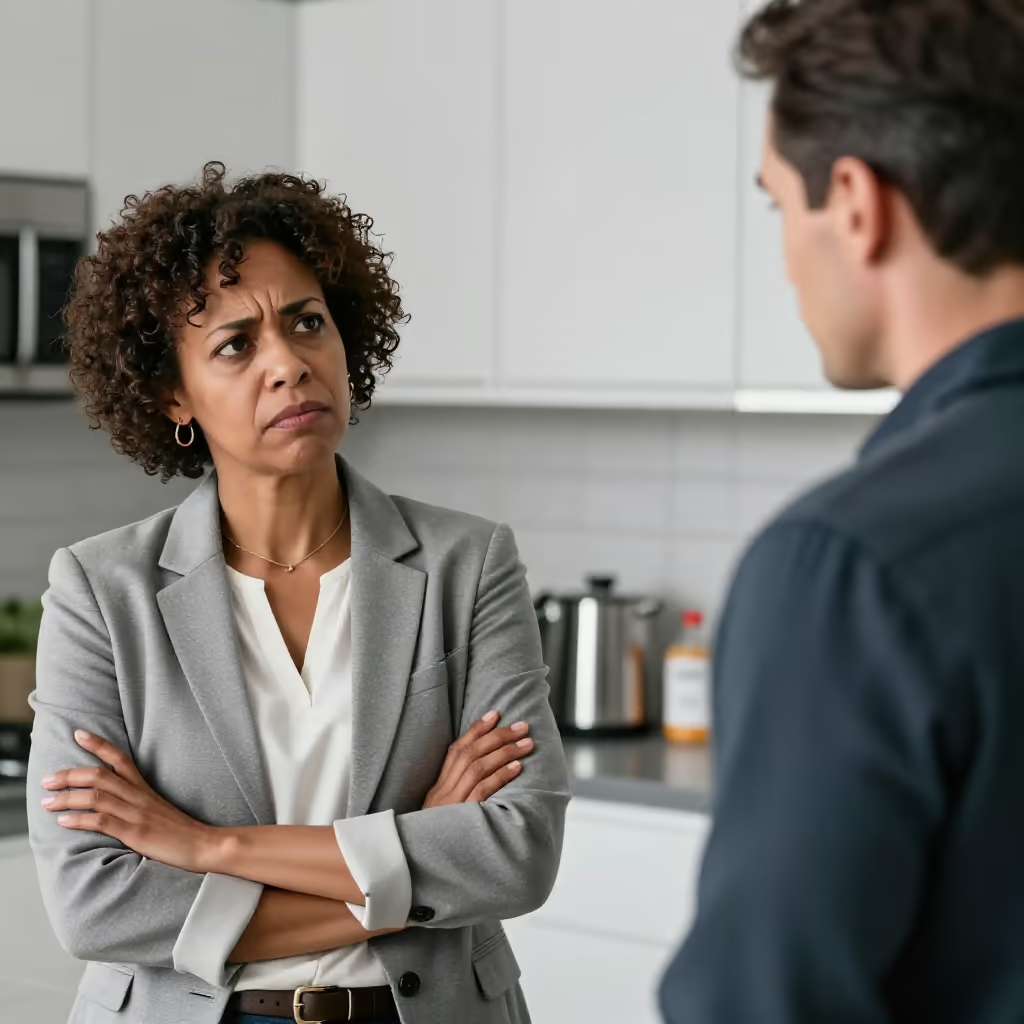
barb / dig
A brief, often ironic or critical remark aimed at someone or something.
Er konnte sich eine kleine Spitze gegen seinen Konkurrenten nicht verkneifen.
He couldn't resist a little dig at his competitor.

peak
The highest point of a mountain or hill; the summit.
Vom Tal aus konnten wir die schneebedeckte Spitze des Berges sehen.
From the valley, we could see the snow-covered peak of the mountain.
The noun 'die Spitze' (tip/top/lace) derives from the adjective 'spitz'. If you know that 'spitz' means 'sharp' or 'pointed', you can more easily understand most meanings of 'Spitze'.
Vorsicht, die Nadel ist sehr spitz!
Careful, the needle is very sharp!
For the meaning 'Führungsposition' (leadership position), the preposition 'an' is used. 'An der Spitze sein/stehen' describes the position, while 'an die Spitze kommen/gelangen' describes the movement to get there.
Sie steht seit fünf Jahren an der Spitze der Organisation.
She has been at the head of the organization for five years.
To say what something is the tip of, the genitive or the preposition 'von' is often used. This is very typical for the literal meaning.
Die Spitze des Eisbergs ist nur ein kleiner Teil des Ganzen.
The tip of the iceberg is only a small part of the whole.
The expression 'eine Spitze gegen jemanden' means a small critical or ironic remark. It is often combined with verbs like 'sich erlauben' (to allow oneself) or 'sich nicht verkneifen können' (to be unable to resist).
In seiner Rede erlaubte er sich eine kleine Spitze gegen die Opposition.
In his speech, he allowed himself a little dig at the opposition.
When 'Spitze' appears in the context of clothing, fabrics, or decoration, it always means the fine fabric. Typical verbs are 'verzieren' (to decorate) or 'einnähen' (to sew in).
Ihre Bluse hat einen Kragen aus feiner Spitze.
Her blouse has a collar made of fine lace.
summit / peak
Spitze and Gipfel can both refer to the highest point of a mountain. Gipfel is the usual, specific term for this and can refer to the upper part of a mountain as the destination of a climb. Spitze emphasizes the outermost point, which is often narrow or pointed.
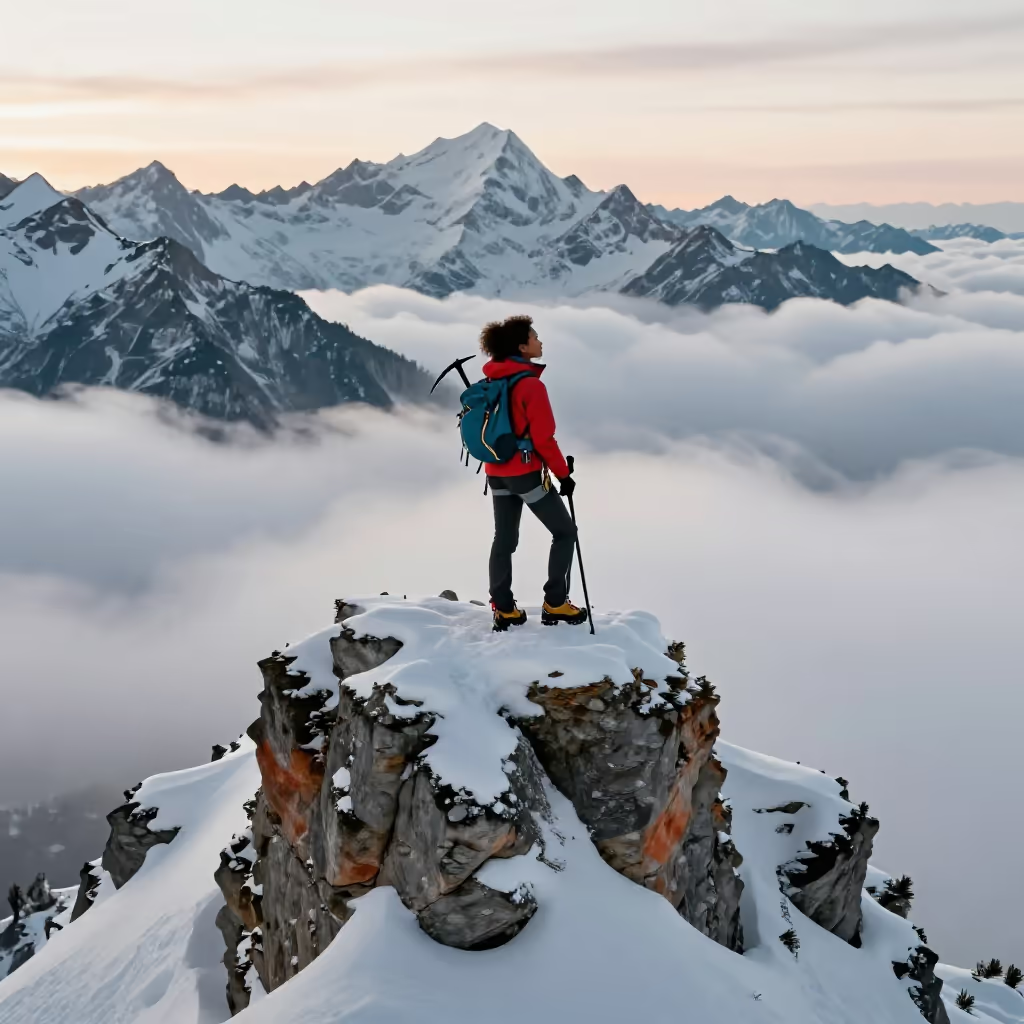
Die schmale Spitze des Berges ragt aus den Wolken.
The mountain's narrow peak rises above the clouds.
Nach fünf Stunden erreichen wir den Gipfel des Berges.
After five hours, we reach the summit of the mountain.