

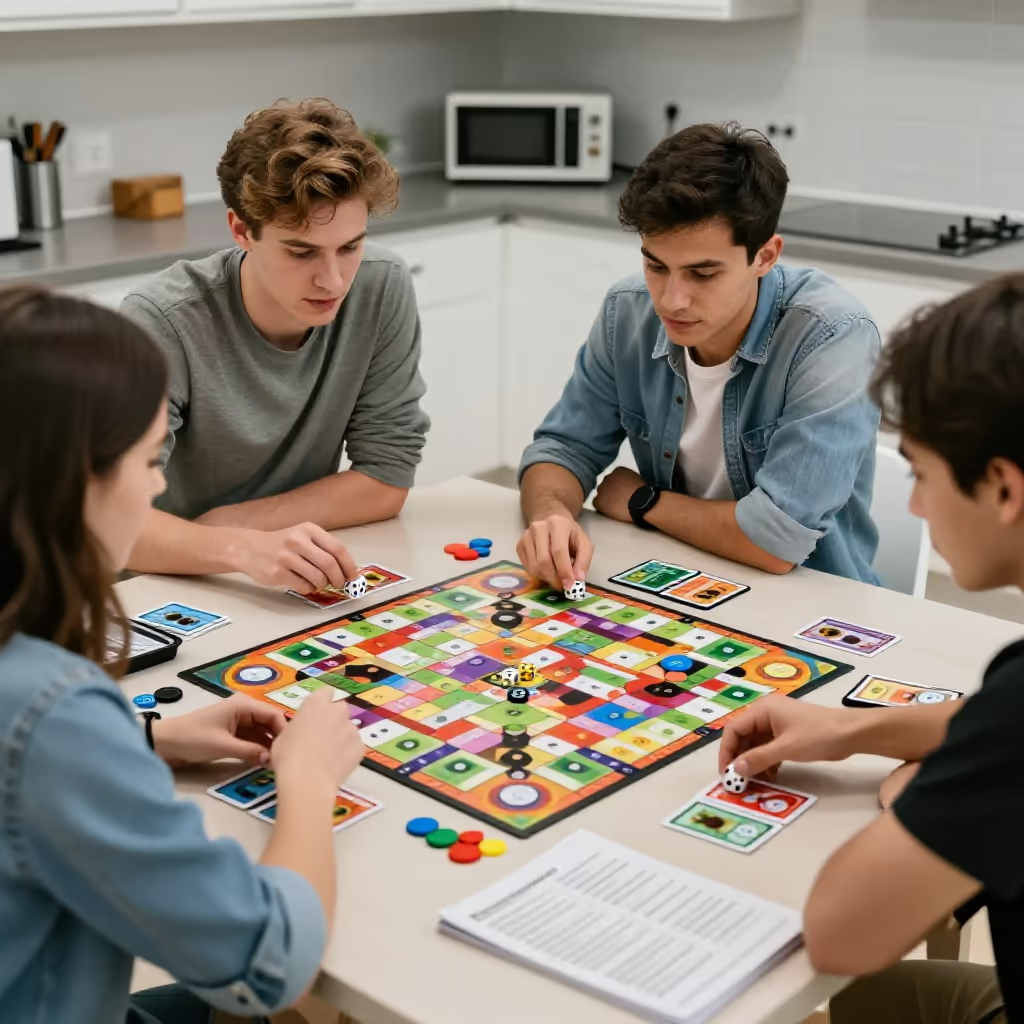
das Spiel
game
An activity with fixed rules that is done for fun, entertainment, or in competition.
EXAMPLE
Lass uns am Wochenende ein Brettspiel spielen.
Let's play a board game this weekend.
game / play
Loading your saved state.
game
An activity with fixed rules that is done for fun, entertainment, or in competition.
Lass uns am Wochenende ein Brettspiel spielen.
Let's play a board game this weekend.
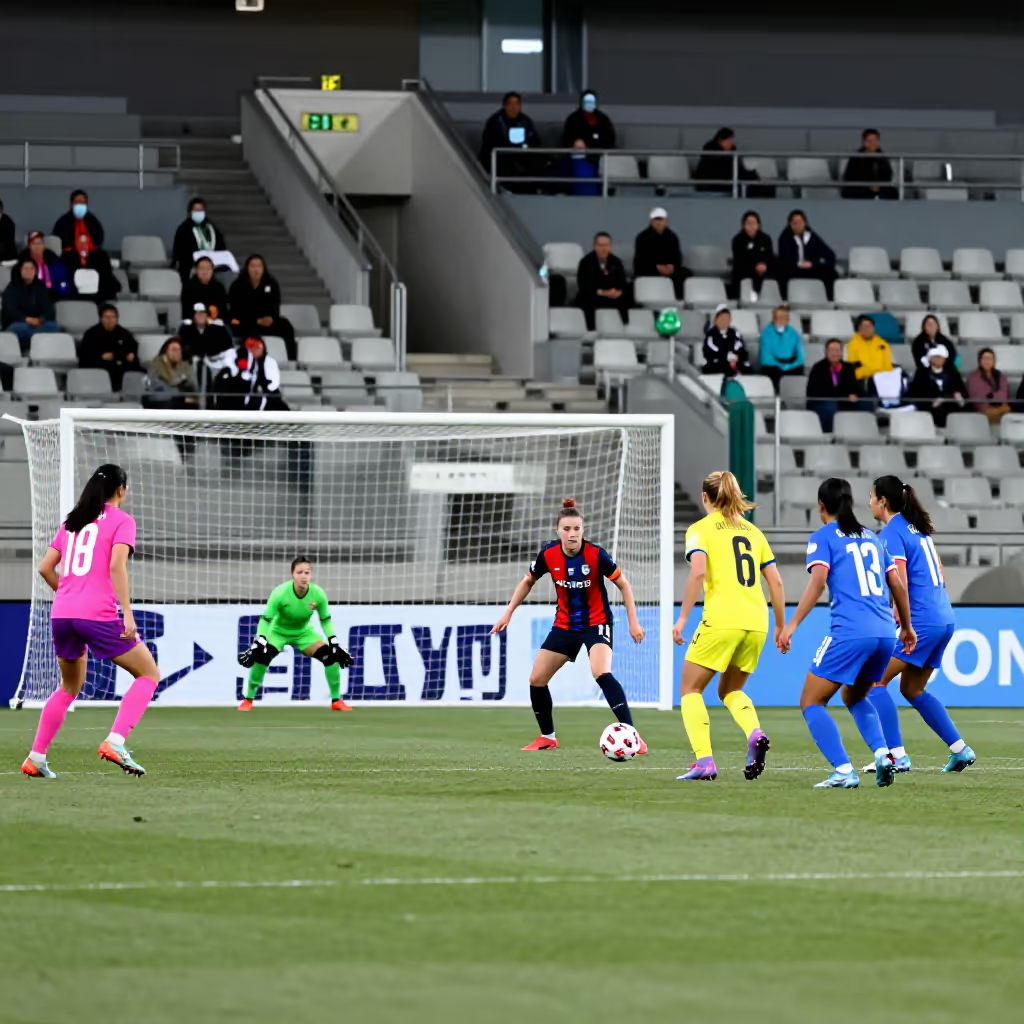
game / match
A single sporting contest between two people or teams.
Das Fußballspiel endete 2:2 unentschieden.
The soccer game ended in a 2–2 draw.
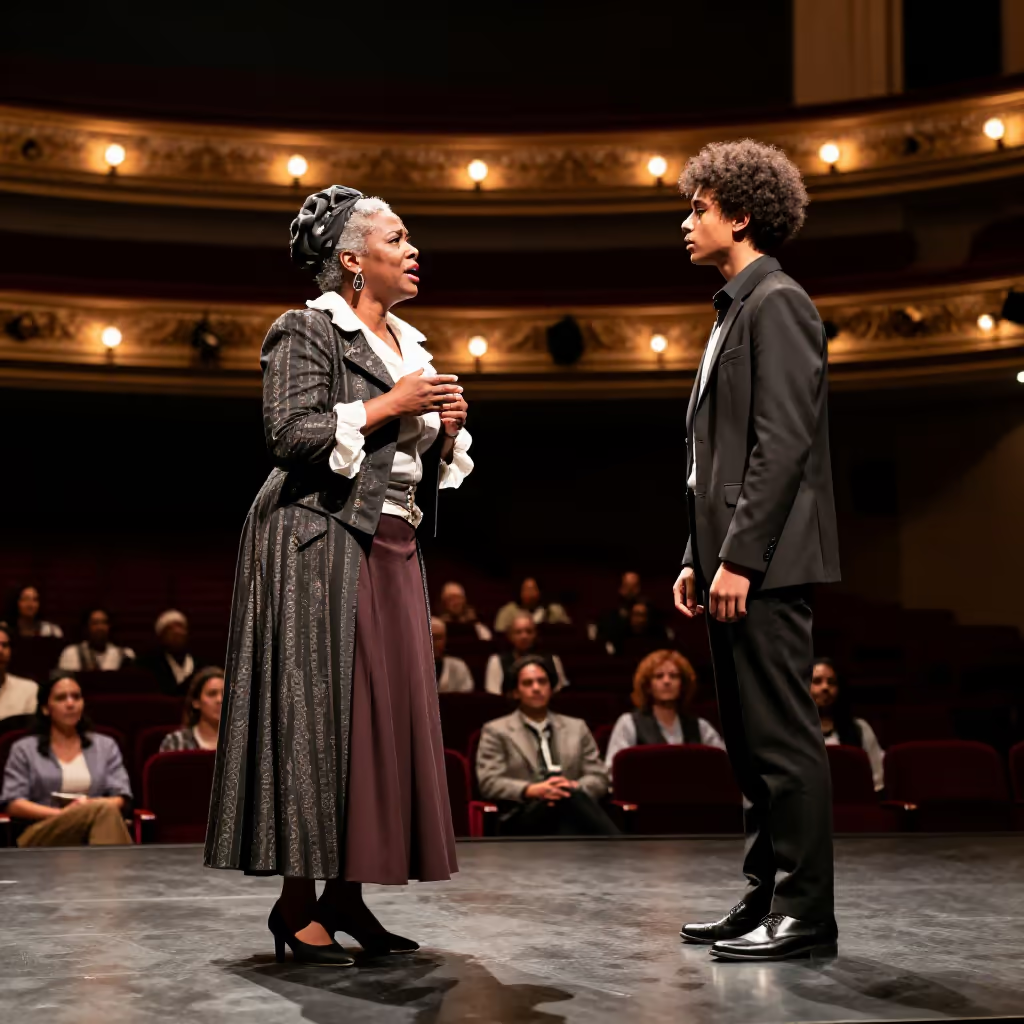
acting / performance
The acting performance or staging of a play.
Das Spiel der Hauptdarstellerin war absolut beeindruckend.
The lead actress's performance was absolutely impressive.

game
A complex, often strategic or manipulative interaction between people or groups.
Sie durchschaute das politische Spiel ihrer Gegner sofort.
She immediately saw through her opponents' political game.
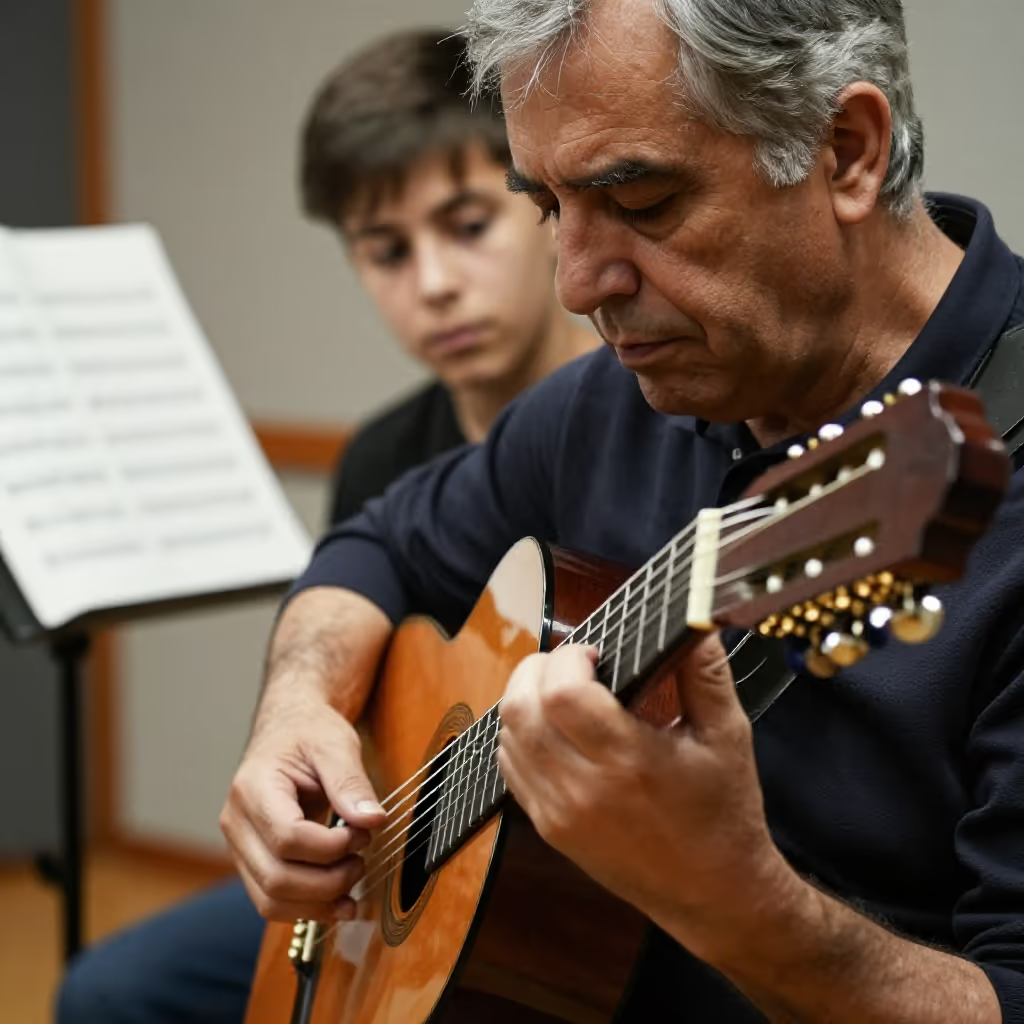
playing
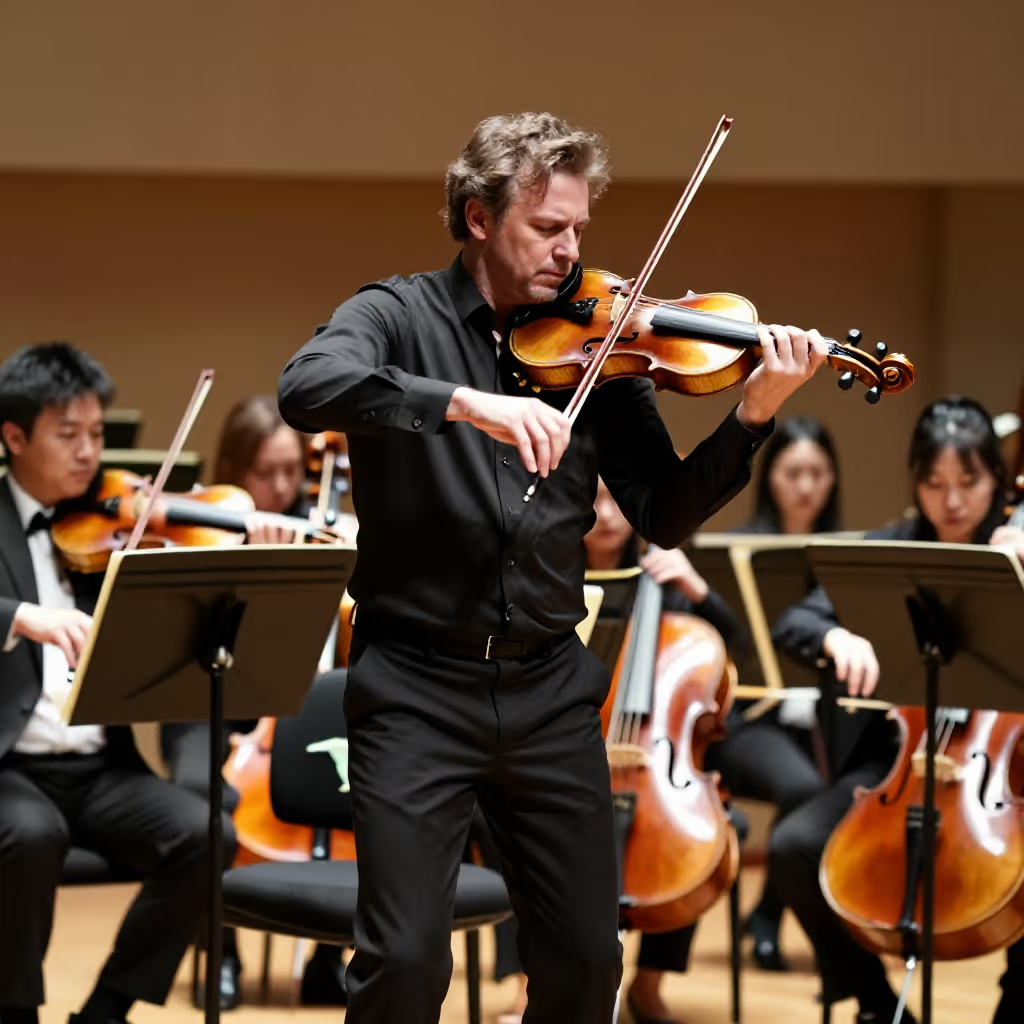
The way someone plays a musical instrument; playing technique.
Sein virtuoses Spiel auf der Geige begeisterte das Publikum.
His virtuosic playing on the violin thrilled the audience.

to put at risk
A fixed expression meaning to risk or endanger something valuable.
Mit dieser unüberlegten Aktion hat er seine ganze Karriere aufs Spiel gesetzt.
With this rash action, he put his entire career at risk.
'Das Spiel' (game/play) is the noun related to the very common verb 'spielen' (to play). 'Der Spieler' (the player) and 'das Spielzeug' (the toy) are also derived from it.
Die Kinder spielen am liebsten mit ihrem neuen Spielzeug.
The children like playing with their new toy most of all.
The idiom 'etwas aufs Spiel setzen' means to risk something important. The preposition 'aufs' is a fixed short form of 'auf das' and always requires the accusative.
Für diesen Traum hat er alles aufs Spiel gesetzt.
For this dream, he put everything at risk.
You can recognize the meaning of 'Spiel' from the context. Sports point to a competition, instruments to a musical performance, and words like 'Theater' (theater) to acting.
Das Spiel der deutschen Mannschaft war enttäuschend.
The German team's game was disappointing.
The most common combination is 'ein Spiel spielen' (to play a game). Even though it sounds as if you are repeating the same word, this is a completely normal and common expression.
Wollen wir heute Abend zusammen ein Spiel spielen?
Do we want to play a game together tonight?
When a sports event is meant, typical verbs are 'ansehen' (to watch), 'übertragen' (to broadcast), or 'pfeifen' (to referee / blow the whistle, said of the referee). The score is often described with 'das Spiel endet ...' (the game ends ...).
Der Schiedsrichter hat das Spiel pünktlich angepfiffen.
The referee kicked off the game right on time.
In a figurative sense, 'Spiel' often describes negative, manipulative actions. In this context, it is frequently combined with adjectives such as 'politisch' (political), 'gefährlich' (dangerous), or 'falsch' (false/dishonest).
Ich bin nicht bereit, dieses politische Spiel mitzuspielen.
I'm not willing to play along with this political game.
lecture / presentation
Spiel and Vortrag can both describe how someone performs music. Spiel focuses more on the person’s individual playing style and technical execution on the instrument. Vortrag refers more strongly to the interpretation and performance of a particular piece of music.
Ihr Spiel am Klavier ist technisch sehr sicher.
Her piano playing is technically very confident.
Ihr Vortrag der Sonate wirkt ruhig und ausdrucksstark.
Her performance of the sonata sounds calm and expressive.