

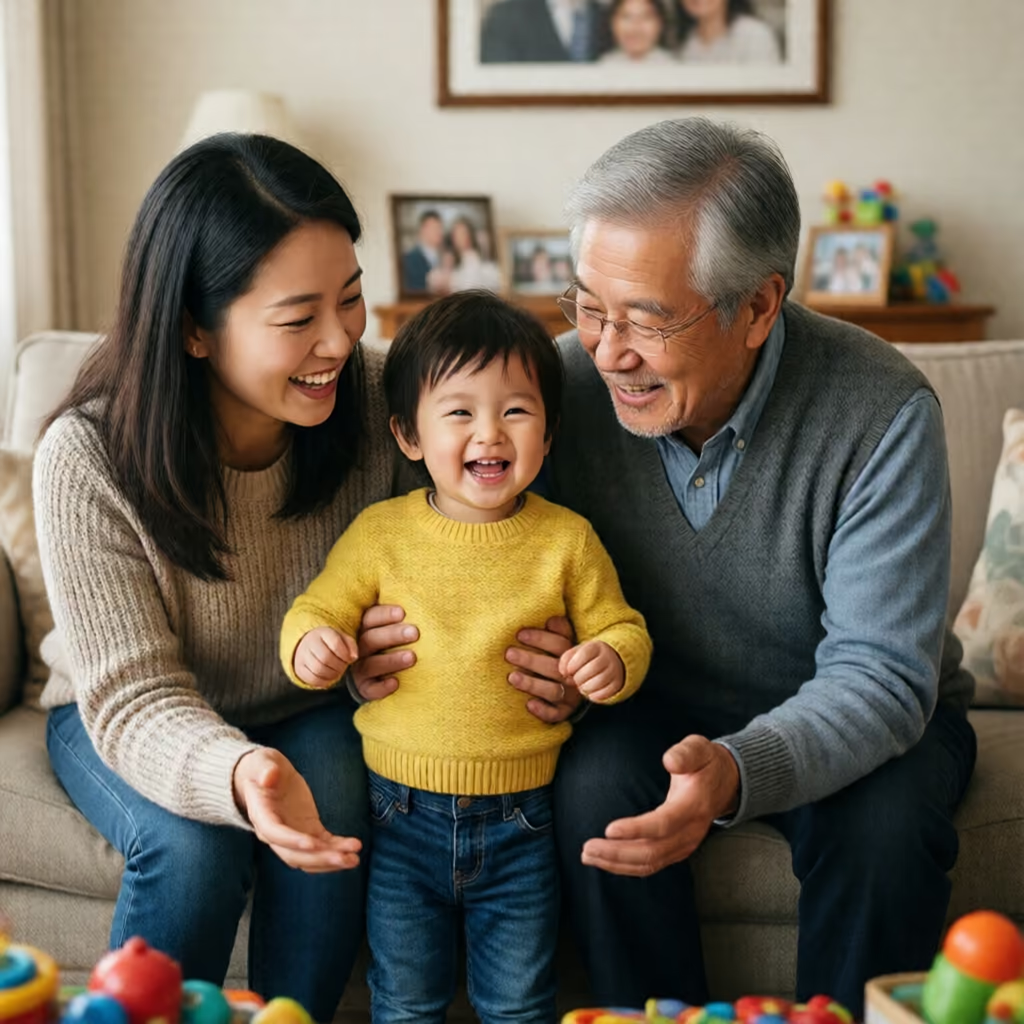
der Sprössling
offspring
A child or descendant, usually used as an affectionate or humorous term.
EXAMPLE
Die stolzen Eltern stellten ihren kleinen Sprössling der Familie vor.
The proud parents introduced their little offspring to the family.
offspring / shoot
der Sprössling, die Sprösslinge
Loading your saved state.
offspring
A child or descendant, usually used as an affectionate or humorous term.
Die stolzen Eltern stellten ihren kleinen Sprössling der Familie vor.
The proud parents introduced their little offspring to the family.

shoot
A young shoot or plant that grows out of the ground or from a larger plant.
Im Frühjahr treibt neben dem alten Baum ein neuer Sprössling aus.
In spring, a new shoot emerges next to the old tree.
| gender | masculine der |
|---|---|
| plural | die Sprösslinge |
| genitive | des Sprösslings |
| singular | plural | |
|---|---|---|
| nominative | der Sprössling | die Sprösslinge |
| accusative | den Sprössling | die Sprösslinge |
| dative | dem Sprössling | den Sprösslingen |
| genitive | des Sprösslings des Sprösslinges | der Sprösslinge |
The article changes with the case; it is shown in colour.
'Sprössling' (offspring / shoot) belongs to the same word family as 'sprießen' (to sprout) and refers to something newly growing. This connection helps you understand both meanings as forms of 'Nachwuchs' (new growth or offspring).
Der kleine Sprössling wächst schnell und braucht viel Pflege.
The little offspring is growing quickly and needs a lot of care.
You can usually tell whether 'Sprössling' (offspring / shoot) refers to a child or a plant from the surrounding words: for people, the context often mentions parents or family; for plants, look for words such as 'Boden' (ground), 'Baum' (tree), or 'Trieb' (shoot).
Die Eltern nahmen ihren Sprössling zum Konzert mit.
The parents took their offspring to the concert.
Aus dem feuchten Boden ragt ein zarter Sprössling.
A delicate shoot pokes out of the damp ground.
When used for a child, 'Sprössling' (offspring) usually sounds affectionate, playful, or mildly humorous. The word often appears with a possessive determiner and an adjective such as 'klein' (little) or 'jung' (young).
Unser kleiner Sprössling hat heute seinen ersten Schultag.
Our little offspring has their first day of school today.