

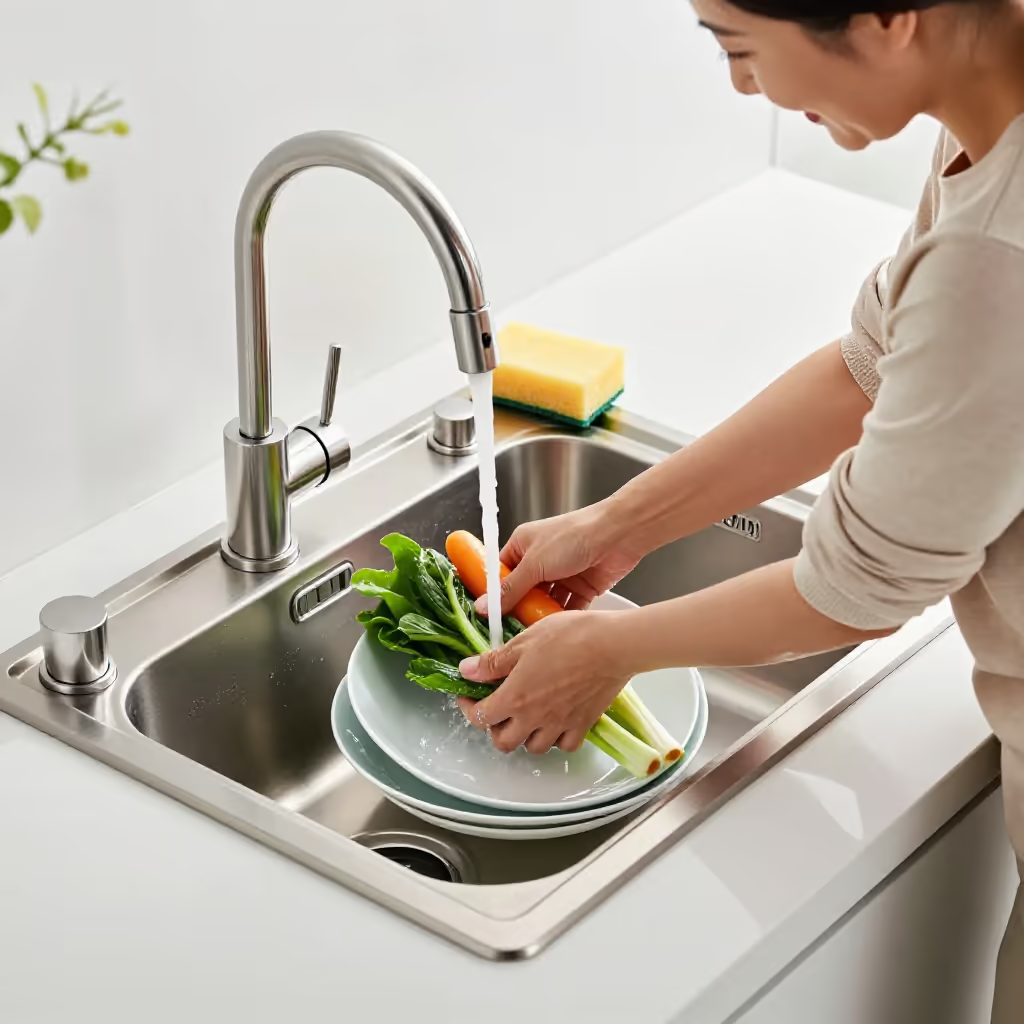
die Spüle
sink
A fixed basin in the kitchen, usually made of stainless steel or ceramic, used for washing dishes and food.
EXAMPLE
Stell das schmutzige Geschirr bitte in die Spüle.
Please put the dirty dishes in the sink.
sink
Loading your saved state.
sink
A fixed basin in the kitchen, usually made of stainless steel or ceramic, used for washing dishes and food.
Stell das schmutzige Geschirr bitte in die Spüle.
Please put the dirty dishes in the sink.
'Die Spüle' (the sink) is the place where you 'spült' (wash/rinse). The word is derived directly from the verb 'spülen' (to wash dishes / to rinse), which means 'Geschirr waschen' (to wash dishes) or 'etwas mit Wasser reinigen' (to clean something with water).
Ich muss noch das Geschirr von gestern Abend spülen.
I still have to wash the dishes from last night.
Pay attention to the case with the preposition 'in'. Movement toward a destination is expressed with the accusative ('in die Spüle' — into the sink), while a state or an action at a location takes the dative ('in der Spüle' — in the sink).
Stell die Tassen bitte in die Spüle.
Please put the cups in the sink.
Common actions connected with the sink are: 'Geschirr in die Spüle räumen' (to put dishes in the sink), 'die Spüle putzen' (to clean the sink), or 'Gemüse in der Spüle waschen' (to wash vegetables in the sink).
Bevor du gehst, räum bitte dein Geschirr in die Spüle.
Before you leave, please put your dishes in the sink.
sink
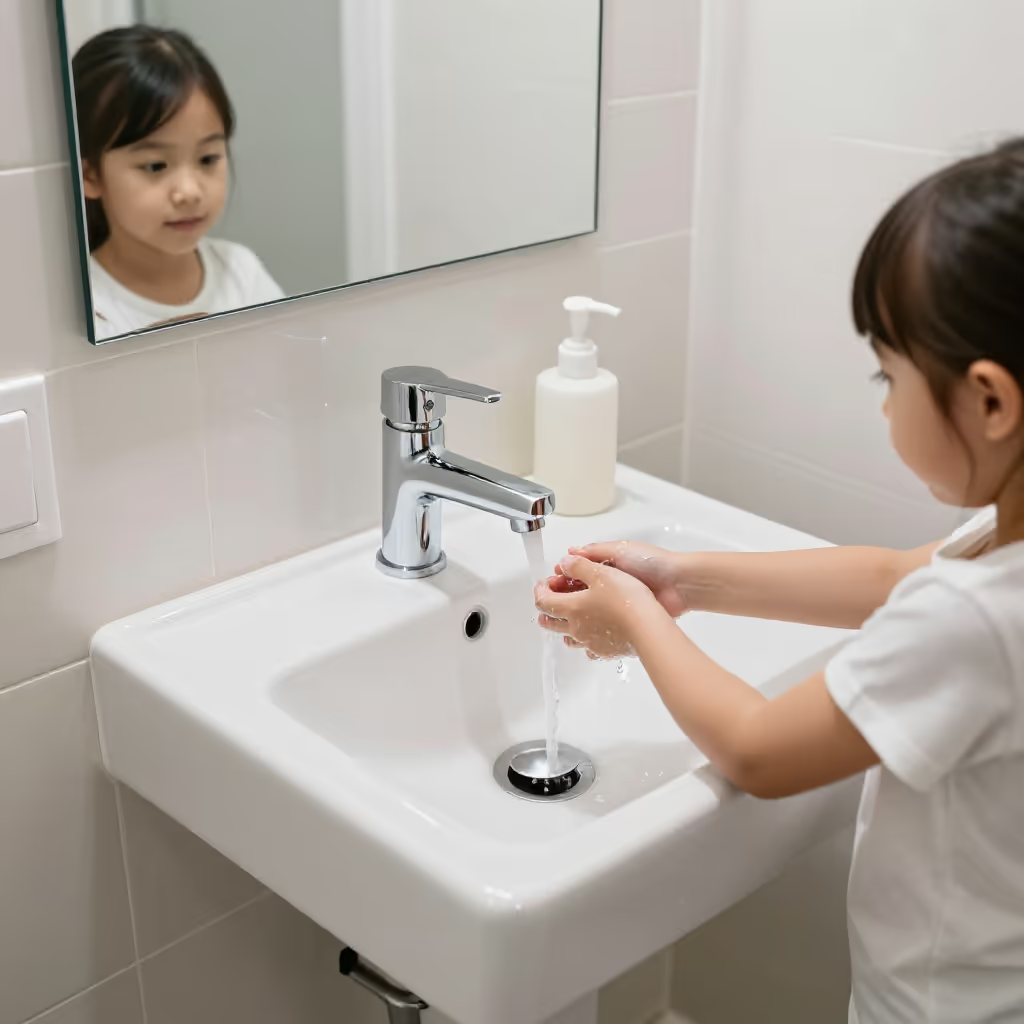
Waschbecken and Spüle are permanently installed basins with a faucet and drain. A Waschbecken is usually found in the bathroom and is mainly used for washing hands and face, while a Spüle is found in the kitchen and is used for washing dishes or food. So in the bathroom, you say Waschbecken, and in the kitchen, Spüle.
Nach dem Essen stellt Mia die Teller in die Spüle.
After the meal, Mia puts the plates in the kitchen sink.
Nach dem Zähneputzen wäscht sich Mia am Waschbecken das Gesicht.
After brushing her teeth, Mia washes her face at the sink.