

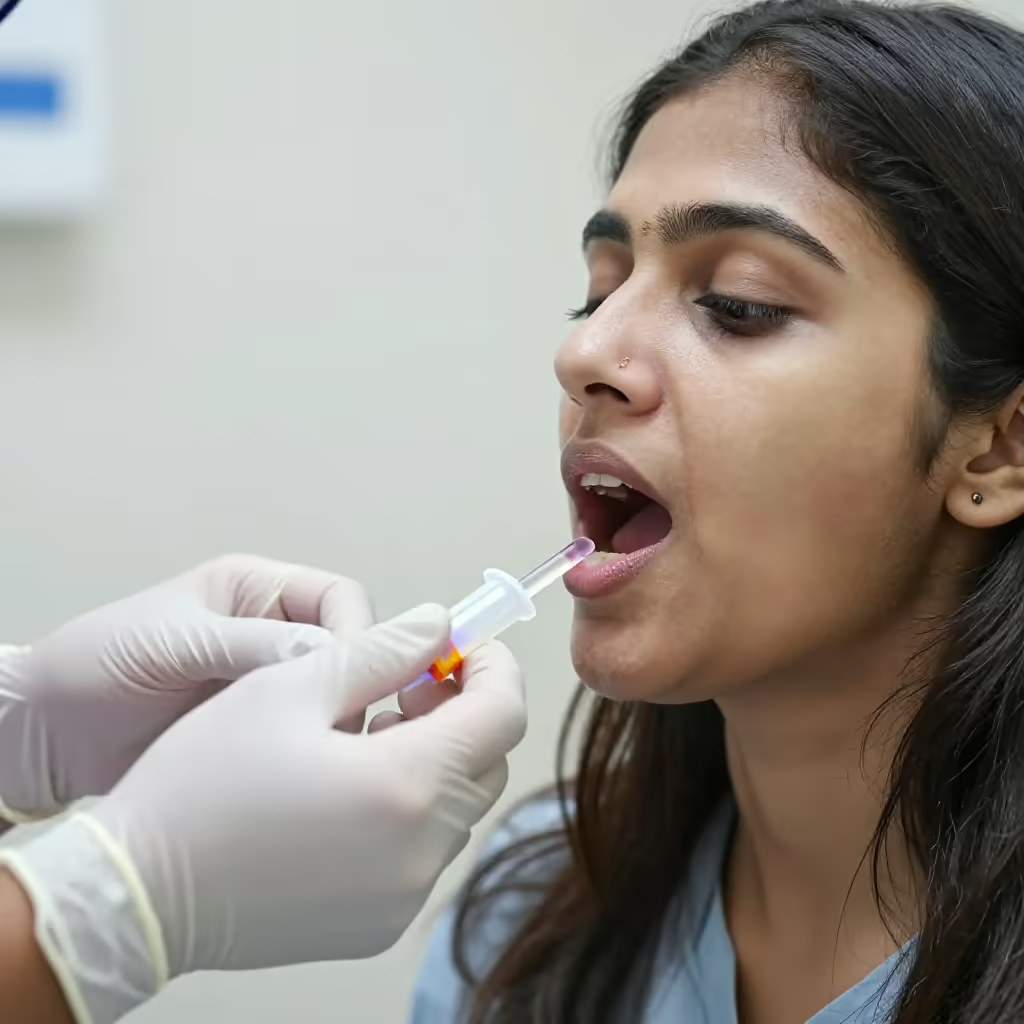
die Spucke
spit / saliva
The fluid produced in the mouth; saliva.
EXAMPLE
Der Arzt nahm eine Probe von seiner Spucke.
The doctor took a sample of his saliva.
spit / saliva
Loading your saved state.
spit / saliva
The fluid produced in the mouth; saliva.
Der Arzt nahm eine Probe von seiner Spucke.
The doctor took a sample of his saliva.

to be speechless
An idiom meaning that someone is speechless from surprise, shock, or amazement.
Als sie die Rechnung sah, blieb ihr die Spucke weg.
When she saw the bill, she was left speechless.
The noun 'die Spucke' (spit/saliva) belongs to the word family of the verb 'spucken' (to spit). It refers to the fluid that one can spit out.
Der Bauarbeiter spuckte auf den Boden.
The construction worker spat on the ground.
'Spucke' (spit/saliva) is the colloquial, everyday expression for the fluid in the mouth. In a medical or scientific context, the word 'der Speichel' (saliva) is used.
Wisch dir mal die Spucke vom Mundwinkel.
Wipe the spit from the corner of your mouth.
The idiom 'jemandem bleibt die Spucke weg' (someone is left speechless) is fixed. The person who is speechless is always in the dative.
Als er den Hauptpreis gewann, blieb ihm vor Freude die Spucke weg.
When he won the grand prize, he was left speechless with joy.
saliva
Spucke and Speichel refer to the same fluid in the mouth. Spucke is clearly colloquial and is especially suitable for casual conversations, while Speichel sounds neutral and is also common in factual or medical texts. Therefore, choose the word mainly according to the situation and style of speech.
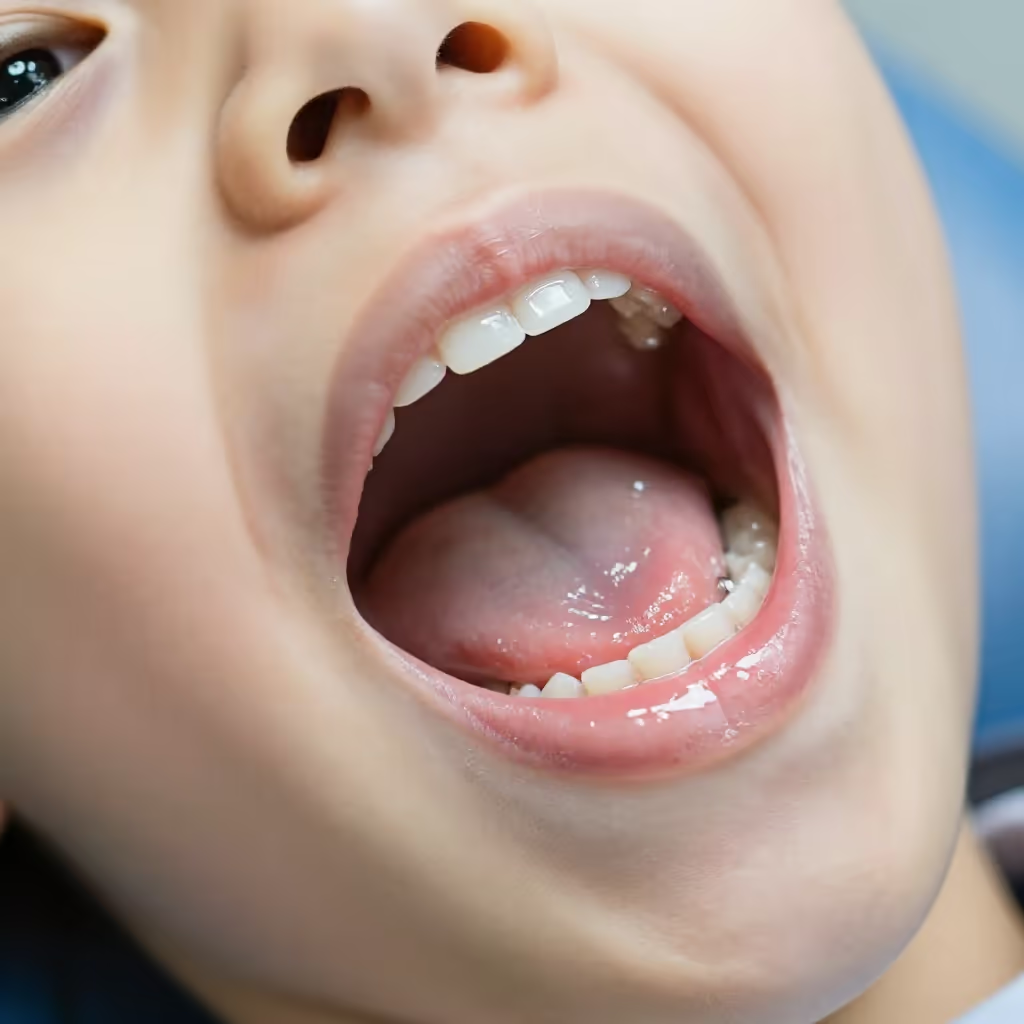
Nach dem langen Lauf war mein Mund ganz trocken und ich hatte kaum Spucke.
After the long run, my mouth was completely dry and I had hardly any saliva.
Der Speichel im Mund hilft dabei, die Nahrung zu verdauen.
The saliva in your mouth helps digest food.