


spuren
to obey
To obey or comply with an instruction or rule; this word is colloquial.
EXAMPLE
Wenn du nicht spurst, bekommst du Ärger.
If you don't obey, you'll get in trouble.
to obey / to track
spuren – spurte – hat gespurt
Loading your saved state.
to obey
To obey or comply with an instruction or rule; this word is colloquial.
Wenn du nicht spurst, bekommst du Ärger.
If you don't obey, you'll get in trouble.

to track
To move in a particular track or follow exactly in the track of another vehicle with its wheels. This meaning is used mainly for vehicles.
Der Anhänger spurt in der Kurve nicht genau.
The trailer doesn't track exactly around the bend.
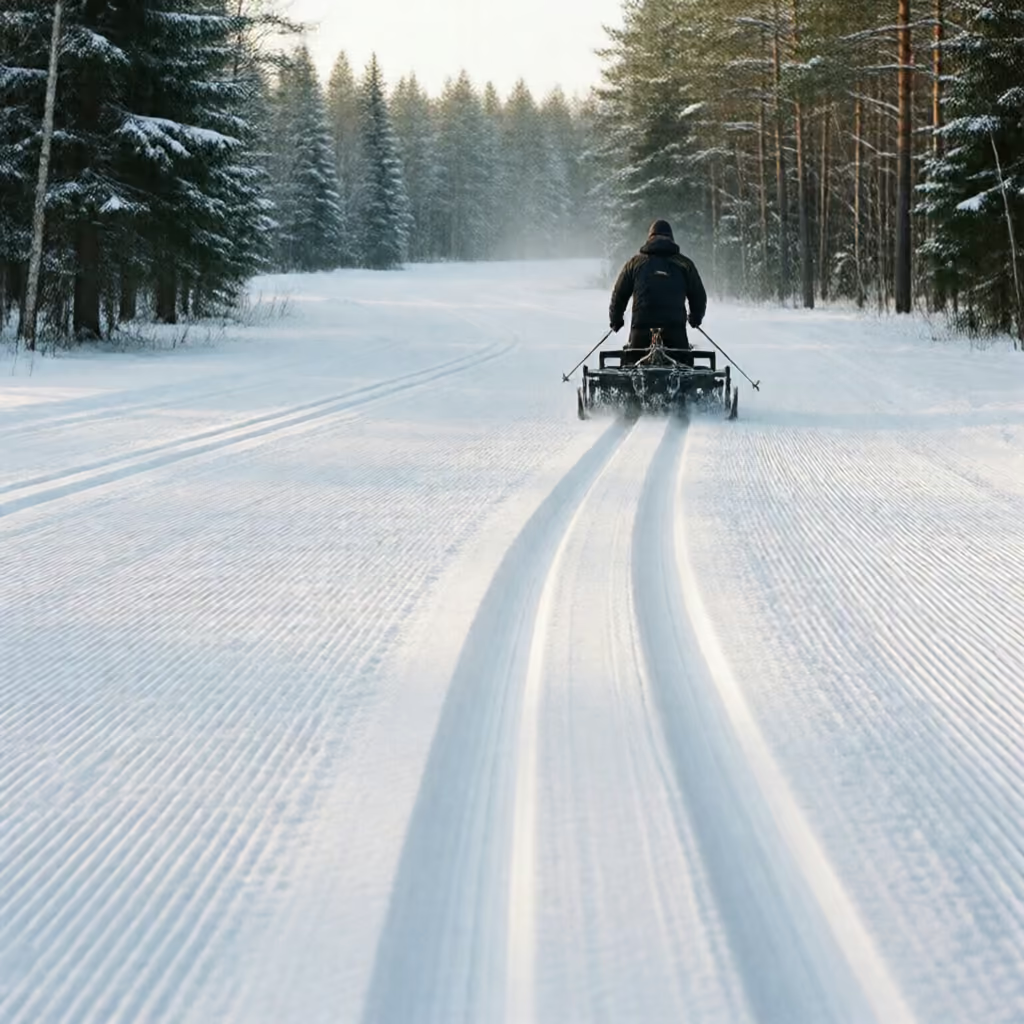
to groom
To create a track in the snow, especially a cross-country ski trail.
Nach dem Neuschnee wurden die Loipen am Morgen frisch gespurt.
After the fresh snowfall, the cross-country ski trails were freshly groomed in the morning.
| ich | spure |
|---|---|
| du | spurst |
| er/sie/es | spurt |
| wir | spuren |
| ihr | spurt |
| sie | spuren |
| ich | spurte |
|---|---|
| du | spurtest |
| er/sie/es | spurte |
| wir | spurten |
| ihr | spurtet |
| sie | spurten |
| ich | habe gespurt |
|---|---|
| du | hast gespurt |
| er/sie/es | hat gespurt |
| wir | haben gespurt |
| ihr | habt gespurt |
| sie | haben gespurt |
| du | spure! spur! |
|---|---|
| ihr | spurt! |
| Sie | spuren Sie! |
| ich | hatte gespurt |
|---|---|
| du | hattest gespurt |
| er/sie/es | hatte gespurt |
| wir | hatten gespurt |
| ihr | hattet gespurt |
| sie | hatten gespurt |
| ich | werde spuren |
|---|---|
| du | wirst spuren |
| er/sie/es | wird spuren |
| wir | werden spuren |
| ihr | werdet spuren |
| sie | werden spuren |
| ich | spure |
|---|---|
| du | spurest |
| er/sie/es | spure |
| wir | spuren |
| ihr | spuret |
| sie | spuren |
Used for reported speech.
| ich | spurte |
|---|---|
| du | spurtest |
| er/sie/es | spurte |
| wir | spurten |
| ihr | spurtet |
| sie | spurten |
Used for wishes and “would”.
| infinitive | spuren |
|---|---|
| with zu | zu spuren |
| present participle | spurend |
| past participle | gespurt |
When „spuren“ means behaving properly, the person who is expected to act is usually the subject; warnings or conditions often appear in the sentence. In the technical meaning, a vehicle or trailer is usually the subject, often together with information about the track or a bend.
Wenn du nicht spurst, musst du den Raum verlassen.
If you don't obey, you have to leave the room.
Der Anhänger spurt in engen Kurven nicht sauber.
The trailer doesn't track properly around tight bends.
In the meaning „sich fügen“ (to comply), „spuren“ is often used without an object. It particularly often appears in the expression „nicht spuren“ (not to obey), frequently after „wenn“ (if/when) or in a threat.
Wenn ihr nicht spurt, fällt das Training heute aus.
If you don't obey, training is canceled today.
In its technical meaning, „spuren“ is often used with vehicles or trailers and describes their behavior in a designated driving lane. Typical additions refer to bends or to whether a vehicle tracks well or accurately.
Das neue Fahrzeug spurt auch auf nasser Straße sehr genau.
The new vehicle tracks very accurately even on wet roads.