

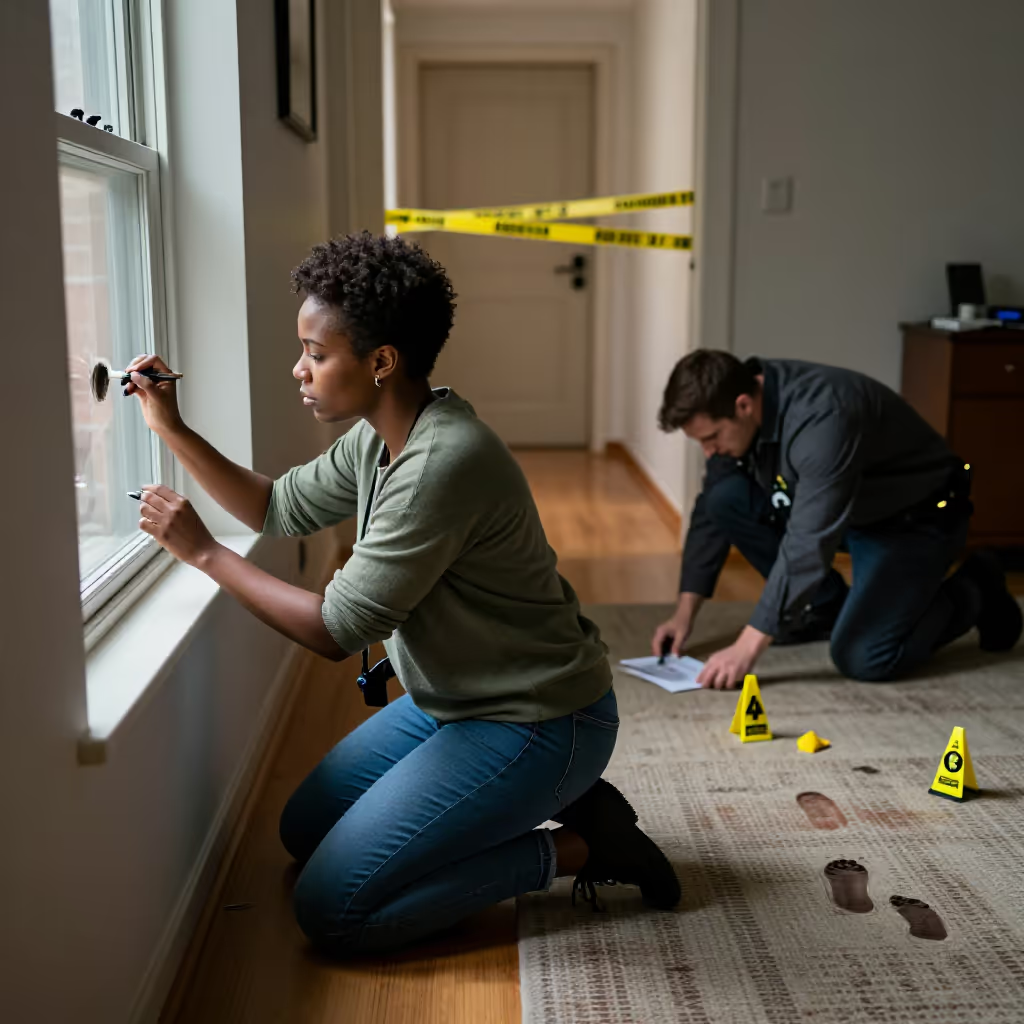
The targeted search for traces, clues, or evidence in order to find a person, solve a crime, or determine the cause of something. It can refer both to physical traces and to figurative clues.
example
Nach dem Einbruch begann die Polizei sofort mit der Spurensuche am Tatort.
After the break-in, the police immediately began searching for clues at the crime scene.
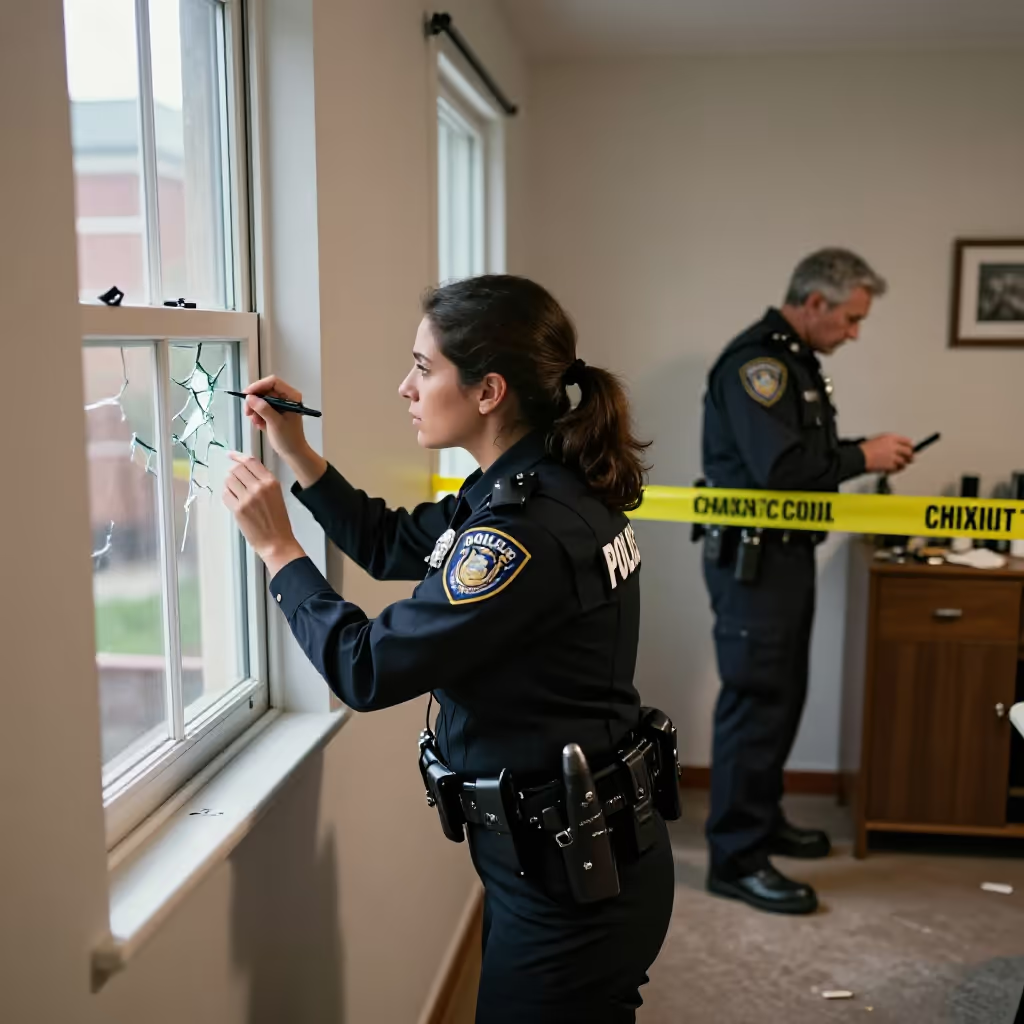
Usage tips
Compound word
'Spurensuche' (search for clues) is a compound noun made up of 'Spuren' (traces/clues, plural of 'die Spur') and 'die Suche' (the search). So it literally means 'the search for traces/clues.'
EXAMPLE
Die Spurensuche führte die Ermittler in eine andere Stadt.
The search for clues led the investigators to another city.
Typical verbs
You 'beginnt' (begin) a 'Spurensuche' (search for clues) or 'begibt sich auf' (set out on) a 'Spurensuche' (search for clues). These fixed combinations are often used to describe the start of an investigation.
EXAMPLE
Die Journalistin begab sich auf Spurensuche in der Vergangenheit des Politikers.
The journalist set out to search for clues in the politician's past.
Literal and figurative
The word is used both literally in the context of crime or archaeology and figuratively. A figurative 'Spurensuche' (search for clues) can be, for example, historical research or a journey into one's own family history.
EXAMPLE
Die Spurensuche am Tatort dauerte mehrere Stunden.
The search for clues at the crime scene lasted several hours.
Compare with
near_synonym · confusable
Spurensuche vs Untersuchung
investigation / examination
'Untersuchung' and 'Spurensuche' can both help find a cause, a person, or a sequence of events. 'Untersuchung' is the more general term for carefully examining facts, data, or situations. 'Spurensuche' emphasizes the search for traces, clues, or evidence. These can be real traces at a crime scene, but also figurative clues, for example in old letters or conversations. The words can be confused because a 'Spurensuche' is often part of an 'Untersuchung'. If the whole process of clarifying something is meant, 'Untersuchung' fits. If the search for individual clues is the focus, 'Spurensuche' is more precise.
Spurensuche
Die Spurensuche nach der Ursache des Wasserschadens beginnt im Keller.
The search for clues to the cause of the water damage begins in the basement.
Untersuchung
In der Nachbarschaft haben wir nach dem Gespräch eine Untersuchung des Lärms gefordert.
In the neighborhood, after the conversation, we called for an investigation into the noise.