

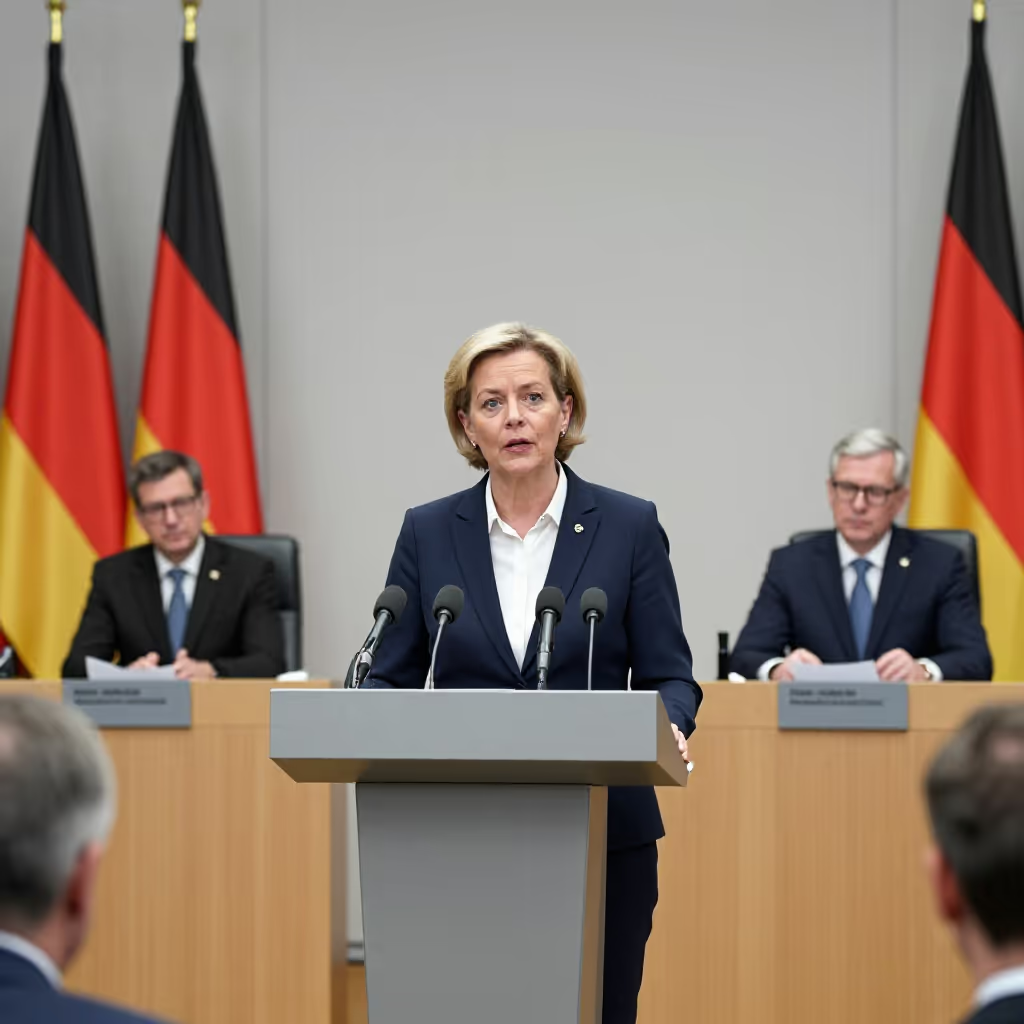
A high-ranking member of a government. In Germany, this can be a minister in a state government or a Parliamentary State Secretary at the federal level.
example
Der Staatsminister für Kultur und Medien hat die Filmfestspiele eröffnet.
The Minister of State for Culture and Media opened the film festival.
Usage tips
Word composition
The term is made up of 'Staat' (state) and 'Minister' (minister), connected by an 's'. It therefore refers to a minister who serves the state.
EXAMPLE
Der Staatsminister ist Mitglied der bayerischen Regierung.
The Minister of State is a member of the Bavarian government.
Indicating responsibility
To name the area of responsibility of a 'Staatsminister' (Minister of State), you use the preposition 'für' followed by the accusative.
EXAMPLE
Er ist Staatsminister für Bundesangelegenheiten.
He is Minister of State for Federal Affairs.
Formal usage
The title 'Staatsminister' (Minister of State) is mainly used in official, political, and journalistic contexts.
EXAMPLE
In der Pressemitteilung wurde der Staatsminister zitiert.
The Minister of State was quoted in the press release.
Compare with
near_synonym · confusable
Staatsminister vs Minister
minister
'der Minister' and 'der Staatsminister' both refer to high-ranking people in politics. 'Minister' is the more general word: it means a member of a government who is responsible for a ministry or a policy area. 'Staatsminister' is a special title that is used differently depending on the federal state or political system. Learners may confuse the words because they sound very similar and both have to do with government. If you are not talking about an exact official title, 'Minister' is usually the more natural general word.
Staatsminister
Der Staatsminister reist zur Konferenz nach Berlin.
The Minister of State is traveling to Berlin for the conference.
Minister
Am Morgen hat der Minister den neuen Plan vorgestellt.
In the morning, the minister presented the new plan.