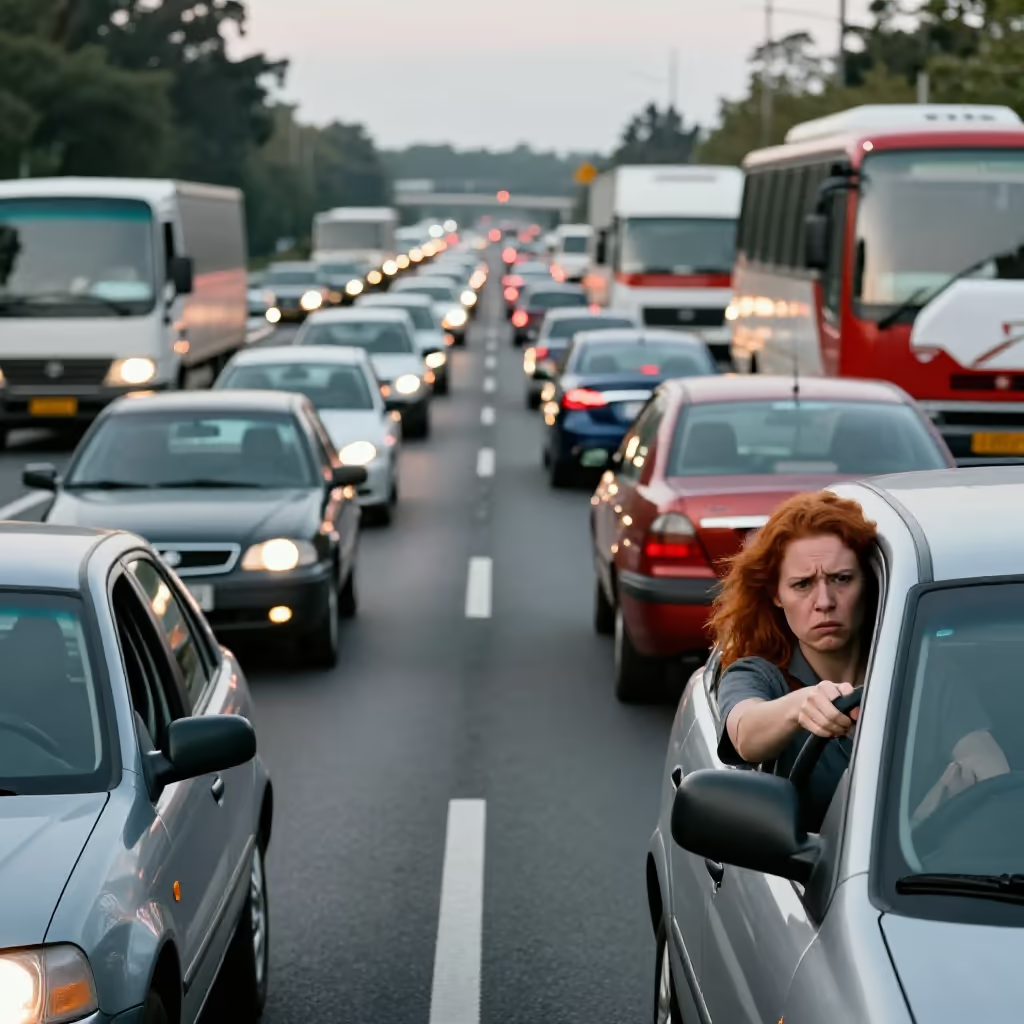
Describes the situation in which vehicles accumulate in traffic and can no longer move on, or can move only very slowly, creating a traffic jam.
example
Auf der Autobahn A5 staut sich der Verkehr auf einer Länge von zehn Kilometern.
Traffic is backed up for ten kilometers on the A5 motorway.
Usage tips
Word family
The verb 'stauen' (to back up / to dam) is closely related to the noun 'der Stau' (traffic jam / buildup). The verb describes the action or process that leads to a 'Stau' (accumulation), whether in traffic or with water.
EXAMPLE
Wenn sich der Verkehr staut, entsteht ein langer Stau.
When traffic backs up, a long traffic jam forms.
Reflexive vs. transitive
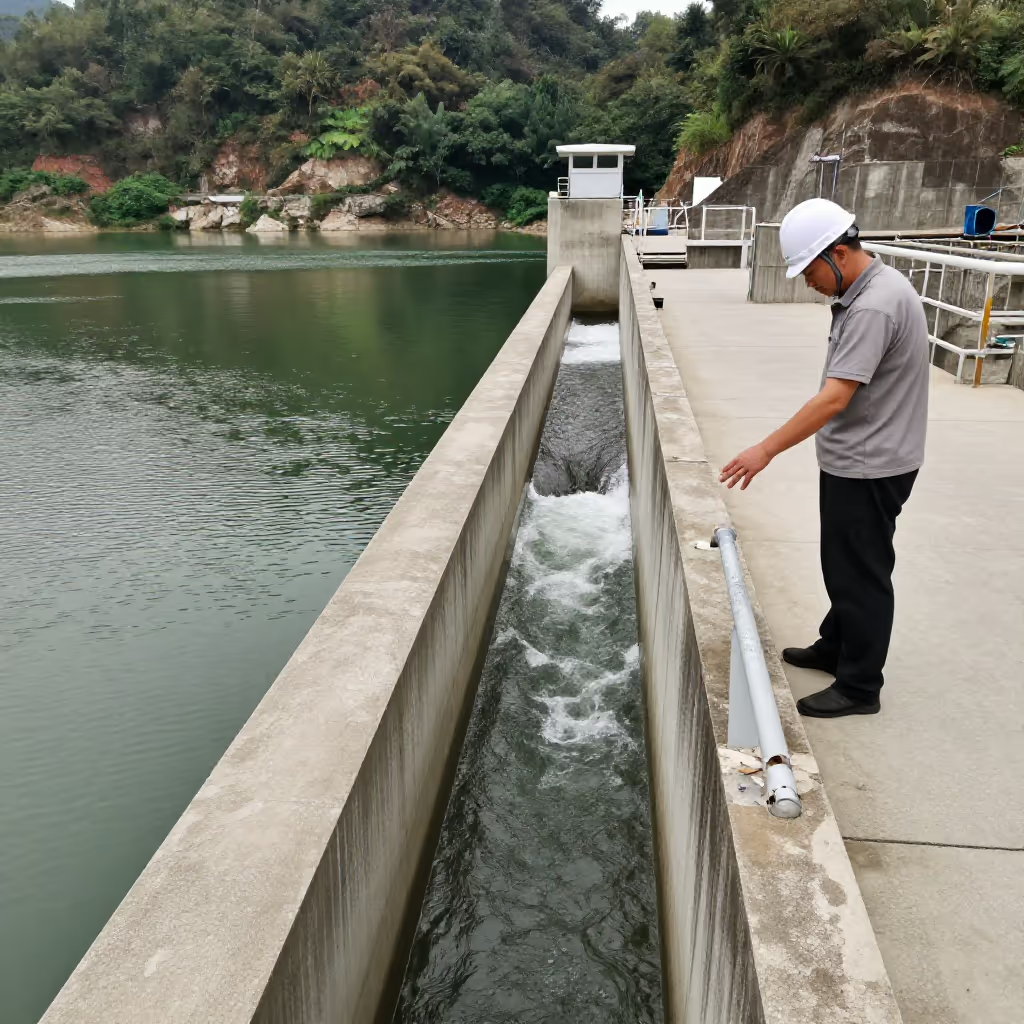
The grammar helps with the meaning. 'Sich stauen' (to back up / to build up, reflexive) is used for traffic and figurative things like feelings or work. 'Etwas stauen' (to dam something, transitive with an accusative object) is used for stopping water.
EXAMPLE
Der Verkehr staut sich vor der Baustelle.
Traffic is backing up before the construction site.
Typical subjects
When it is about traffic, the subject is often 'der Verkehr' (the traffic) or the impersonal 'es' (it). The location is often given with 'auf' (on) and the name of the road or motorway.
EXAMPLE
Es staut sich mal wieder auf der A8 Richtung München.
Traffic is backed up again on the A8 toward Munich.
Figurative meaning
In the figurative meaning, 'sich stauen' (to build up) is always used reflexively. Typical subjects are things that can accumulate, such as 'die Arbeit' (the work), 'die Wut' (the anger), 'der Frust' (the frustration), or 'die Post' (the mail).
EXAMPLE
Die unerledigte Arbeit staute sich auf seinem Schreibtisch.
The unfinished work built up on his desk.
Compare with
antonym
stauen vs fließen
to flow
'fließen' and 'stauen' are often opposites. 'fließen' describes free, steady movement, for example of water, traffic, or information. 'stauen' means that this movement is held up and something accumulates. In traffic, 'der Verkehr fließt' when cars are moving well; 'er staut sich' when too many vehicles can no longer move forward. With water, you can intentionally stop the flow, for example with a dam.
stauen
Vor der Baustelle stauen sich die Autos über mehrere Kilometer.
Before the construction site, cars are backed up for several kilometers.
fließen
Am frühen Morgen fließt der Verkehr auf der Autobahn noch ruhig.
Early in the morning, traffic on the motorway is still flowing calmly.