


stoppen
to stop
To end a movement or an ongoing process, or bring it to a standstill.
EXAMPLE
Bitte stoppe das Auto an der nächsten Ecke.
Please stop the car at the next corner.
to stop
Loading your saved state.
to stop
To end a movement or an ongoing process, or bring it to a standstill.
Bitte stoppe das Auto an der nächsten Ecke.
Please stop the car at the next corner.
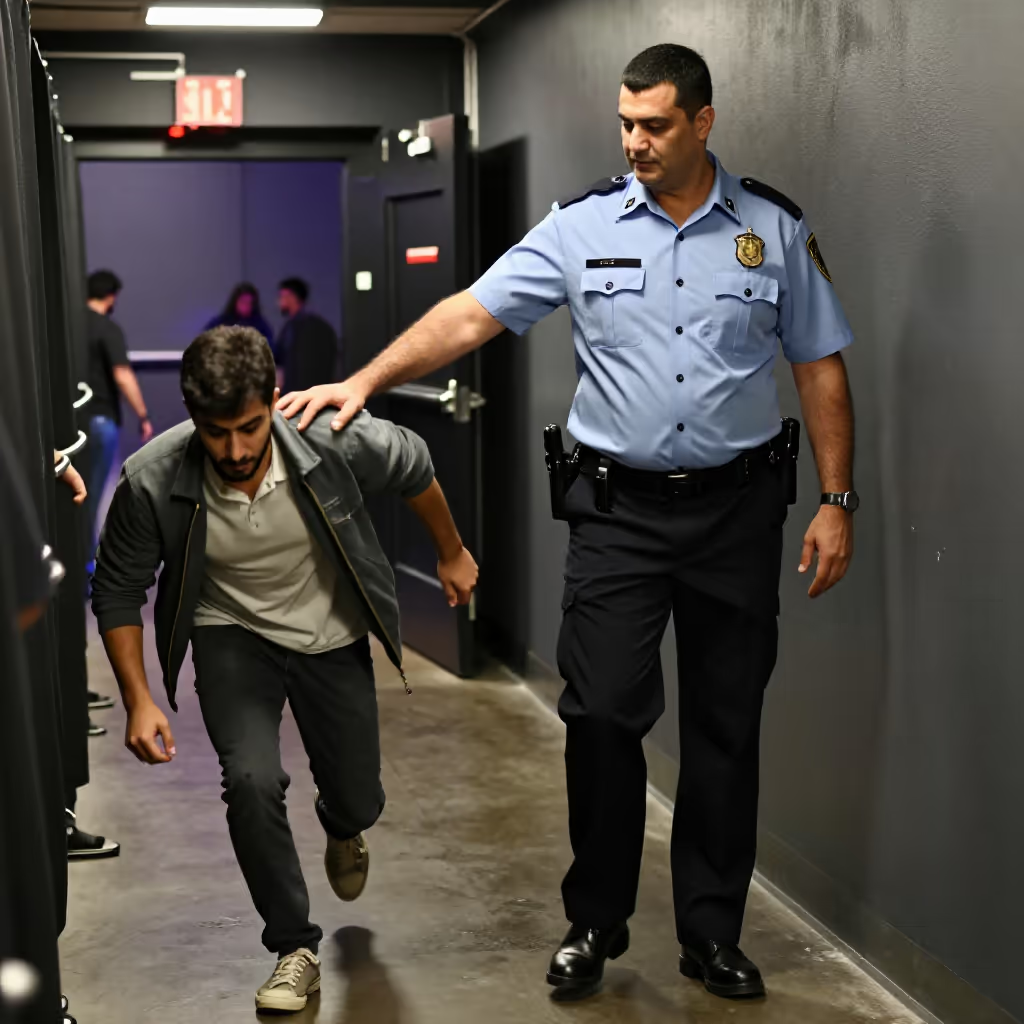
to stop
To stop someone or something, or prevent them from doing or continuing something.
Die Polizei konnte die Diebe auf ihrer Flucht stoppen.
The police were able to stop the thieves during their escape.

to time
To measure the duration of a process with a watch or clock.
Kannst du stoppen, wie lange ich brauche, um die Seite zu lesen?
Can you time how long it takes me to read the page?
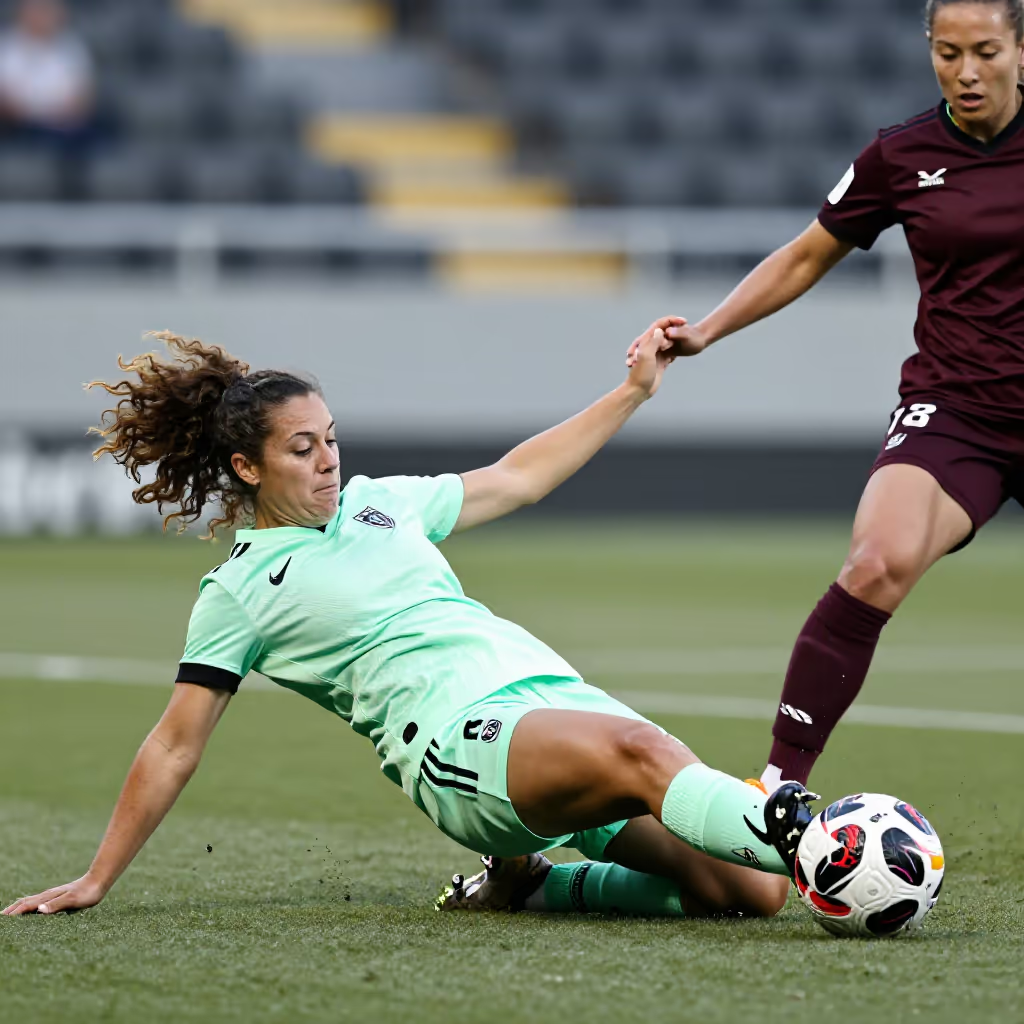
to stop
In sports, to block an opposing attack or the ball.
Der Torwart stoppte den Ball mit einer spektakulären Parade.
The goalkeeper stopped the ball with a spectacular save.
The verb 'stoppen' (to stop) is the basis for the noun 'der Stopp' (e.g. a short stop) and for compound words such as 'die Stoppuhr' (a watch for measuring time intervals).
Wir legen auf der Fahrt nach Italien einen Stopp in den Alpen ein.
On the drive to Italy, we'll make a stop in the Alps.
'Stoppen' (to stop) almost always requires an accusative object. You always stop 'etwas' (something) or 'jemanden' (someone).
Der Regen hat die Bauarbeiten gestoppt.
The rain stopped the construction work.
In the meaning of 'zum Stillstand bringen' (to bring to a standstill), 'stoppen' is often used for processes or movements. Typical combinations are 'die Blutung stoppen' (to stop the bleeding), 'die Produktion stoppen' (to stop production), or 'den Verkehr stoppen' (to stop traffic).
Ein Ersthelfer muss wissen, wie man eine starke Blutung stoppt.
A first aider must know how to stop severe bleeding.
You can recognize the meaning 'Zeit messen' (to measure time) from the context. Often the word 'Zeit' (time) appears directly as the object, or a stopwatch is mentioned.
Der Trainer stoppt die Zeit seiner Läufer auf die Sekunde genau.
The coach times his runners to the exact second.
The meaning 'abwehren' (to block/defend against) is typical in sports. People talk about 'den Ball stoppen' (to stop the ball), 'einen Angriff stoppen' (to stop an attack), or 'den Gegner stoppen' (to stop the opponent).
Der Verteidiger konnte den Stürmer im letzten Moment stoppen.
The defender was able to stop the striker at the last moment.
to hold
Both words can refer to the end of a vehicle’s movement. “Halten” is especially common for a scheduled stop at a particular place. “Stoppen,” by contrast, focuses more on ending the movement or an ongoing process, often suddenly or deliberately.
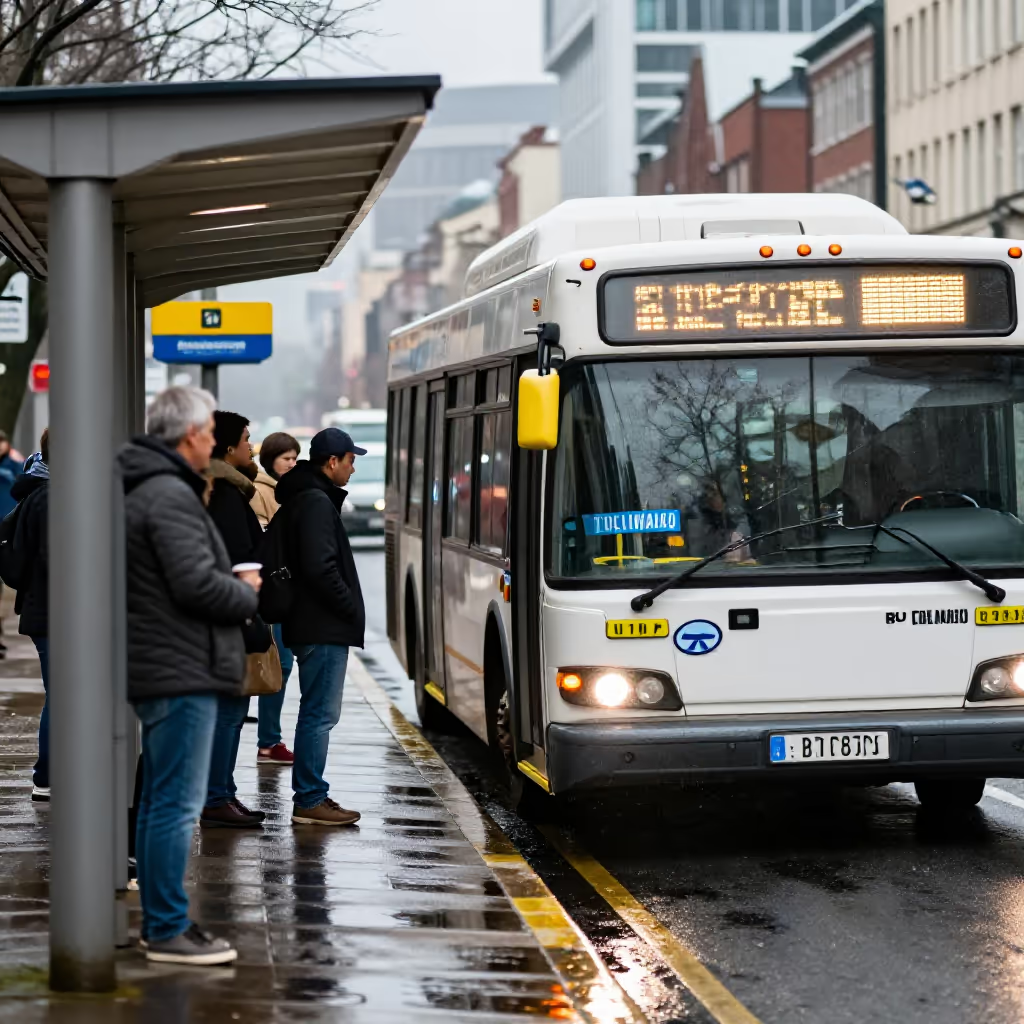
Wegen eines Hindernisses stoppt der Zug plötzlich vor dem nächsten Bahnhof.
Because of an obstacle, the train suddenly stops before the next station.
Der Zug hält planmäßig am nächsten Bahnhof.
The train stops as scheduled at the next station.