

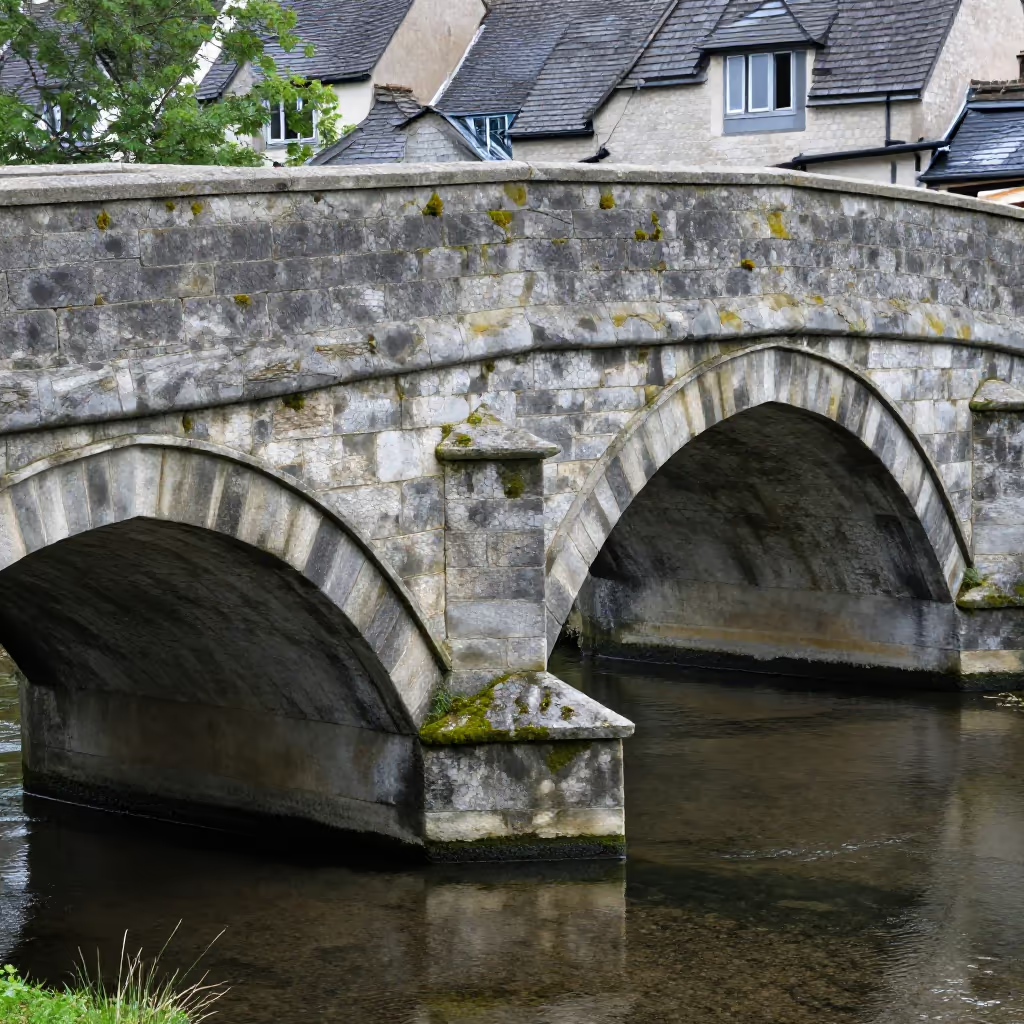
steinern
made of stone
Made of or consisting of the material stone.
EXAMPLE
Eine alte, steinerne Brücke führte über den Fluss.
An old stone bridge led across the river.
stony
Loading your saved state.
made of stone
Made of or consisting of the material stone.
Eine alte, steinerne Brücke führte über den Fluss.
An old stone bridge led across the river.
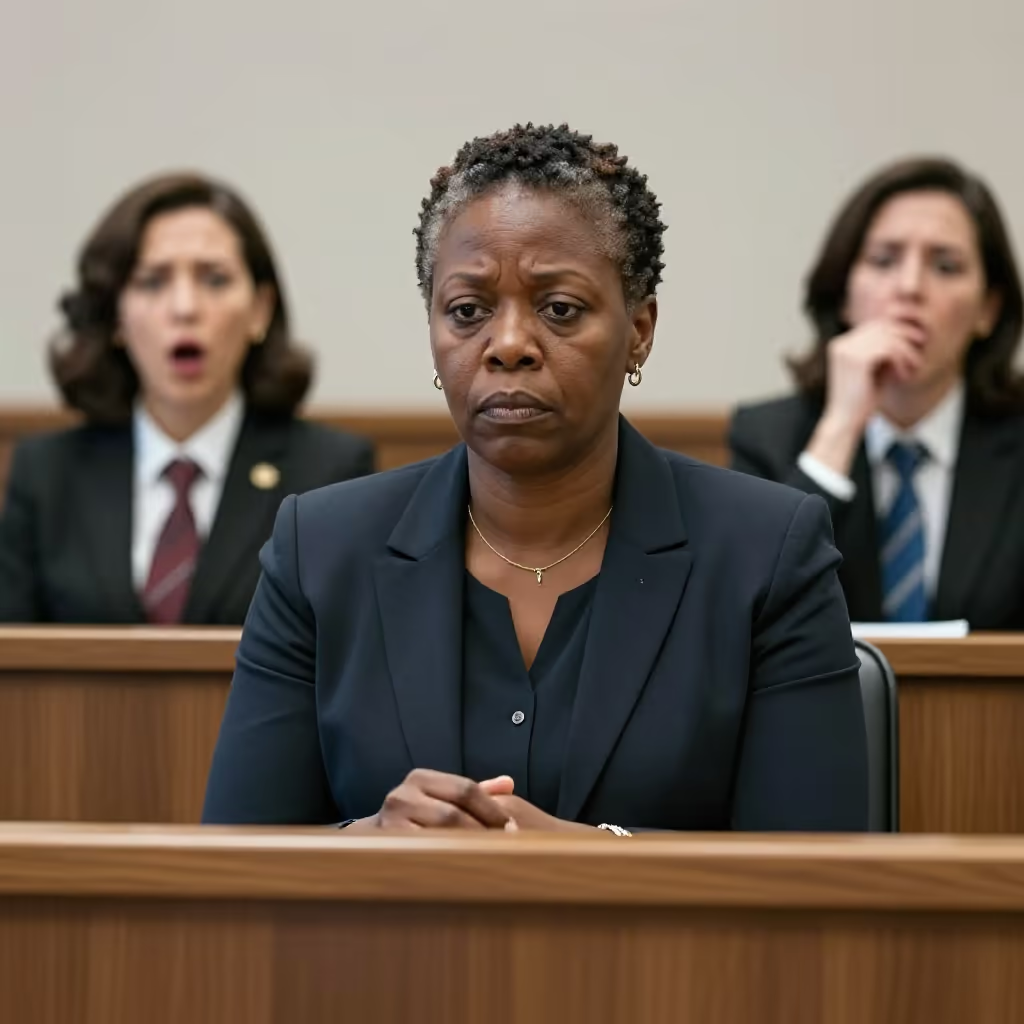
stony
In a figurative sense: showing no visible emotion, motionless, or seeming hard. Often used for facial expressions.
Er nahm die Kritik mit steinerner Miene entgegen.
He received the criticism with a stony expression.
The adjective 'steinern' (stony/made of stone) is formed from the noun 'der Stein' (the stone) and the suffix '-ern'. This ending often means 'made of the material ...'.
Der Wanderweg führte über eine steinerne Treppe den Berg hinauf.
The hiking trail led up the mountain over a stone staircase.
The meaning of 'steinern' (stony/made of stone) depends on the noun. If it describes an object like a wall or bridge, it means 'made of stone'. If it describes a facial expression, it means 'emotionless'.
Er hörte die schlechte Nachricht mit steinernem Gesicht.
He listened to the bad news with a stony face.
In the figurative meaning, 'steinern' (stony) is very often used in the fixed combination 'eine steinerne Miene' (a stony expression). This describes a facial expression that shows no feeling at all.
Während der gesamten Verhandlung behielt der Angeklagte eine steinerne Miene.
Throughout the entire trial, the defendant kept a stony expression.
hard
Both a harter and a steinerner facial expression can seem unapproachable. Hart emphasizes strictness or relentlessness, while steinern additionally describes a motionless face with no visible emotions. steinern is therefore more precise for a mask-like calmness.

Mit steinernem Gesicht hörte der Chef die Bitte an, ohne eine Regung zu zeigen.
With a stony expression, the boss listened to the request without showing any reaction.
Mit hartem Gesicht wies der Chef jede Bitte um eine Pause zurück.
With a stern expression, the boss rejected every request for a break.