


hart
hard
Having a firm, resistant quality; not soft.
EXAMPLE
Das Brot vom Vortag war schon ziemlich hart.
The bread from the day before was already quite hard.
hard
Loading your saved state.
hard
Having a firm, resistant quality; not soft.
Das Brot vom Vortag war schon ziemlich hart.
The bread from the day before was already quite hard.

hard
Difficult, exhausting, and involving a lot of effort.
Es war ein harter Tag bei der Arbeit.
It was a hard day at work.

harsh
Strict, uncompromising, or ruthless in behavior or judgment.
Der Chef ist für seine harten Entscheidungen bekannt.
The boss is known for his harsh decisions.
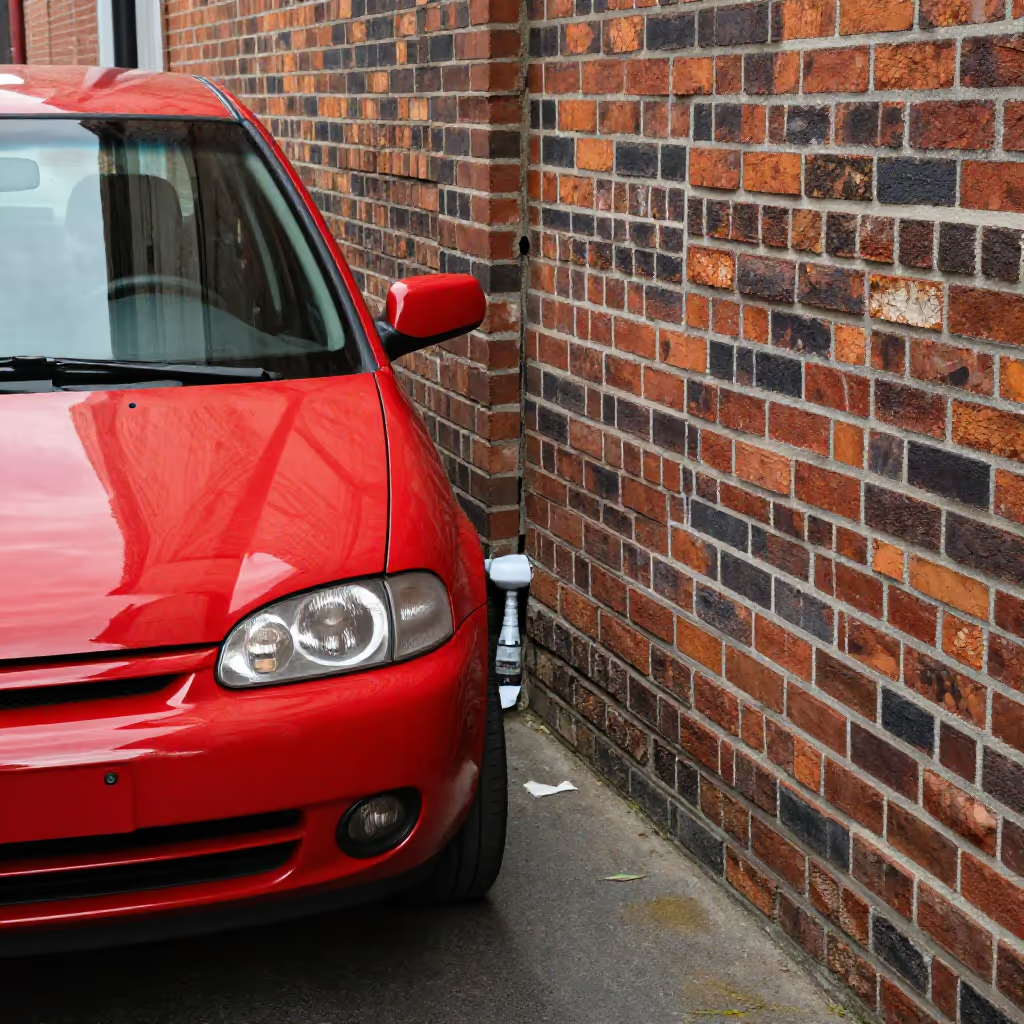
right next to
In immediate proximity; very close to. Often used in fixed expressions like 'hart an' (right on/at) or 'hart neben' (right next to).
Das Haus steht hart an der Autobahn.
The house stands right next to the highway.
As an adverb, 'hart' can intensify a verb and then means 'strongly', 'intensely', or 'with a lot of force'. It describes the manner of an action.
Der Autofahrer musste hart bremsen, um einen Unfall zu vermeiden.
The driver had to brake hard to avoid an accident.
In the meaning of 'fest' (firm/solid), 'hart' is often used for materials and foods. Typical examples are 'hartes Holz' (hard wood), 'harter Stein' (hard stone), or a 'hart gekochtes Ei' (hard-boiled egg).
Diese Matratze ist mir zu hart, ich kann darauf nicht schlafen.
This mattress is too hard for me; I can't sleep on it.
When 'hart' means 'anstrengend' (strenuous/exhausting), it often describes periods of time or activities. Common combinations are 'ein harter Tag' (a hard day), 'eine harte Woche' (a hard week), 'harte Arbeit' (hard work), or 'ein harter Kampf' (a hard fight).
Nach der langen Wanderung hatten alle einen harten Muskelkater.
After the long hike, everyone had serious muscle soreness.
The meaning 'dicht bei' (very close to) occurs almost only in fixed expressions with prepositions. The most common one is 'hart an', for example 'hart an der Grenze' (right on the border/limit) or 'hart am Abgrund' (right on the edge of the abyss).
Das Auto parkte hart am Straßenrand.
The car was parked right at the edge of the road.
heavy / difficult
Schwer and hart can both describe a demanding task. Schwer emphasizes that it is not easy to solve or manage, while hart focuses more on the effort and strain involved. Schwer often fits complicated tasks, while hart is more suitable for exhausting challenges.

Die Prüfung war hart, weil sie vier Stunden lang volle Konzentration verlangte.
The exam was hard because it required complete concentration for four hours.
Die Prüfung war schwer, weil viele Aufgaben kompliziert waren.
The exam was difficult because many of the questions were complicated.