

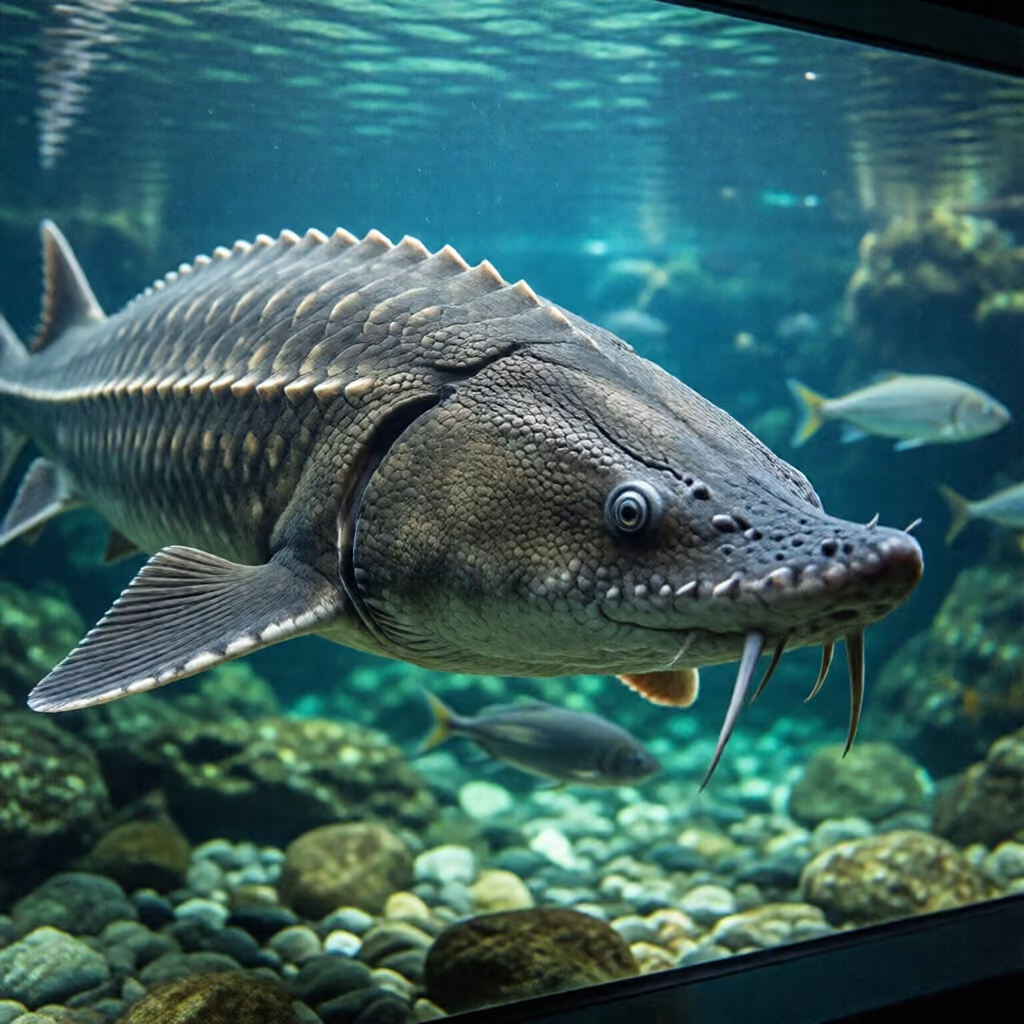
der Stör
sturgeon
A large fish that mainly lives in rivers and seas in the Northern Hemisphere. Some species produce caviar.
EXAMPLE
Der Stör kann mehrere Meter lang werden.
The sturgeon can grow several meters long.
sturgeon
der Stör, die Störe
Loading your saved state.
sturgeon
A large fish that mainly lives in rivers and seas in the Northern Hemisphere. Some species produce caviar.
Der Stör kann mehrere Meter lang werden.
The sturgeon can grow several meters long.
| gender | masculine der |
|---|---|
| plural | die Störe |
| genitive | des Störs |
| singular | plural | |
|---|---|---|
| nominative | der Stör | die Störe |
| accusative | den Stör | die Störe |
| dative | dem Stör | den Stören |
| genitive | des Störs | der Störe |
The article changes with the case; it is shown in colour.
“Stör” (sturgeon) is often used with verbs and expressions related to fishing and aquaculture: “einen Stör fangen” (to catch a sturgeon), “einen Stör züchten” (to farm a sturgeon), “einen Stör aussetzen” (to release a sturgeon), and “Kaviar vom Stör gewinnen” (to obtain caviar from sturgeon).
Die Fischereibehörde setzte mehrere junge Störe in den Fluss aus.
The fisheries authority released several young sturgeons into the river.
The noun “Stör” (sturgeon) is masculine. The plural is “die Störe” (sturgeons), and the singular genitive is “des Störs” or “des Störes”.
In der Aquakultur werden die Störe regelmäßig untersucht.
The sturgeons are examined regularly in aquaculture facilities.
“Stör” (sturgeon) occurs especially in texts about zoology, fishing, water conservation, and aquaculture. On menus and in delicatessens, the word also refers to the meat of this fish.
Der Schutz des Störs ist für viele Flussökosysteme ein wichtiges Thema.
Protecting the sturgeon is an important issue for many river ecosystems.