

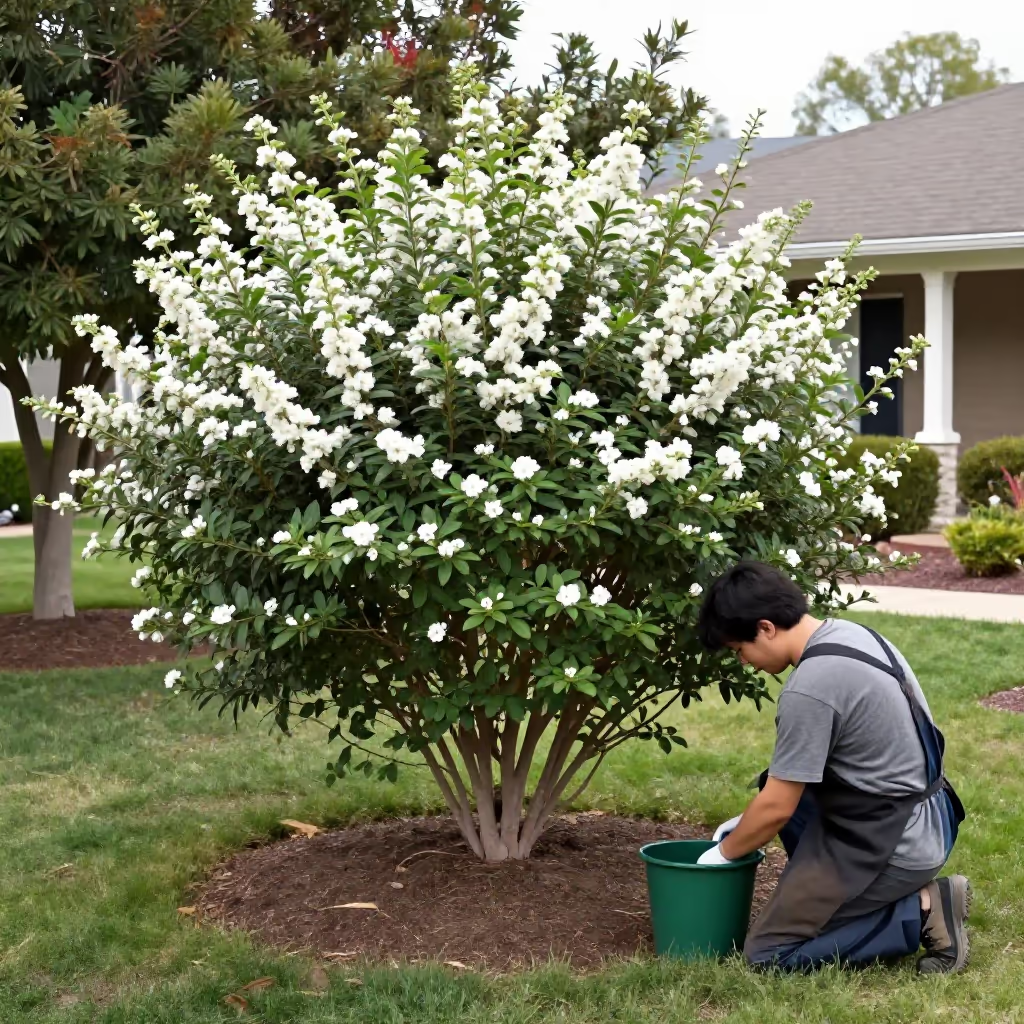
der Strauch
bush / shrub
A woody plant that is smaller than a tree and branches into several stems or branches directly above the ground.
EXAMPLE
Im Garten wächst ein blühender Fliederstrauch.
A flowering lilac bush is growing in the garden.
bush / shrub
Loading your saved state.
bush / shrub
A woody plant that is smaller than a tree and branches into several stems or branches directly above the ground.
Im Garten wächst ein blühender Fliederstrauch.
A flowering lilac bush is growing in the garden.
Common verbs used in connection with 'Strauch' (bush/shrub) are 'einen Strauch pflanzen' (to plant a bush) or 'einen Strauch schneiden' (to trim a bush). Typical adjectives are 'blühend' (flowering), 'dicht' (dense), or 'immergrün' (evergreen).
Im Herbst müssen wir die Sträucher im Garten schneiden.
In the fall, we have to trim the bushes in the garden.
'Strauch' (bush/shrub) is very often used as the base word in compound nouns to name a specific type of plant. Examples are 'Rosenstrauch' (rose bush), 'Fliederstrauch' (lilac bush), or 'Beerenstrauch' (berry bush).
Die Vögel fressen gerne die Beeren vom Holunderstrauch.
The birds like to eat the berries from the elderberry bush.
The word is often combined with prepositions of place to describe a position in nature or in the garden. It is especially common when something is hidden.
Die Katze hat sich hinter einem Strauch versteckt.
The cat hid behind a bush.
bush
Busch and Strauch can both refer to the same single low, woody plant. Strauch is the neutral, precise term, while Busch sounds more colloquial. Strauch is therefore often used in technical or factual writing, whereas Busch is common in conversation.
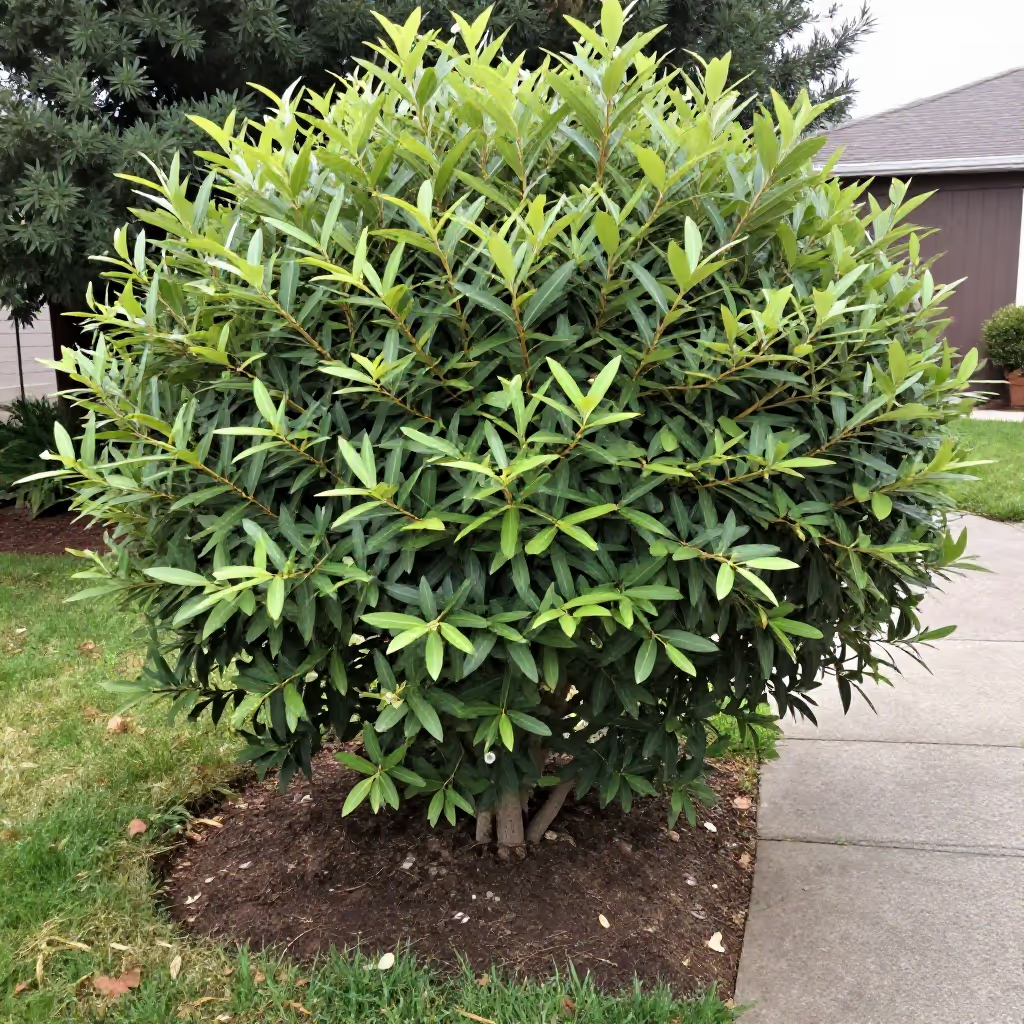
Im Gartenbuch wird dieselbe Pflanze am Zaun als Strauch bezeichnet.
In the gardening book, the same plant by the fence is referred to as a shrub.
Im Gespräch nennt die Nachbarin die Pflanze am Zaun einen Busch.
In conversation, the neighbor calls the plant by the fence a bush.