

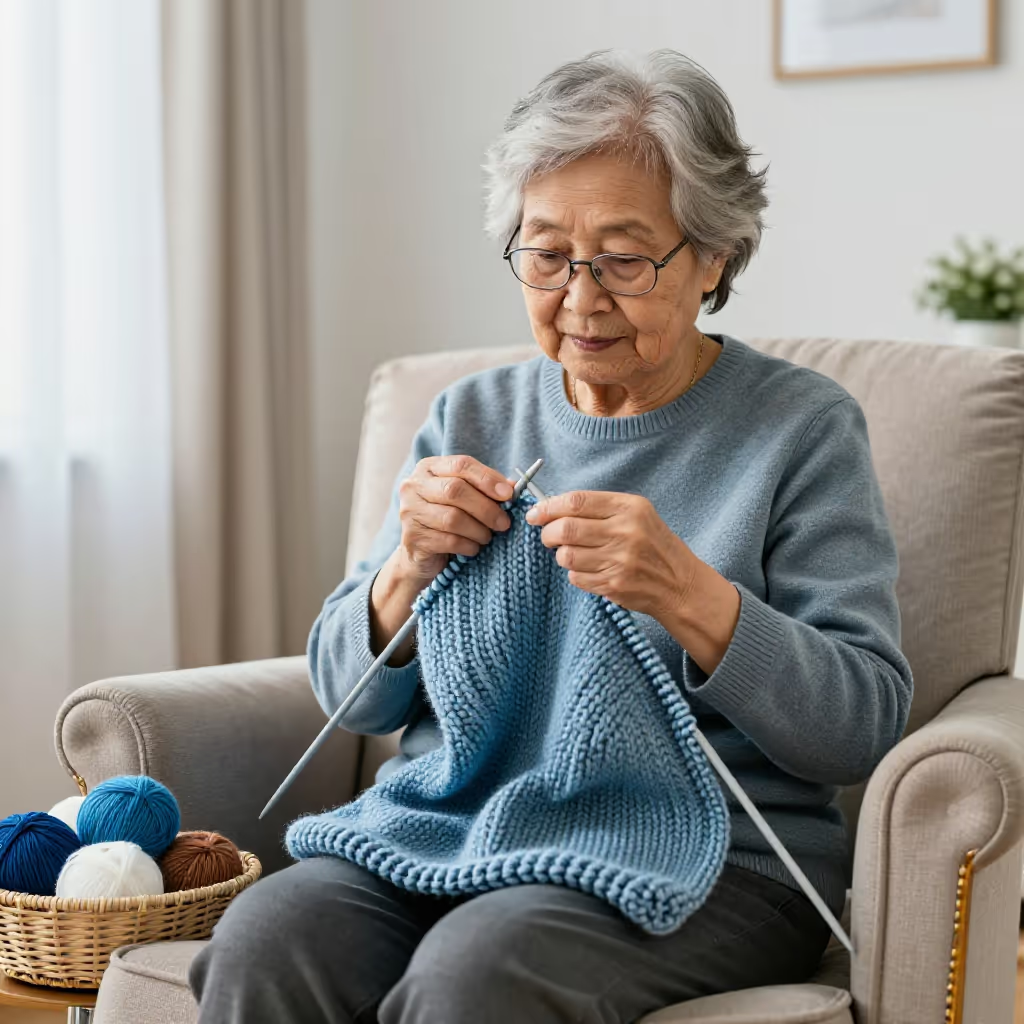
stricken
to knit
To make textiles, especially clothing, from yarn or wool using two or more needles.
Meine Großmutter strickt mir jedes Jahr zu Weihnachten einen warmen Pullover.
My grandmother knits me a warm sweater every year for Christmas.


to knit / devise / remove
Loading your saved state.
to knit
To make textiles, especially clothing, from yarn or wool using two or more needles.
Meine Großmutter strickt mir jedes Jahr zu Weihnachten einen warmen Pullover.
My grandmother knits me a warm sweater every year for Christmas.
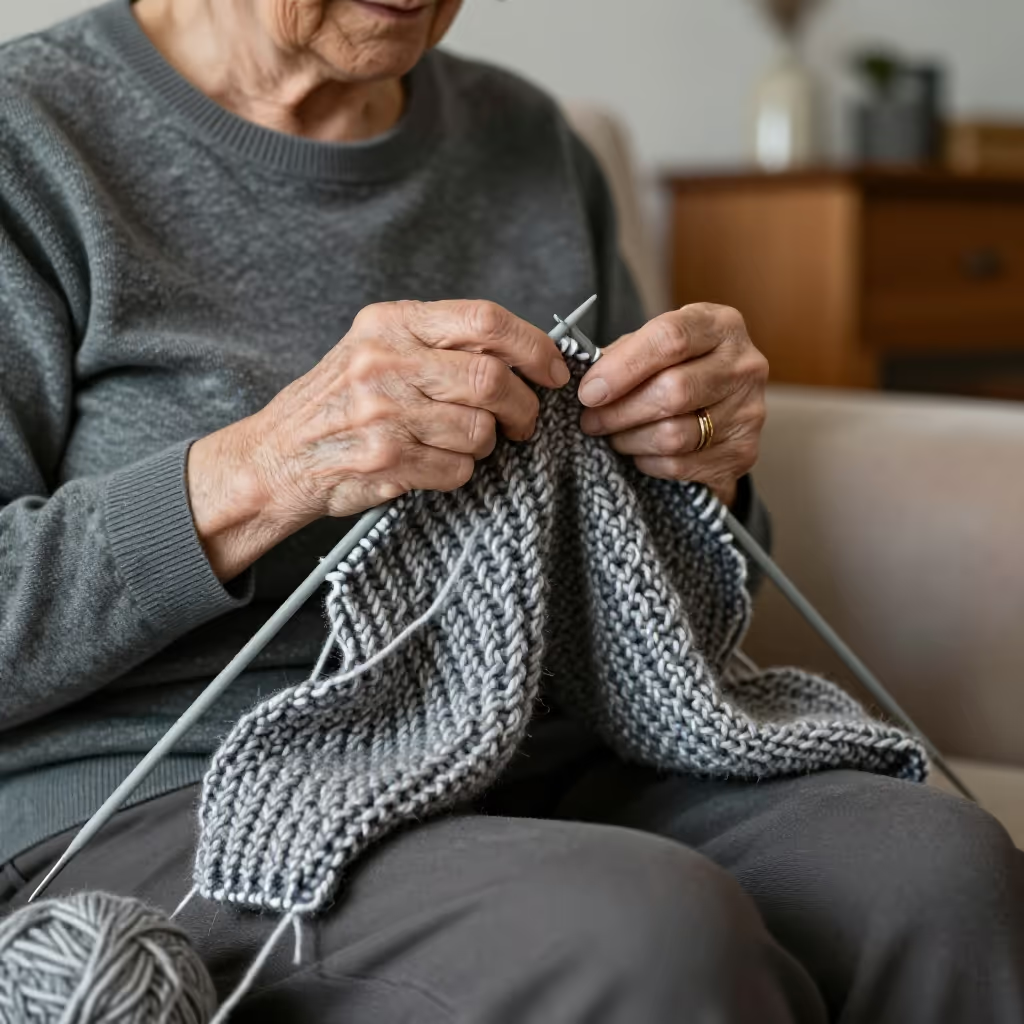
The meaning of 'stricken' (to knit / devise / remove) depends strongly on the object. If it refers to clothing like 'Pullover' (sweater) or 'Socken' (socks), the literal meaning is intended. If it refers to abstract things like 'Plan' (plan) or 'Geschichte' (story), the figurative meaning is intended.
Sie strickt einen Schal für den Winter.
She is knitting a scarf for the winter.
When you knit something for another person, that person is in the dative. The knitted object is in the accusative. The pattern is: jemandem (dative) etwas (accusative) stricken.
Er strickt seiner Freundin warme Handschuhe.
He is knitting his girlfriend warm gloves.
In the figurative meaning, 'stricken' (to devise) is often combined with abstract, complex things. Typical expressions are 'einen Plan stricken' (to devise a plan), 'eine Intrige stricken' (to weave a plot/intrigue), or 'eine Geschichte stricken' (to construct a story).
Er hat einen komplizierten Plan gestrickt, um das Projekt zu retten.
He devised a complicated plan to save the project.
The meaning 'etwas streichen' (to cross something out/delete something) or 'entfernen' (to remove) is outdated. It is no longer actively used in modern German. You might at most still find it in very old texts.
In dem alten Protokoll wurde der umstrittene Antrag als „gestrickt“ vermerkt.
In the old minutes, the controversial motion was noted as 'gestrickt' (removed).
to remove
'entfernen' and 'stricken' can only be similar in one very specific meaning: 'stricken' can have the outdated meaning of removing something from a list or document. In modern German, however, this is hardly common. Normally, 'stricken' means to make clothing from wool or yarn. For modern texts, 'entfernen' is the normal and clear choice. 'stricken' in this meaning is more likely to be understood in old or special texts.

In dem alten Protokoll strickte der Schreiber einen Namen aus der Liste.
In the old minutes, the clerk removed a name from the list.
Die Lehrerin hat den falschen Satz aus dem Arbeitsblatt entfernt.
The teacher removed the incorrect sentence from the worksheet.