


streichen
to paint
To cover a surface, especially a wall, with paint.
EXAMPLE
Am Wochenende wollen wir das Wohnzimmer gelb streichen.
At the weekend, we want to paint the living room yellow.
to paint / to cancel
Loading your saved state.
to paint
To cover a surface, especially a wall, with paint.
Am Wochenende wollen wir das Wohnzimmer gelb streichen.
At the weekend, we want to paint the living room yellow.

to cancel / delete
To remove something from a list, text, or plan, or declare it invalid.
Wegen des Sturms wurden alle Flüge nach Hamburg gestrichen.
Because of the storm, all flights to Hamburg were canceled.

to spread
To spread a soft substance, such as butter or jam, on a surface.
Kannst du mir bitte etwas Frischkäse auf mein Brot streichen?
Could you please spread some cream cheese on my bread?
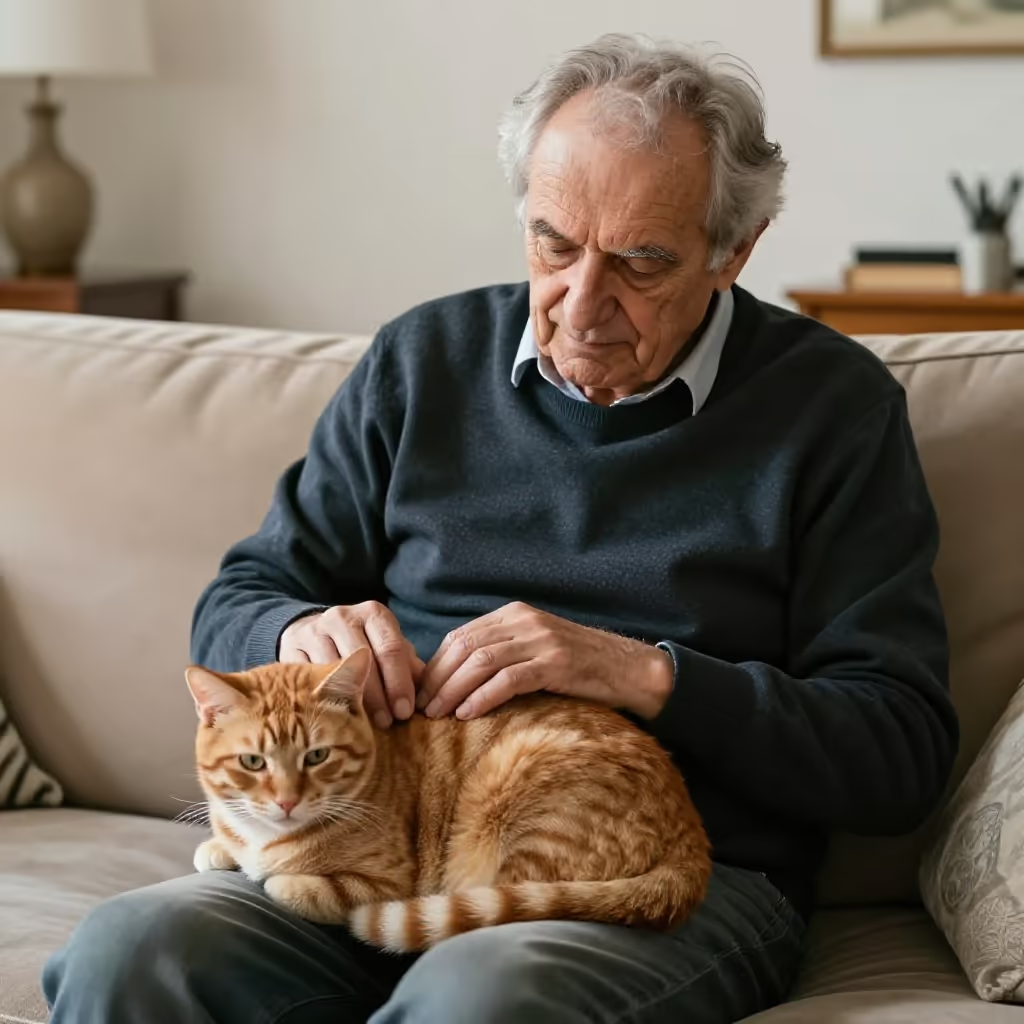
to stroke
To move your hand gently and lovingly over someone or something; to caress.
Die Mutter strich ihrem weinenden Kind tröstend über den Kopf.
The mother stroked her crying child comfortingly on the head.

to surrender
A fixed expression meaning to give up or surrender.
Angesichts der erdrückenden Beweise musste der Angeklagte die Segel streichen und gestehen.
In the face of overwhelming evidence, the defendant had to surrender and confess.

to roam
To move around, especially of animals; to wander about.
Die Katze streicht jede Nacht durch die Gärten der Nachbarschaft.
The cat roams through the neighborhood gardens every night.
Normally, 'streichen' forms the perfect tense with 'haben'. One exception is the meaning 'umherziehen' (to roam): when an animal moves around, the perfect tense is formed with 'sein'.
Ich habe die Wand blau gestrichen.
I painted the wall blue.
Many meanings of 'streichen' share a common basic idea: a smooth movement over a surface. This idea connects painting a wall, spreading butter, and gently touching the skin.
Er strich die Farbe gleichmäßig auf die Leinwand.
He spread the paint evenly on the canvas.
In the meaning 'entfernen' (to remove) or 'annullieren' (to cancel), 'streichen' is often combined with plans, appointments, or lists. Typical phrases are: 'einen Flug streichen' (to cancel a flight), 'einen Termin streichen' (to cancel an appointment), or 'einen Namen von der Liste streichen' (to cross a name off the list).
Wegen Krankheit musste ich meinen Zahnarzttermin streichen.
Because of illness, I had to cancel my dentist appointment.
When something is canceled, the sentence is very often in the passive. The thing that is canceled is then the subject of the sentence.
Das Konzert wurde wegen des schlechten Wetters gestrichen.
The concert was canceled because of the bad weather.
When you gently touch someone, the person is in the dative. The preposition 'über' then introduces the body part or surface being touched.
Er strich seiner Freundin sanft über die Wange.
He gently stroked his girlfriend's cheek.
'Die Segel streichen' (to surrender / to give up) is a fixed idiom. It comes from seafaring and figuratively means that you give up a fight, a plan, or an undertaking.
Nach stundenlanger Diskussion strich er schließlich die Segel und stimmte zu.
After hours of discussion, he finally gave up and agreed.
to drive / ride
Here, Fahren neutrally describes moving a hand across a surface. Streichen usually refers to a deliberate, gentle, and often affectionate touch. Fahren is appropriate for simply gliding across something; when the tenderness matters, streichen is more precise.
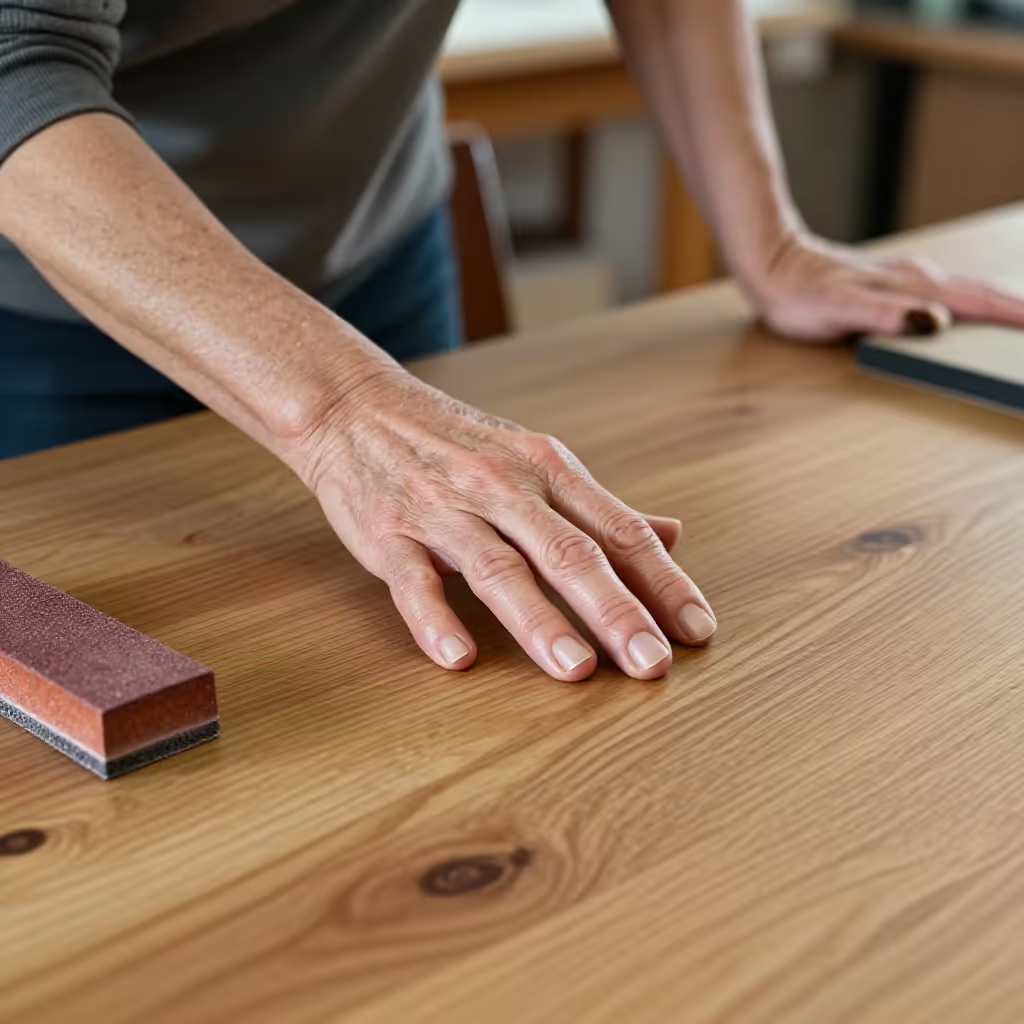
Die Mutter streicht mit der Hand sanft über den Rücken ihres Kindes.
The mother gently strokes her child’s back.
Die Ärztin fährt mit der Hand über seinen Rücken und sucht die schmerzende Stelle.
The doctor runs her hand over his back, looking for the painful spot.