

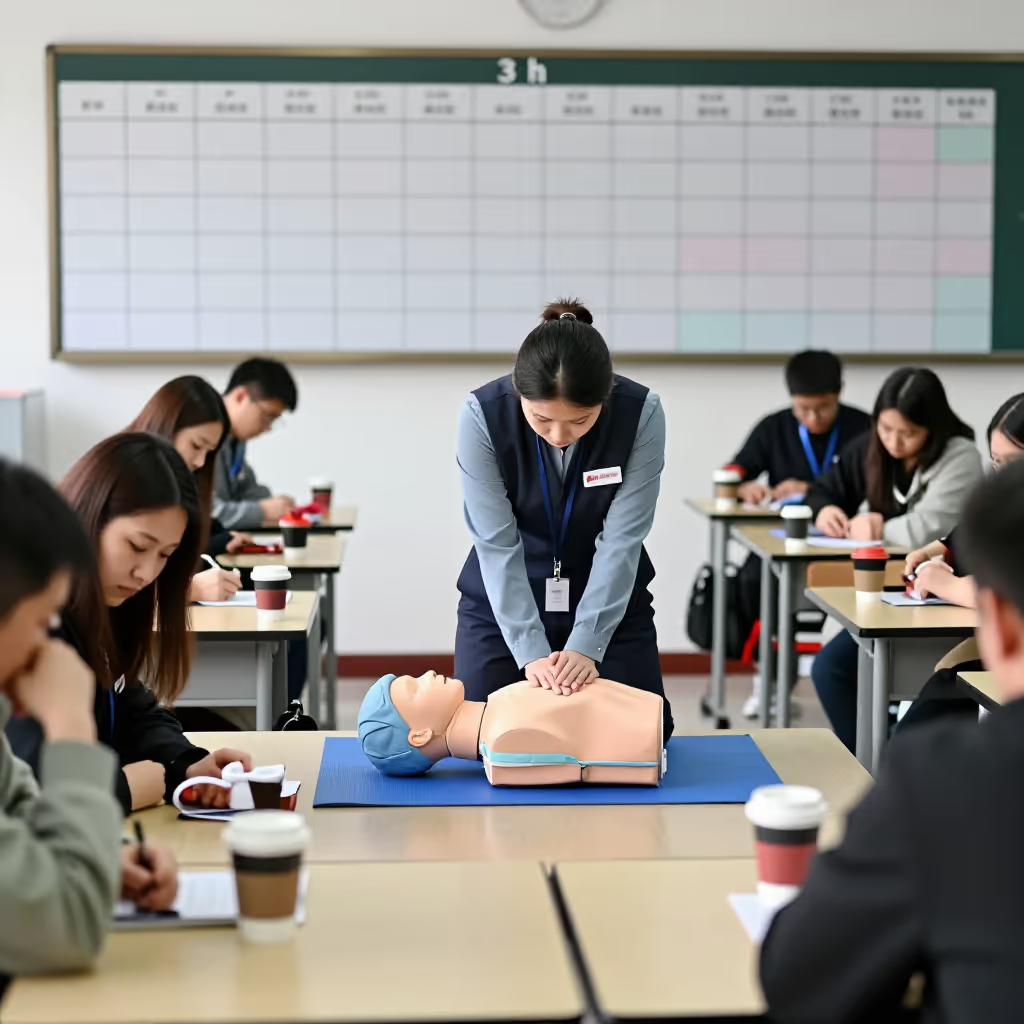
Used as an adjective ending to indicate the duration of something in hours. It is almost always combined with a number or an indefinite numeral word (e.g., 'zweistündig' = two-hour, 'mehrstündig' = lasting several hours).
example
Nach einer mehrstündigen Diskussion konnten sie sich endlich einigen.
After a discussion lasting several hours, they were finally able to reach an agreement.
Usage tips
Word structure
The ending '-stündig' (hour-long) is derived from 'die Stunde' (hour). It is attached to a number or quantity word to form an adjective that describes a duration of time. It cannot stand alone.
EXAMPLE
Die mehrstündige Wanderung war sehr anstrengend.
The hike lasting several hours was very exhausting.
Usage pattern
This adjective is always combined with a number (e.g., 'ein-', 'zwei-', 'drei-') or an indefinite numeral word (e.g., 'mehr-', 'viel-') to form a single word. For example: 'einstündig' (one-hour), 'zweistündig' (two-hour), 'mehrstündig' (lasting several hours).
EXAMPLE
Wir machen eine zweistündige Mittagspause.
We are taking a two-hour lunch break.
Sentence structure and declension
The compound word (e.g., 'zweistündig' = two-hour) is declined like a normal adjective before a noun. It adjusts its ending to the gender, case, and number of the noun.
EXAMPLE
Nach einem zweistündigen Flug landeten wir in Madrid.
After a two-hour flight, we landed in Madrid.
Compare with
near_synonym · confusable
stündig vs stundenlang
for hours
'stundenlang' and 'stündig' both have to do with a duration in hours. 'stundenlang' describes that something happens or lasts for several hours, often with the feeling: that was a long time. 'stündig' is used as part of an adjective with a number or numeral word, for example 'zweistündig' (two-hour) or 'mehrstündig' (lasting several hours). It more often describes the planned or exact duration of an event, a course, or a trip. Learners may confuse the words because both refer to hours. In practice: for an action, people often say 'stundenlang warten' (to wait for hours); for a fixed duration, they are more likely to say 'ein zweistündiger Kurs' (a two-hour course).
stündig
Zur Vorbereitung besucht sie einen zweistündigen Kurs.
To prepare, she attends a two-hour course.
stundenlang
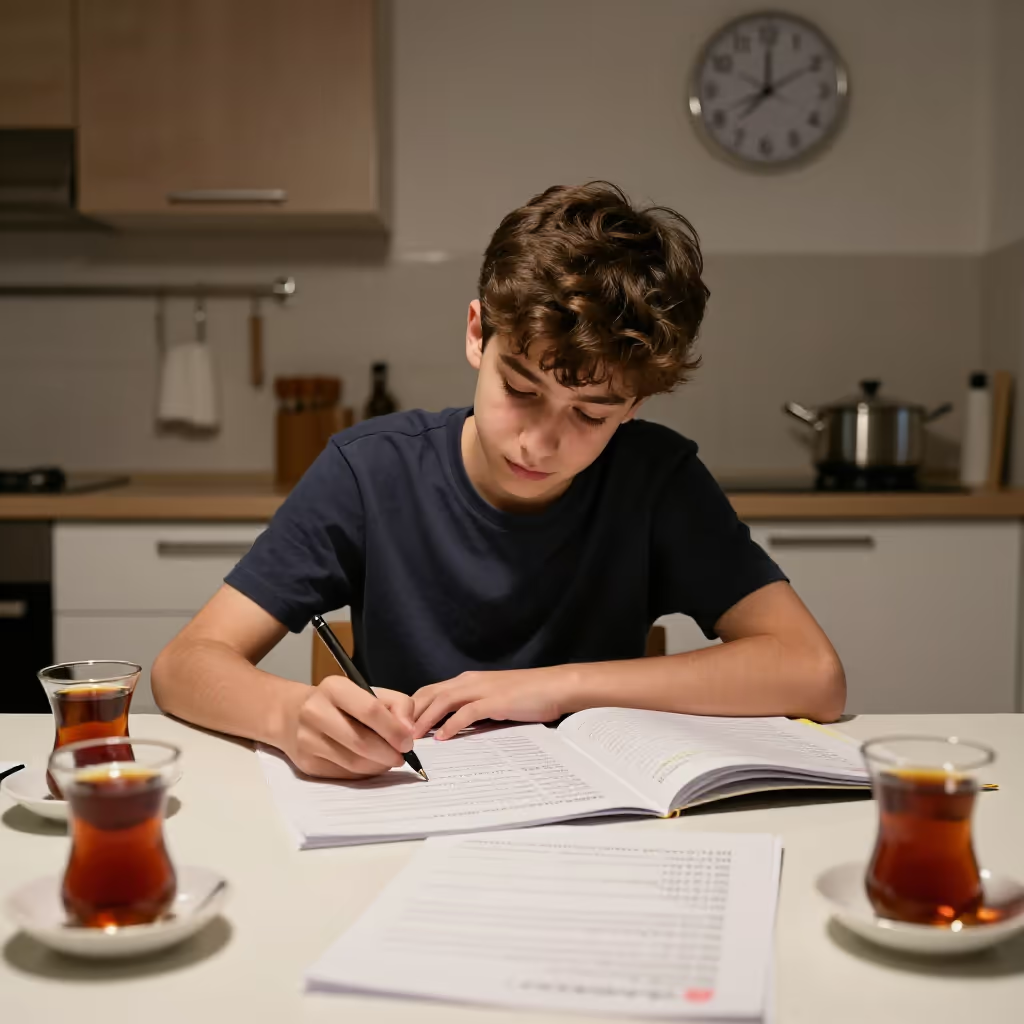
Für die Prüfung lernen wir heute stundenlang in der Küche.
Today we are studying in the kitchen for hours for the exam.