
stumm
mute
Unable to speak or temporarily not speaking, for example because of a disability, shock, or by one's own choice.
Sie war so überrascht, dass sie nur stumm dastehen konnte.
She was so surprised that she could only stand there mute.
mute / silent
Loading your saved state.
mute
Unable to speak or temporarily not speaking, for example because of a disability, shock, or by one's own choice.
Sie war so überrascht, dass sie nur stumm dastehen konnte.
She was so surprised that she could only stand there mute.

The adjective 'stumm' (mute/silent) is closely related to the verb 'verstummen' (to fall silent). 'Verstummen' describes the process of becoming quiet, while 'stumm' describes the state of being silent.
Als der Chef den Raum betrat, verstummte das Gespräch sofort.
When the boss entered the room, the conversation fell silent immediately.
If 'stumm' (mute/silent) refers to a person, it means 'not speaking'. If it refers to an object, such as a device, it means 'silent' or 'making no sound'.
Er blieb nach der überraschenden Frage einfach stumm.
After the surprising question, he simply remained mute.
To express the reason for the silence, the construction 'stumm vor + [noun in the dative]' is often used. Typical examples are 'stumm vor Schreck' (speechless with fright), 'stumm vor Wut' (speechless with anger), or 'stumm vor Staunen' (speechless with amazement).
Das Kind war nach dem lauten Knall stumm vor Schreck.
After the loud bang, the child was mute with fright.
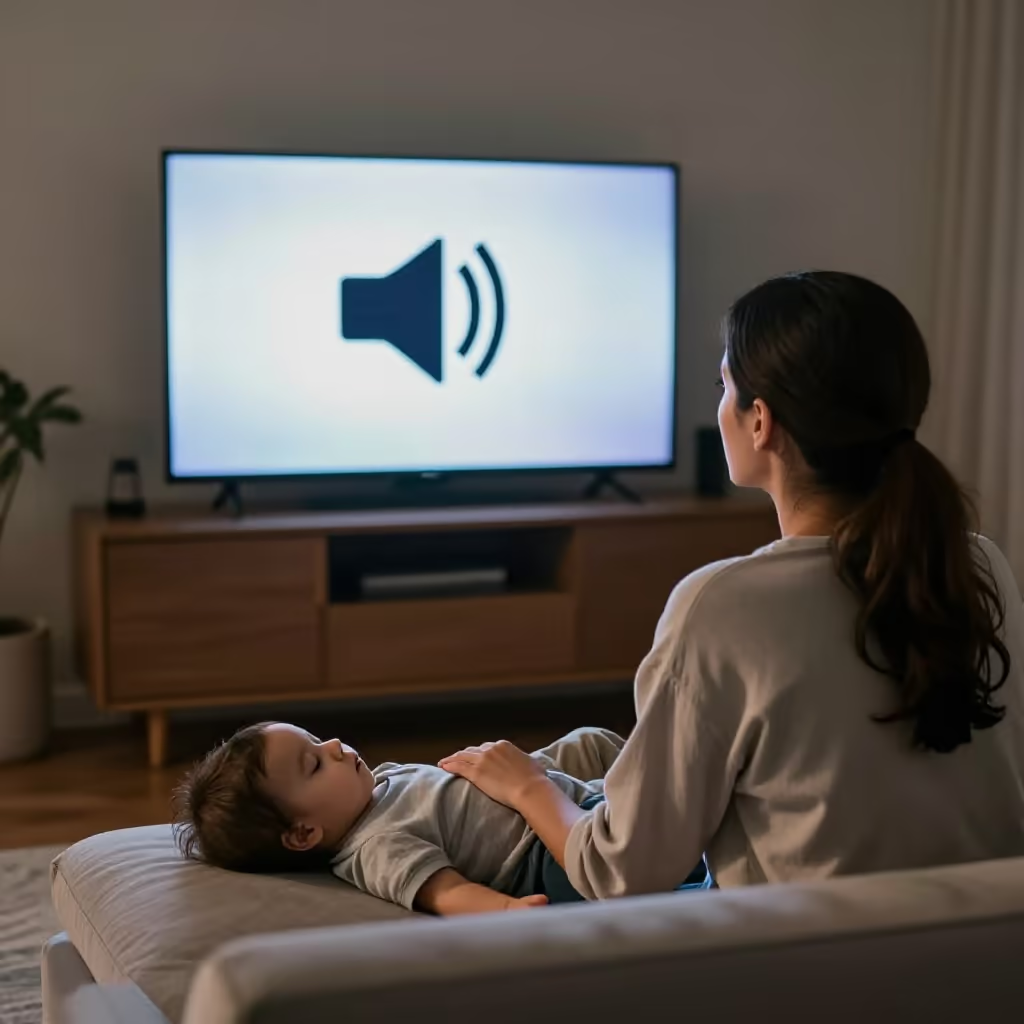
In the meaning of 'silent', 'stumm' (silent) is often used for technical devices. A very common action is 'das Telefon stumm schalten' (to mute the phone).
Könntest du bitte dein Handy stumm schalten? Der Film beginnt gleich.
Could you please mute your phone? The movie is about to start.
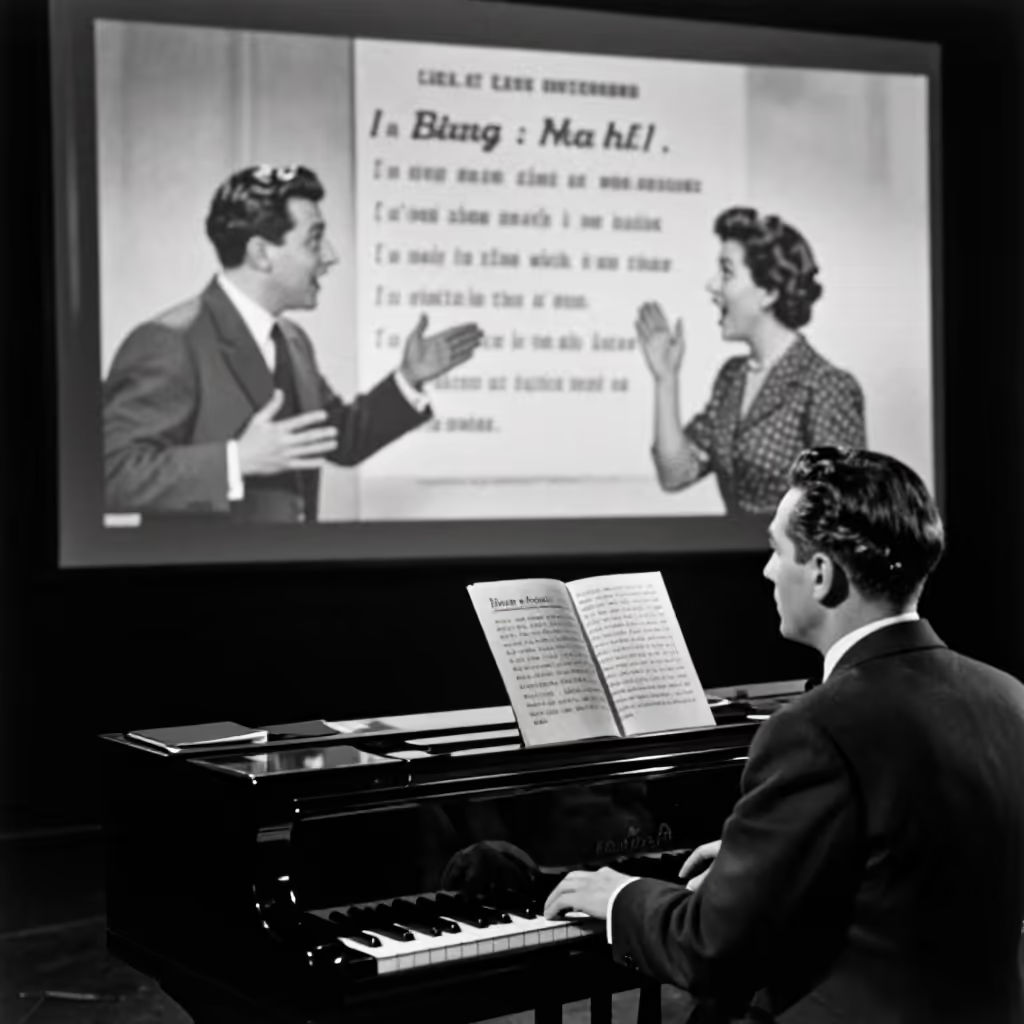
In the context of films without sound, the fixed combination 'der Stummfilm' (silent film) is usually used. Here, the adjective 'stumm' becomes part of the noun.
Stummfilme wurden oft von einem Klavierspieler im Kino live begleitet.
Silent films were often accompanied live by a piano player in the cinema.
'Ein stummer Vorwurf' (a silent reproach) is a fixed idiom. It describes criticism that is expressed not with words, but only through a look or gesture.
Der unaufgeräumte Zustand der Küche war ein stummer Vorwurf an alle Mitbewohner.
The messy state of the kitchen was a silent reproach to all the roommates.
loud / according to
'laut' and 'stumm' are opposites in the area of sound and speaking. 'laut' means that something is clearly audible or has a high volume. 'stumm' means that someone is not speaking or that something makes no sound. With devices, films, or situations, 'stumm' therefore does not simply mean 'quiet', but without sound. The simple contrast is: you can hear 'laut' clearly; with 'stumm', you hear nothing at all, or someone says nothing.

Während der Nachricht blieb er stumm und sah nur aus dem Fenster.
During the news, he remained silent and just looked out the window.
Bitte sprich nicht so laut, das Kind schläft schon.
Please don't speak so loudly; the child is already asleep.