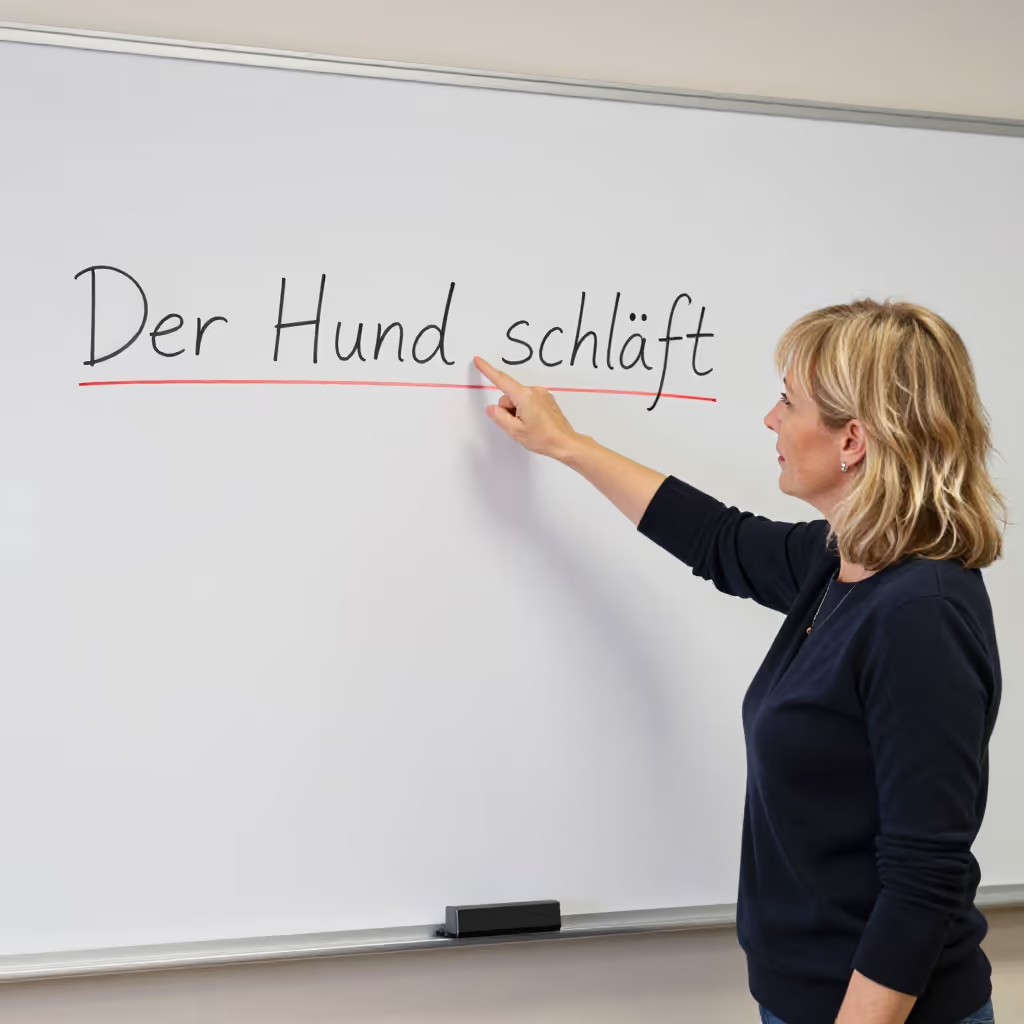
In grammar, the part of the sentence that indicates who or what does something or is in a certain state. You identify it with 'Wer oder was?' (Who or what?).
example
Im Satz „Der Hund bellt“ ist „Der Hund“ das Subjekt.
In the sentence 'Der Hund bellt' (The dog barks), 'Der Hund' (the dog) is the subject.

Usage tips
False friend
Although 'Subjekt' resembles the English 'subject', in German it does not mean 'topic'. If you are talking about the topic of an email or a conversation, use 'das Thema' (topic) or 'der Betreff' (subject line).
EXAMPLE
In der Grammatikstunde haben wir gelernt, das Subjekt im Satz zu finden.
In grammar class, we learned how to find the subject in a sentence.
Grammatical function
In grammar, the subject is always in the nominative. You find it with the question 'Wer oder was?' (Who or what?). The conjugated verb in the sentence agrees with the subject in person and number.
EXAMPLE
Im Satz „Die Kinder spielen“ ist „Die Kinder“ das Subjekt.
In the sentence 'Die Kinder spielen' (The children are playing), 'Die Kinder' (the children) is the subject.
Context: philosophy
You can recognize the philosophical meaning of 'Subjekt' (subject) as the thinking self from context. It is often used in academic or theoretical texts and usually forms a contrast with the 'Objekt' (object).
EXAMPLE
Kant untersuchte die Beziehung zwischen Subjekt und Objekt in der Erkenntnis.
Kant examined the relationship between subject and object in cognition.
Outdated meaning
The meaning 'Untertan' (subject) is outdated today and is used almost only in historical contexts when talking about monarchies or earlier forms of government.
EXAMPLE
Der König erwartete von seinen Subjekten absoluten Gehorsam.
The king expected absolute obedience from his subjects.
Compare with
near_synonym · confusable
Subjekt vs Bürger
citizen
'der Bürger' and 'das Subjekt' can both refer to a person in relation to a state or a ruling power. Today, 'Bürger' is the normal word for someone who belongs to a state or a city and has rights and duties. 'Subjekt' in the sense of 'Untertan' (subject) is outdated or very formal, and it emphasizes more that someone is subordinate to a power. Learners may confuse the words because both have to do with the state and a person. In everyday modern German, you almost always say 'Bürger'; 'Subjekt' is used in this sense mainly in historical or philosophical texts.
Subjekt
In dem alten Königreich galt der Mensch nicht als freier Bürger, sondern als Subjekt des Königs.
In the old kingdom, a person was not considered a free citizen, but a subject of the king.
Bürger
Die Bürger der Stadt dürfen am Sonntag über den neuen Park abstimmen.
The residents of the city may vote on the new park on Sunday.