

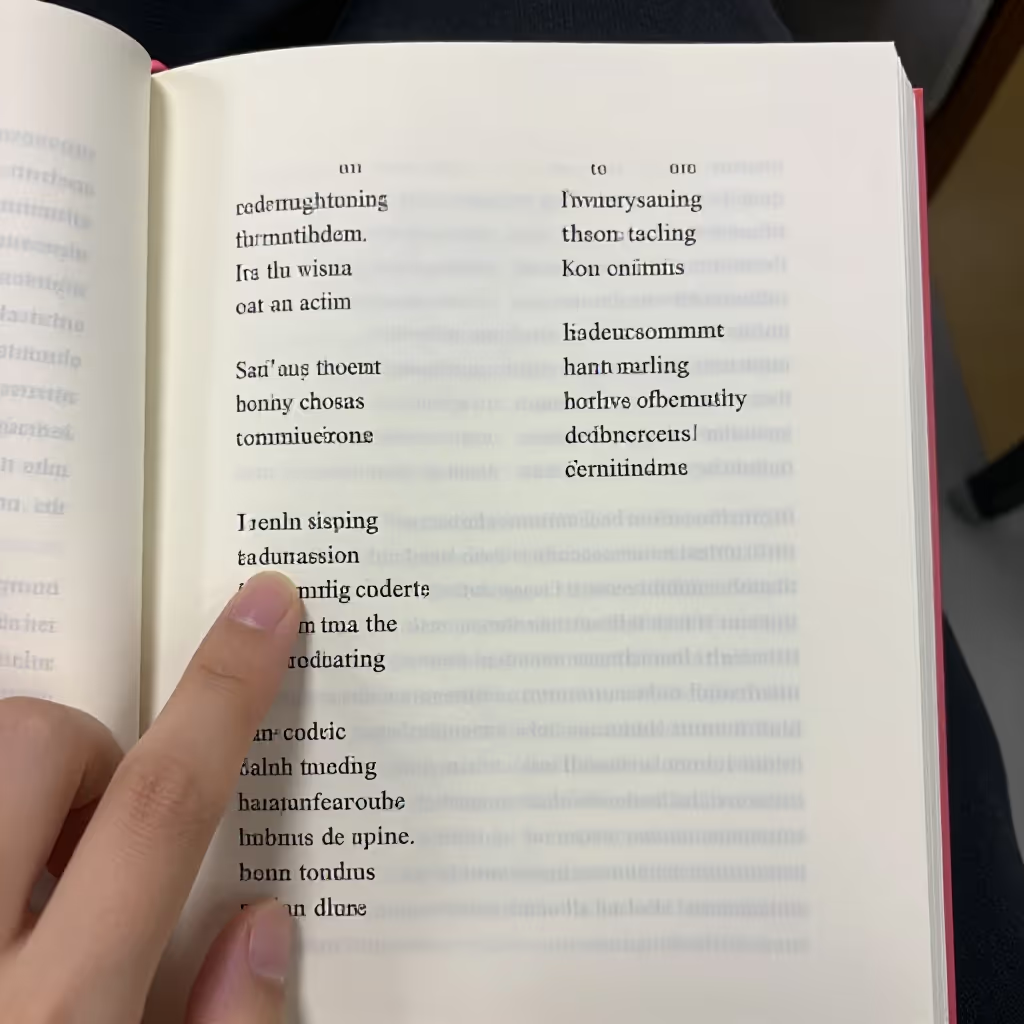
A section in a poem or song lyric that consists of several lines (verses) and forms a self-contained unit.
example
Das Lied hat drei Strophen und einen Refrain, den alle mitsingen können.
The song has three verses and a chorus that everyone can sing along to.

Usage tips
Structure of a text
A 'Strophe' (stanza/verse) is a whole section in a poem or song. It consists of several individual lines, which are called 'Verse' (lines/verses).
EXAMPLE
Die erste Strophe beschreibt die Landschaft im Winter.
The first stanza describes the landscape in winter.
Typical collocations
'Strophe' (stanza/verse) is often combined with verbs such as 'singen' (to sing), 'lesen' (to read), 'schreiben' (to write), or 'lernen' (to learn). People also speak of the 'erste' (first), 'nächste' (next), or 'letzte' (last) stanza/verse.
EXAMPLE
Können wir bitte die zweite Strophe noch einmal üben?
Can we please practice the second verse one more time?
Context: literature and music
This word is used almost exclusively in the context of poems and song lyrics. It is a technical term from literary and music theory, but it is also common in everyday language.
EXAMPLE
Dieses Gedicht hat vier Strophen mit je vier Versen.
This poem has four stanzas with four lines each.
Compare with
confusable
Strophe vs Zeile
line
'Zeile' and 'Strophe' both occur in poems or song lyrics, but they do not mean the same thing. A 'Zeile' is only a single horizontal line in the text. A 'Strophe' is a larger section made up of several lines. They can be confused when talking about song lyrics. If you mean just one single line of text, use 'Zeile'. If you mean a whole section of the song or poem, use 'Strophe'.
Strophe
Nach der ersten Strophe singt der Chor den Refrain.
After the first verse, the choir sings the chorus.