


der Süd
south
The cardinal direction opposite north. Often used as 'Süden' (south).
EXAMPLE
Unser Haus ist nach Süd ausgerichtet, deshalb haben wir viel Sonne.
Our house faces south, so we get a lot of sun.
south
Loading your saved state.
south
The cardinal direction opposite north. Often used as 'Süden' (south).
Unser Haus ist nach Süd ausgerichtet, deshalb haben wir viel Sonne.
Our house faces south, so we get a lot of sun.
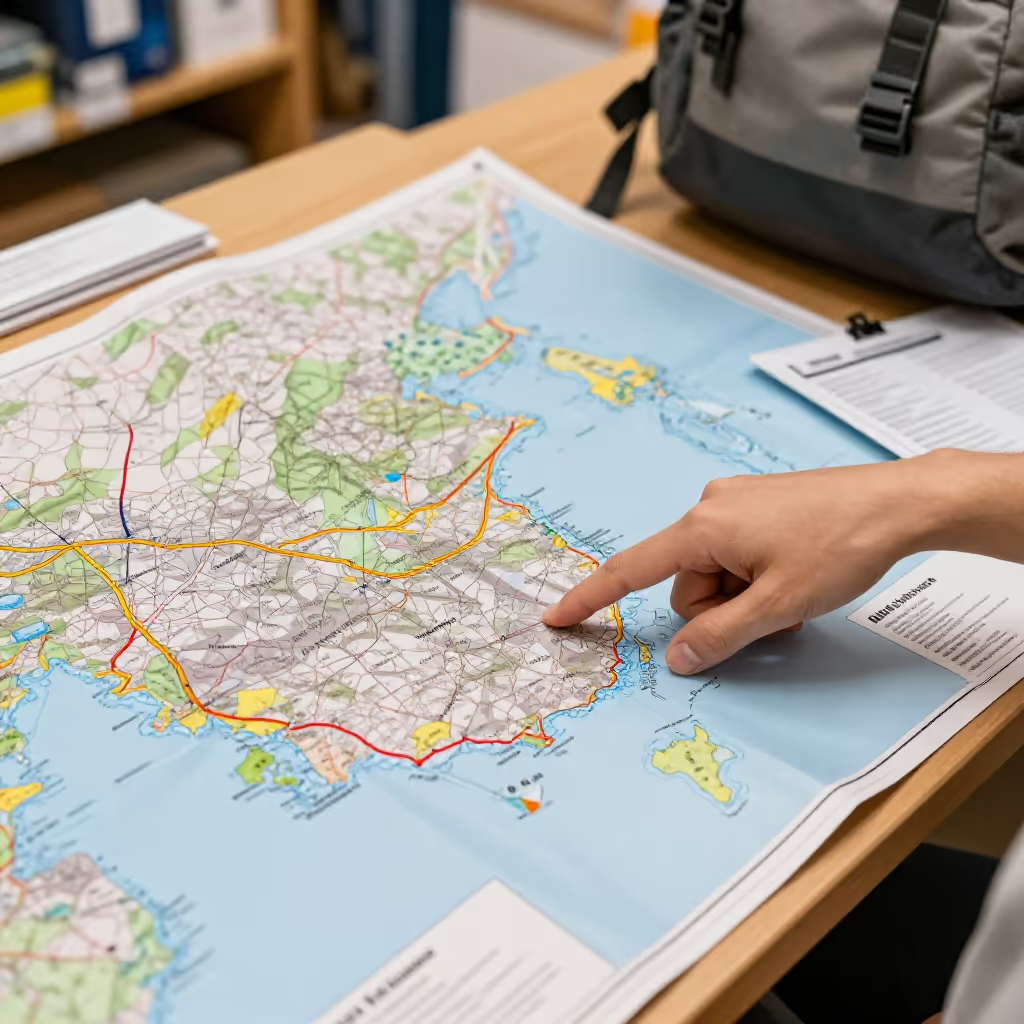
south
The southern part of a geographic area such as a country, region, or continent.
Der Süd des Landes ist touristisch sehr beliebt.
The south of the country is very popular with tourists.
For cardinal directions, the prepositions are crucial. 'Nach Süden' (to the south) describes movement in that direction, 'im Süden' (in the south) describes a position, and 'aus Süden' (from the south) describes origin.
Viele Vögel fliegen im Winter nach Süden.
Many birds fly south in winter.
'Süd-' (south) is a very productive component of compound words used to describe geographic locations. Examples include countries, regions, or characteristics.
Südkorea ist bekannt für seine Technologie.
South Korea is known for its technology.
The form 'Süd' is often used in compounds (e.g., Süddeutschland, southern Germany) or in technical language (e.g., Wind aus Süd, wind from the south). In general usage, the form 'der Süden' (the south) is more common when the word stands alone.
Im Süden von Spanien ist es auch im Winter mild.
In the south of Spain, it is mild even in winter.
The meaning 'geographic part' is often connected with the genitive or the preposition 'von' (of/from) to specify the area. Examples are 'der Süden Deutschlands' (the south of Germany) or 'der Süden von Italien' (the south of Italy).
Der Süden des Landes ist wirtschaftlich stärker als der Norden.
The south of the country is economically stronger than the north.
south
„Der Süden“ is the usual term for the compass direction. „Der Süd“ can also refer to the same direction, but it usually sounds terse or marked, for example in a course instruction. In an ordinary sentence about the direction, „Süden“ is therefore usually used; „Süd“ can work in fixed expressions.

Der Kapitän gab den kurzen Befehl: Kurs Süd!
The captain gave the brief command: “Course south!”
Das Schiff fährt nach Süden, weil dort der nächste Hafen liegt.
The ship is sailing south because the next port is there.