


Sport treiben
to do sports
To be physically active; to regularly practice a sport.
EXAMPLE
Ich versuche, dreimal pro Woche Sport zu treiben.
I try to do sports three times a week.
to drive / drift
Loading your saved state.
to do sports
To be physically active; to regularly practice a sport.
Ich versuche, dreimal pro Woche Sport zu treiben.
I try to do sports three times a week.
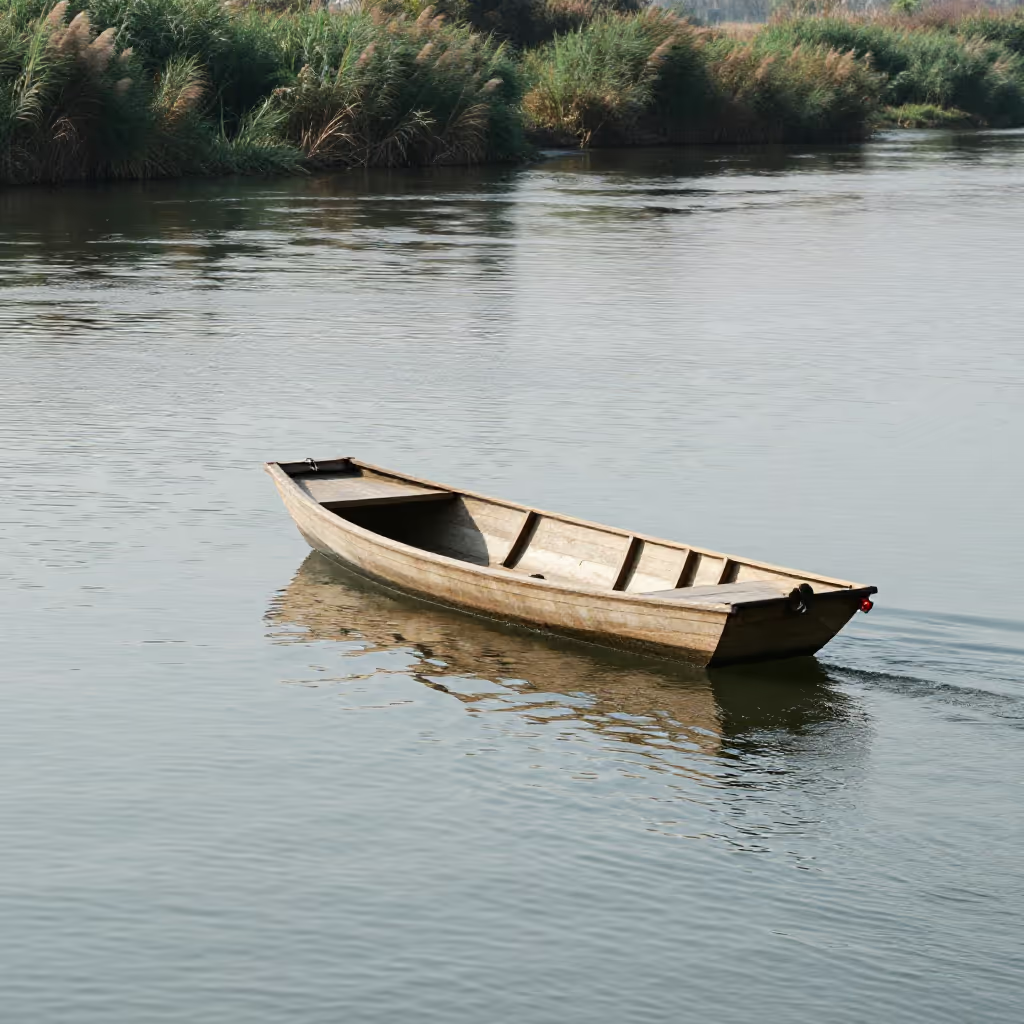
to drift
To let oneself be moved passively by the current of the water or by the wind.
Wir ließen uns mit dem Schlauchboot auf dem Fluss treiben.
We let ourselves drift down the river in the inflatable boat.
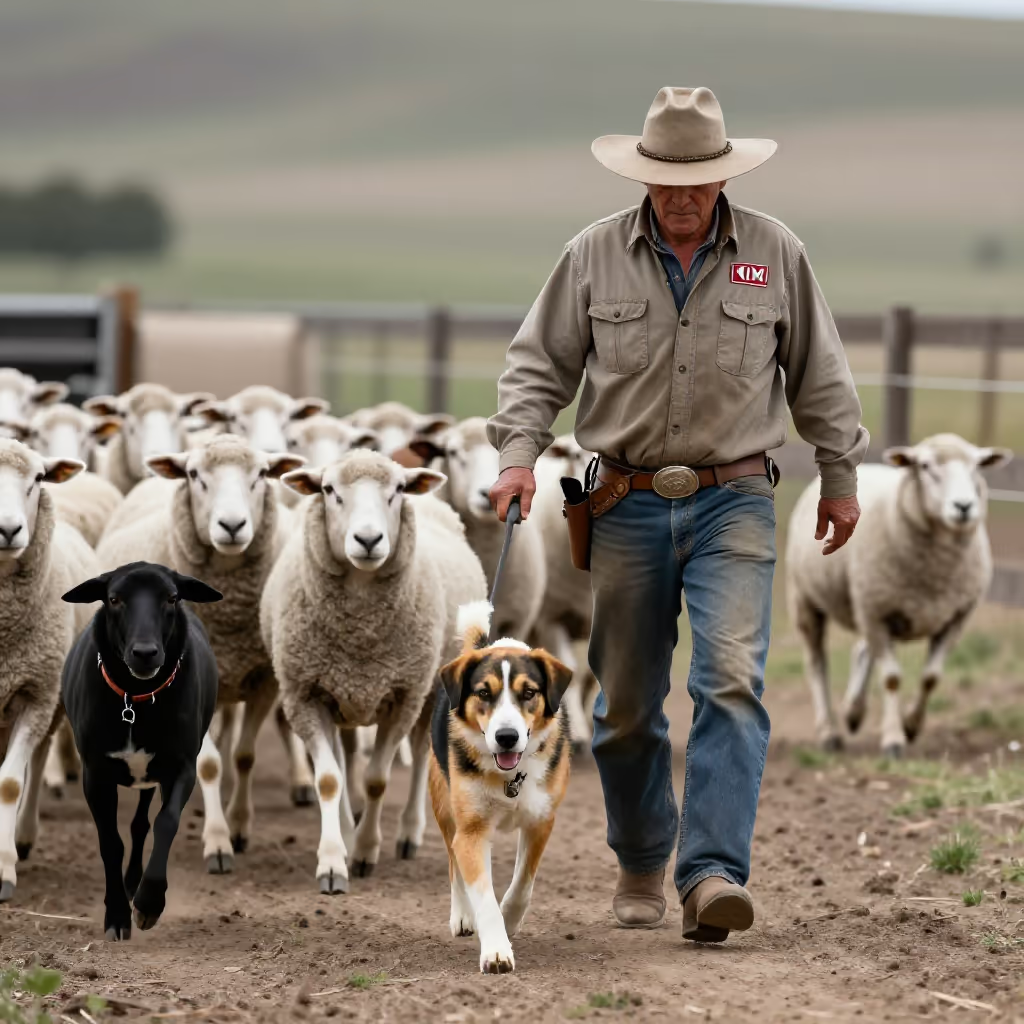
to drive
To move or herd animals in a certain direction.
Der Hirte treibt seine Herde auf eine neue Weide.
The shepherd drives his flock to a new pasture.

to drive someone to something
To bring someone to a certain action through pressure or inner need.
Der Hunger trieb ihn dazu, Essen zu stehlen.
Hunger drove him to steal food.

to sprout
Of plants: to grow new leaves, shoots, or blossoms.
Die Knospen an den Bäumen fangen an zu treiben.
The buds on the trees are beginning to sprout.

to trade
To do business; to trade in goods or services.
Schon im Mittelalter trieben die Städte regen Handel miteinander.
As early as the Middle Ages, the cities traded actively with one another.

to go too far
To exceed a limit of what is acceptable or reasonable.
Mit seinen ständigen Witzen hat er es diesmal zu weit getrieben.
With his constant jokes, he went too far this time.

to get up to mischief
To do nonsense; to play silly or cheeky pranks.
Die Nachbarskinder haben schon wieder irgendeinen Unfug getrieben.
The neighborhood children have been getting up to some kind of mischief again.
The basic idea of 'treiben' is to set something or someone in motion, or to move passively oneself. This idea appears in many meanings, from driving animals to drifting on water.
Der Wind treibt die Wolken vor sich her.
The wind drives the clouds ahead of it.
The perfect tense of 'treiben' is usually formed with 'haben' (to have). However, if there is directed movement toward a destination, 'sein' (to be) is used.
Der Bauer hat seine Kühe auf die Weide getrieben.
The farmer drove his cows onto the pasture.
'Sport treiben' is a fixed expression and means to be physically active. The noun 'Sport' is the direct object here.
Um fit zu bleiben, sollte man regelmäßig Sport treiben.
To stay fit, you should do sports regularly.
In the meaning 'to move passively', the reflexive form 'sich treiben lassen' (to let oneself drift) is often used. This emphasizes that you give up control and let yourself be moved by water or by a mood.
Im Urlaub möchte ich mich einfach nur am Strand treiben lassen.
On vacation, I just want to let myself drift along at the beach.
When 'treiben' is used in the sense of 'to move ahead of oneself', the objects are usually groups of animals. Typical combinations are 'eine Herde treiben' (to drive a herd) or 'Vieh treiben' (to drive cattle).
Der Cowboy treibt die Rinderherde durch die Prärie.
The cowboy drives the herd of cattle through the prairie.
This meaning often follows the pattern 'jemanden zu etwas treiben' (to drive someone to something). The preposition 'zu' with the dative introduces the action or state that the person is pushed toward.
Die Neugier trieb sie dazu, das alte Buch zu öffnen.
Curiosity drove her to open the old book.
In this context, the subjects are always plants or parts of plants. The verb can also be used with an accusative object to say what is growing, e.g., 'Blüten treiben' (to produce blossoms).
Im Frühling treiben die Bäume neue Blätter.
In spring, the trees produce new leaves.
The combination 'Handel treiben' is a fixed expression for 'to do business'. It is often combined with a description of the trade, e.g., 'regen Handel treiben' (to engage in lively trade).
Die Hafenstadt treibt Handel mit der ganzen Welt.
The port city trades with the whole world.
The idiom 'es zu weit treiben' (to go too far) is a fixed unit. The pronoun 'es' is a fixed component here and cannot be replaced.
Mit dieser unfairen Bemerkung hast du es wirklich zu weit getrieben.
With that unfair remark, you really went too far.
'Unfug treiben' is a fixed collocation and means to do nonsense or play pranks. It is often used for children's behavior.
Pass auf, dass die Kinder im Garten keinen Unfug treiben.
Make sure the children don't get up to any mischief in the garden.
to do / make
Both expressions mean that someone does sports. „Sport machen“ sounds more relaxed and colloquial in conversation, while „Sport treiben“ is the established, somewhat more matter-of-fact expression. „Machen“ works well in a private conversation; „treiben“ is also suitable in a general recommendation or a factual text.
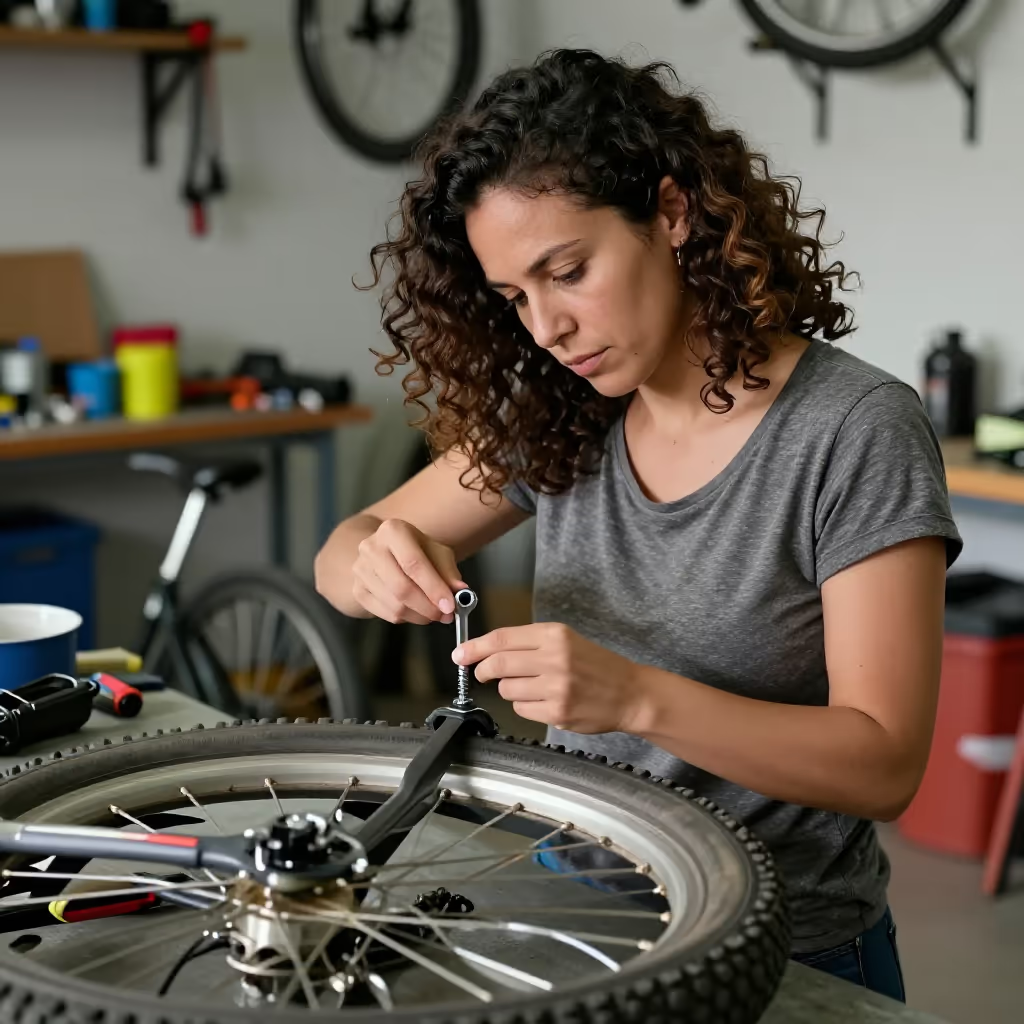
Der Arzt empfiehlt Lisa, regelmäßig Sport zu treiben.
The doctor recommends that Lisa exercise regularly.
Nach der Arbeit macht Lisa gern Sport.
Lisa likes to exercise after work.