


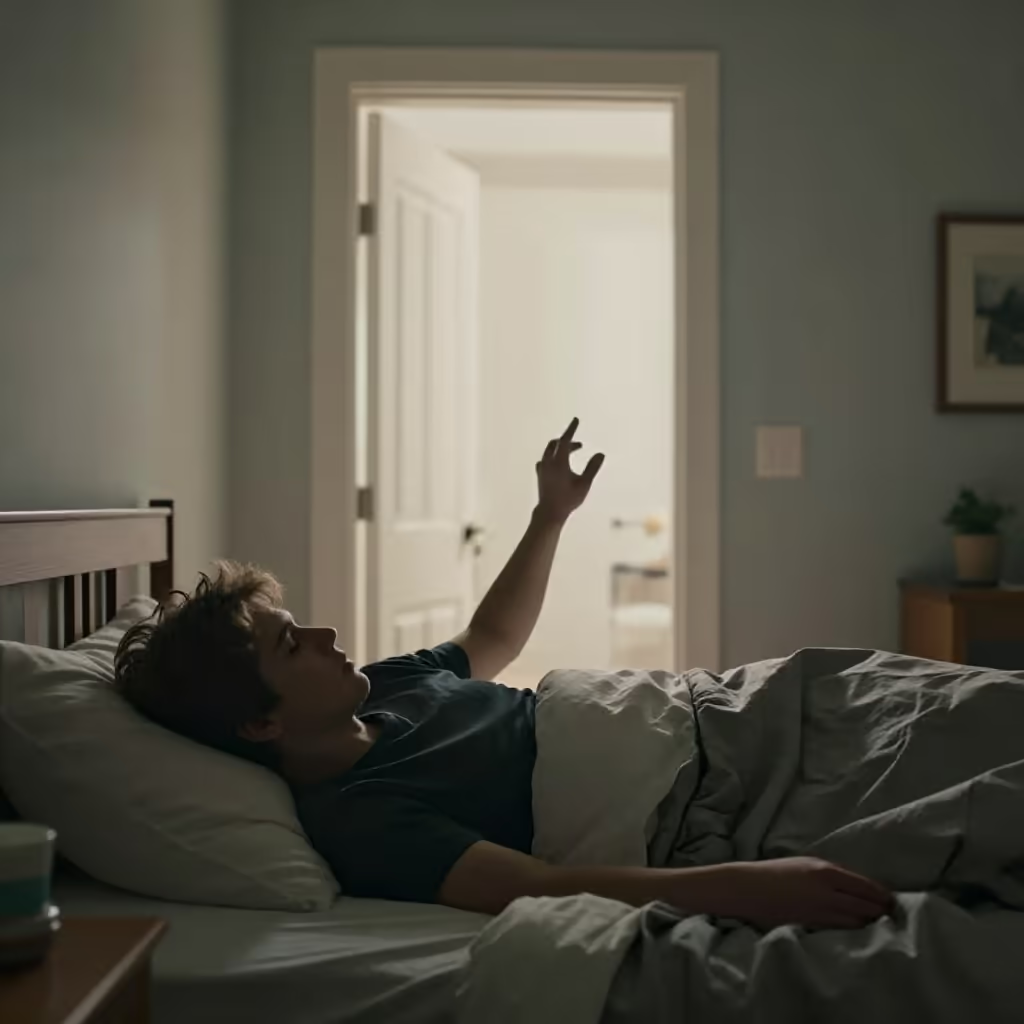
Something that seems like a dream; unreal, bizarre, or fantastic. It calls the perception of reality into question.
example
Die Landschaft nach dem Sturm sah mit den umgeknickten Bäumen und dem seltsamen Licht einfach nur surreal aus.
The landscape after the storm, with the fallen trees and the strange light, looked simply surreal.
Usage tips
Word structure
The word comes from French. The prefix 'sur' means 'above' or 'beyond'. So 'surreal' describes something that stands above normal reality or lies beyond it.
EXAMPLE
Die Stille nach dem lauten Konzert wirkte absolut surreal.
The silence after the loud concert felt absolutely surreal.
Use in a sentence
'Surreal' is often used with verbs that describe a perception or impression. Typical constructions are 'surreal wirken' (to seem surreal), 'surreal aussehen' (to look surreal), or 'sich surreal anfühlen' (to feel surreal).
EXAMPLE
Die verlassene Fabrikhalle fühlte sich im Nebel surreal an.
The abandoned factory hall felt surreal in the fog.
Typical collocations
This adjective often describes abstract impressions or situations. Common combinations are 'eine surreale Atmosphäre' (a surreal atmosphere), 'eine surreale Szene' (a surreal scene), or 'ein surreales Erlebnis' (a surreal experience).
EXAMPLE
Als ich den berühmten Schauspieler zufällig im Supermarkt traf, war das ein surreales Erlebnis.
When I ran into the famous actor by chance at the supermarket, it was a surreal experience.
Compare with
antonym
surreal vs wirklich
really
'wirklich' and 'surreal' are opposites when something either seems real or appears dreamlike. 'wirklich' says that something actually is that way. 'surreal' does not necessarily mean that something is impossible, but rather that it seems very unreal, strange, or dreamlike. 'surreal' is often used for situations, images, or experiences that are not normal or are hard to believe.
surreal
Nach dem Essen wirkt die leere Stadt auf der Feier fast surreal.
After the meal, the empty city at the celebration seems almost surreal.