


The dried and processed leaves of the tobacco plant, used for smoking in cigarettes, cigars, or pipes, as well as for chewing or sniffing.
example
Er dreht seine Zigaretten selbst aus losem Tabak.
He rolls his own cigarettes from loose tobacco.
Usage tips
Use without an article
In the meaning of a consumer product, 'Tabak' (tobacco) is often used like a mass noun (for example, like water or sand) without an article, especially when referring to the substance itself.
EXAMPLE
Er kauft sich immer eine Dose Tabak.
He always buys himself a tin of tobacco.
Context clue
You can tell whether the plant or the finished product is meant from the verb. Verbs like 'anbauen' (to grow/cultivate) or 'ernten' (to harvest) refer to the plant, while verbs like 'rauchen' (to smoke) or 'kaufen' (to buy) refer to the product.
EXAMPLE
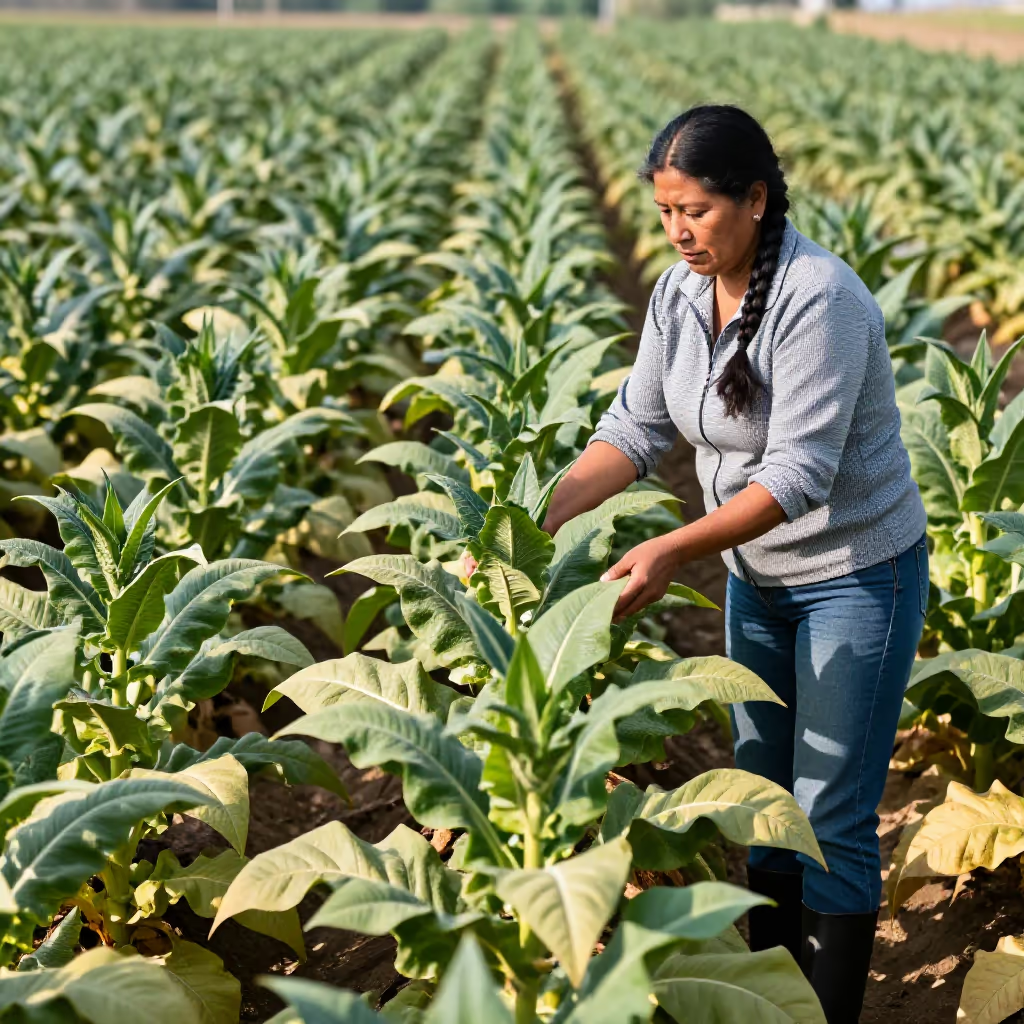
In dieser Region wird seit Jahrhunderten Tabak angebaut.
Tobacco has been grown in this region for centuries.
Typical verbs
When it comes to consumption, 'Tabak' (tobacco) is often combined with the verbs 'rauchen' (to smoke), 'kauen' (to chew), or 'schnupfen' (to sniff/snuff). Rolling cigarettes is also a typical action.
EXAMPLE
Mein Großvater hat früher Pfeife geraucht und dafür speziellen Tabak gekauft.
My grandfather used to smoke a pipe and bought special tobacco for it.
Compare with
confusable
Tabak vs Zigarette
cigarette
'Zigarette' and 'Tabak' are closely connected, but they are not the same thing. A 'Zigarette' is the finished object that you smoke. 'Tabak' is the material made from dried tobacco leaves that can be in a cigarette, cigar, or pipe. In addition, 'Tabak' can also mean the plant. Learners may confuse the words because many cigarettes contain tobacco. You buy or smoke a cigarette, but tobacco is the substance inside it or the product used for rolling your own cigarettes.
Tabak
Für die selbstgedrehten Zigaretten kauft Paul Tabak im Kiosk.
For his hand-rolled cigarettes, Paul buys tobacco at the kiosk.