

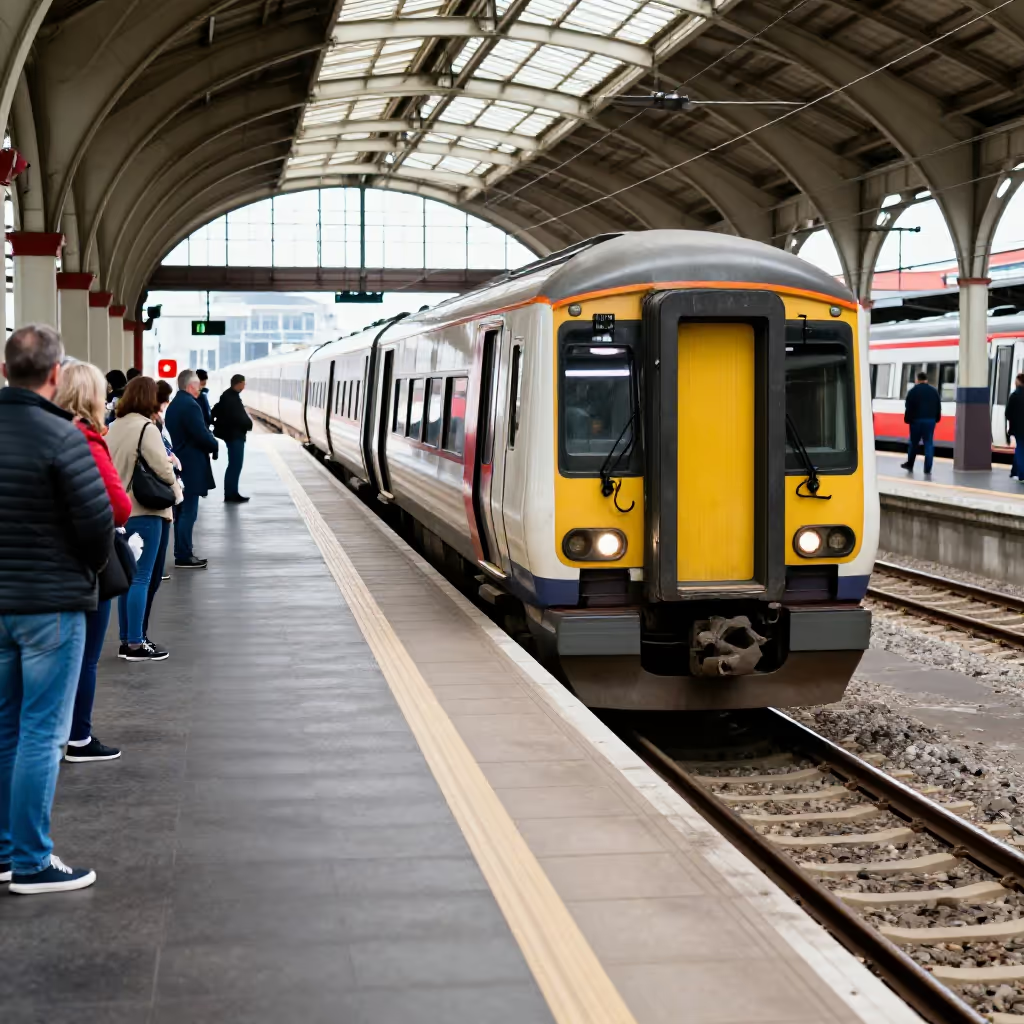
der Stillstand
standstill
A state in which all movement or activity has stopped.
EXAMPLE
Ein technischer Defekt führte zum Stillstand der gesamten Produktionsanlage.
A technical defect brought the entire production facility to a standstill.
standstill
Loading your saved state.
standstill
A state in which all movement or activity has stopped.
Ein technischer Defekt führte zum Stillstand der gesamten Produktionsanlage.
A technical defect brought the entire production facility to a standstill.

standstill
A state without progress, development, or change, often in an economic, political, or personal context; stagnation.
Die Verhandlungen sind zu einem Stillstand gekommen, da keine Seite nachgeben will.
The negotiations have come to a standstill because neither side wants to give in.
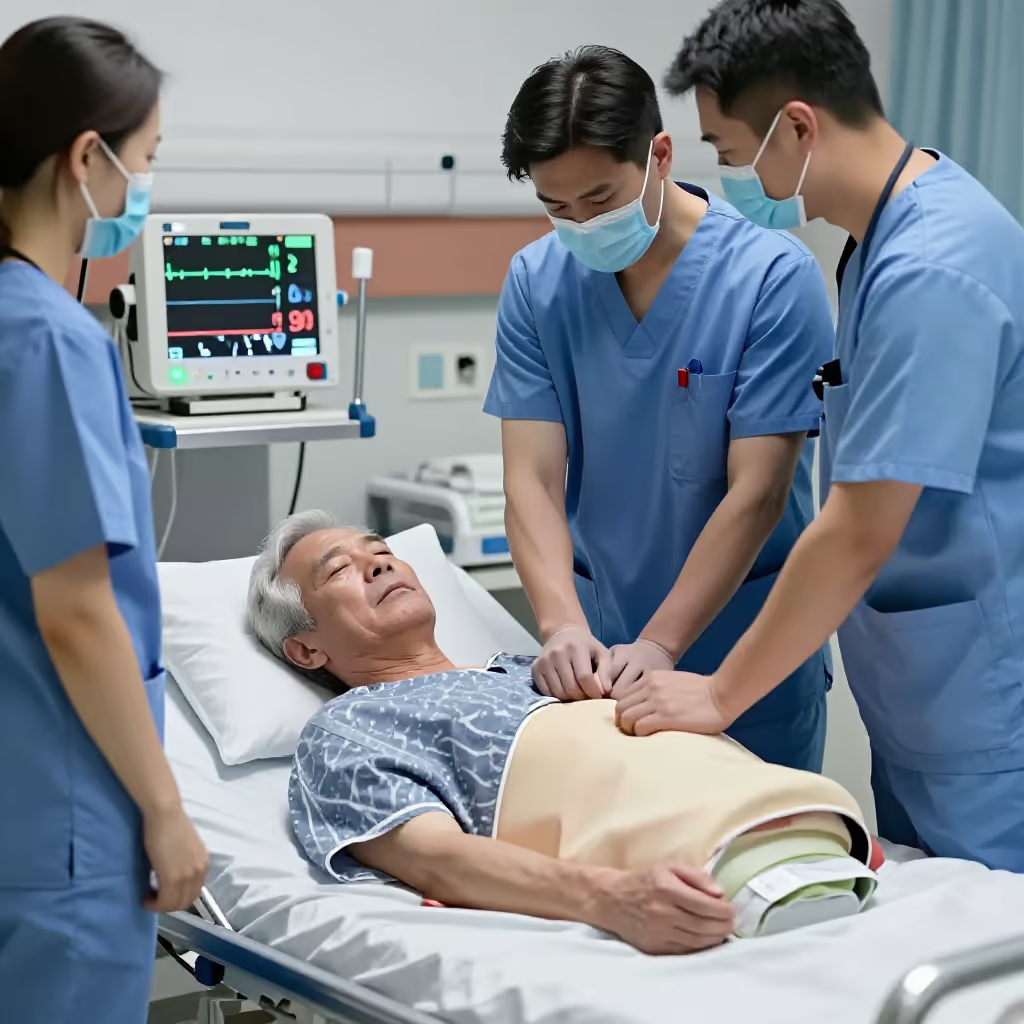
arrest
In medicine, the stopping of a vital bodily function, such as the heartbeat or breathing.
Nach dem Unfall kam es bei dem Patienten zu einem Atemstillstand.
After the accident, the patient suffered respiratory arrest.
'Stillstand' (standstill) is made up of the adjective 'still' (quiet, without movement) and the noun 'der Stand' (state/standing). It literally describes a state in which everything is standing still.
Ein Stromausfall führte zum plötzlichen Stillstand der Maschinen.
A power outage led to the sudden standstill of the machines.
'Stillstand' (standstill) is very commonly used with the verbs 'kommen' (to come) and 'bringen' (to bring): 'zum Stillstand kommen' means that something stops on its own, and 'etwas zum Stillstand bringen' means that someone or something actively stops it.
Der Zug kam quietschend zum Stillstand.
The train came screeching to a standstill.
In medicine, 'Stillstand' (arrest/standstill) is almost always used as part of a compound to name the stopping of a vital function. Typical examples are 'Herzstillstand' (cardiac arrest), 'Atemstillstand' (respiratory arrest), and 'Kreislaufstillstand' (circulatory arrest).
Der Notarzt wurde wegen eines Herzstillstands gerufen.
The emergency doctor was called because of a cardiac arrest.
In a figurative sense, 'Stillstand' (standstill) describes a lack of progress. It is often combined with abstract nouns like 'Wirtschaft' (economy), 'Politik' (politics), or 'Verhandlungen' (negotiations).
Nach wochenlangen Debatten herrscht in der Regierung nun Stillstand.
After weeks of debate, there is now standstill in the government.
silence / stillness
Both words can fit a situation in which nothing is happening anymore. Stille emphasizes the overall sense of quiet and motionlessness, whereas Stillstand refers to the concrete stopping of a movement or activity. Stille is suitable for a quiet room, while Stillstand is used for a stopped machine or activity.

Nach dem Stromausfall kam der Aufzug zum Stillstand.
After the power outage, the elevator came to a standstill.
Nach dem Stromausfall herrschte im Gebäude eine unheimliche Stille.
After the power outage, an eerie silence filled the building.