

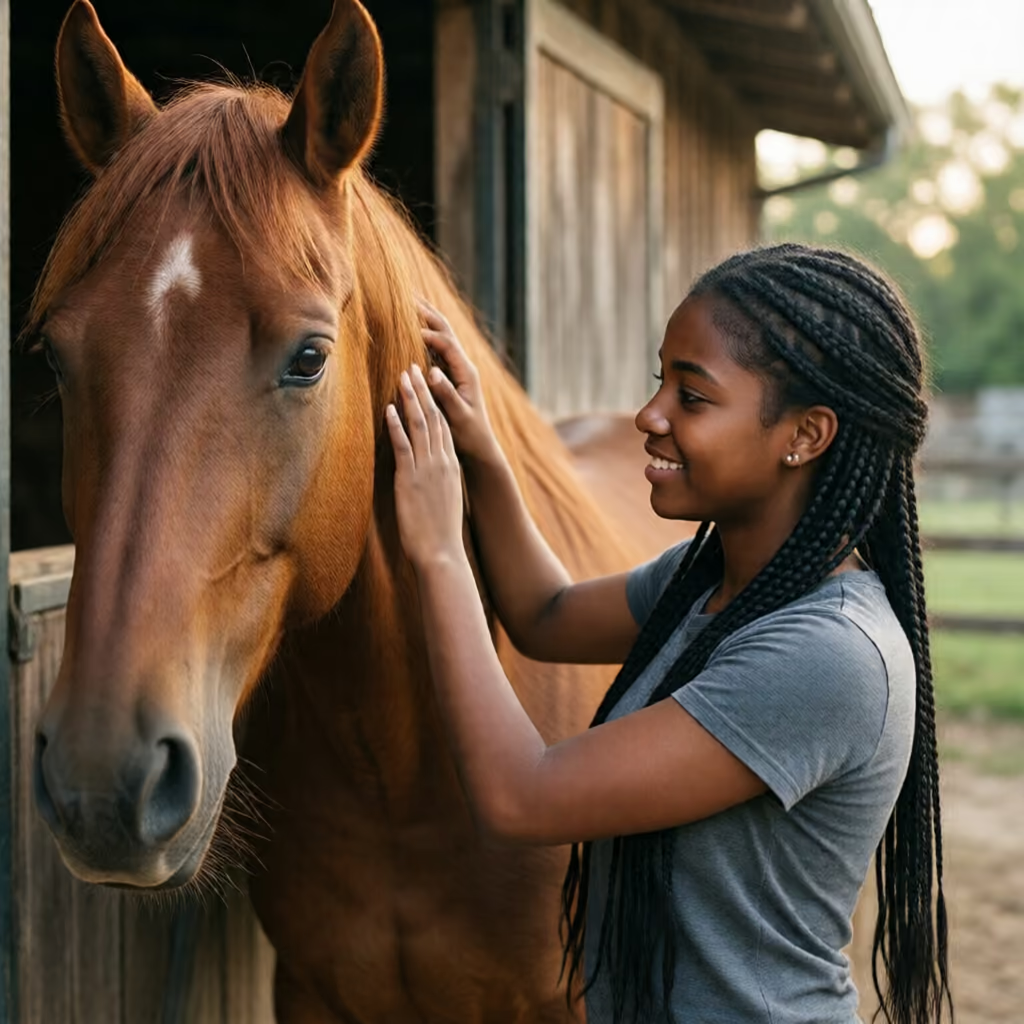
tätscheln
to pat
To touch someone or something lightly and repeatedly with the flat of your hand, usually as a sign of affection, reassurance, or approval.
Sie tätschelte dem Pferd liebevoll den Hals.
She affectionately patted the horse's neck.
to pat
tätscheln – tätschelte – hat getätschelt
Loading your saved state.

to pat
To touch someone or something lightly and repeatedly with the flat of your hand, usually as a sign of affection, reassurance, or approval.
Sie tätschelte dem Pferd liebevoll den Hals.
She affectionately patted the horse's neck.
| ich | tätschle tätschele |
|---|---|
| du | tätschelst |
| er/sie/es | tätschelt |
| wir | tätscheln |
| ihr | tätschelt |
| sie | tätscheln |
| ich | tätschelte |
|---|---|
| du | tätscheltest |
| er/sie/es | tätschelte |
| wir | tätschelten |
| ihr | tätscheltet |
| sie | tätschelten |
| ich | habe getätschelt |
|---|---|
| du | hast getätschelt |
| er/sie/es | hat getätschelt |
| wir | haben getätschelt |
| ihr | habt getätschelt |
| sie | haben getätschelt |
| du | tätschle! tätschele!, tätschel! |
|---|---|
| ihr | tätschelt! |
| Sie | tätscheln Sie! |
| ich | hatte getätschelt |
|---|---|
| du | hattest getätschelt |
| er/sie/es | hatte getätschelt |
| wir | hatten getätschelt |
| ihr | hattet getätschelt |
| sie | hatten getätschelt |
| ich | werde tätscheln |
|---|---|
| du | wirst tätscheln |
| er/sie/es | wird tätscheln |
| wir | werden tätscheln |
| ihr | werdet tätscheln |
| sie | werden tätscheln |
| ich | tätschele tätschle |
|---|---|
| du | tätschelst tätschlest |
| er/sie/es | tätschele tätschle |
| wir | tätscheln |
| ihr | tätschelt tätschlet |
| sie | tätscheln |
Used for reported speech.
| ich | tätschelte |
|---|---|
| du | tätscheltest |
| er/sie/es | tätschelte |
| wir | tätschelten |
| ihr | tätscheltet |
| sie | tätschelten |
Used for wishes and “would”.
| infinitive | tätscheln |
|---|---|
| with zu | zu tätscheln |
| present participle | tätschelnd |
| past participle | getätschelt |
'Tätscheln' (to pat) can take a person or animal directly as its accusative object. Another common pattern puts the person in the dative and the body part in the accusative.
Der Vater tätschelte seinem Sohn beruhigend die Schulter.
The father reassuringly patted his son's shoulder.
Sie tätschelte den nervösen Hund.
She patted the nervous dog.
Common combinations include 'jemandem den Kopf tätscheln' (to pat someone's head), 'jemandem den Rücken tätscheln' (to pat someone's back), and 'ein Tier tätscheln' (to pat an animal). The body parts most often used with this verb are the head, back, and shoulder.
Die Pflegerin tätschelte dem alten Hund den Rücken.
The caregiver patted the old dog's back.
'Tätscheln' (to pat) is especially common in affectionate, reassuring, or caring situations. When directed at adults, the action can also come across as patronizing or condescending, depending on the context.
Nach dem schwierigen Gespräch tätschelte sie ihrer Freundin tröstend den Arm.
After the difficult conversation, she comfortingly patted her friend's arm.