

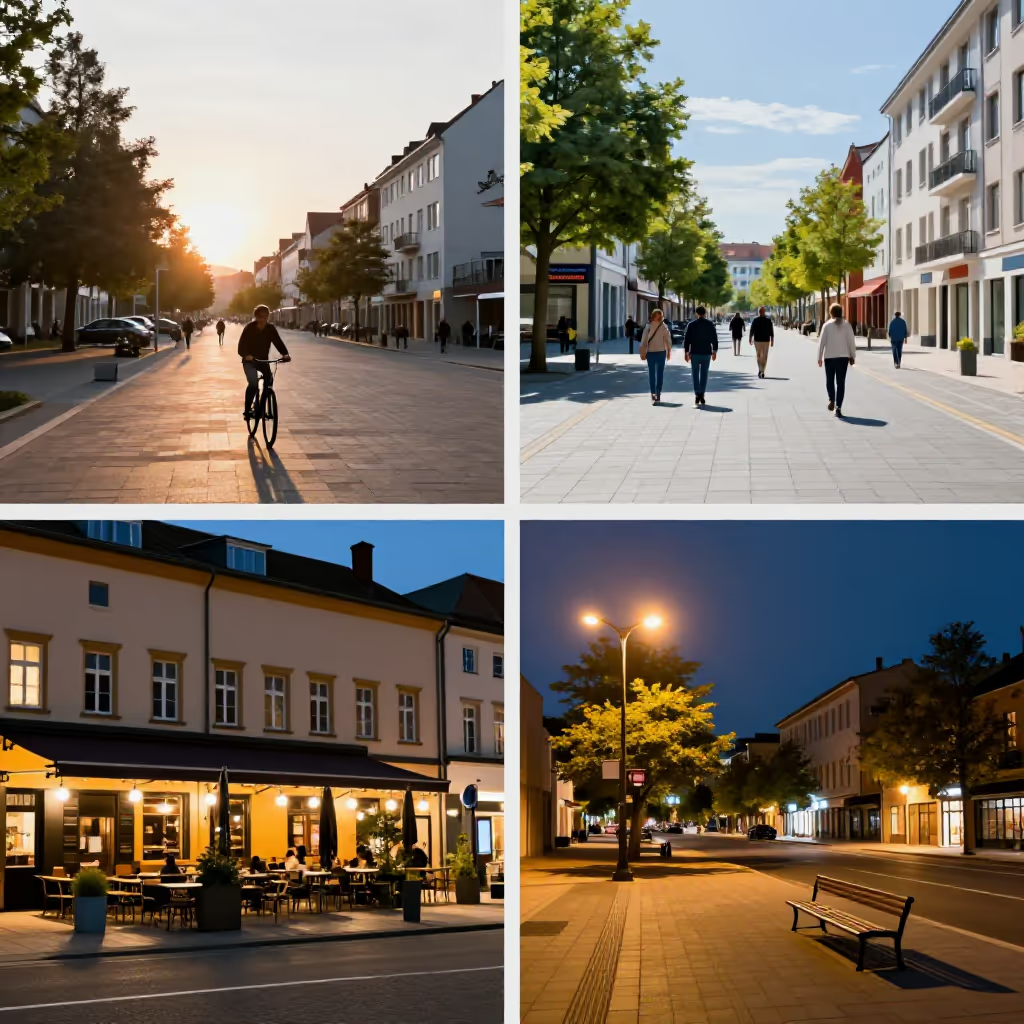
die Tageszeit
time of day
A specific part or period within a day, such as morning, noon, evening, or night.
EXAMPLE
Am Abend, meiner liebsten Tageszeit, lese ich gerne ein Buch.
In the evening, my favorite time of day, I like to read a book.
time of day
Loading your saved state.
time of day
A specific part or period within a day, such as morning, noon, evening, or night.
Am Abend, meiner liebsten Tageszeit, lese ich gerne ein Buch.
In the evening, my favorite time of day, I like to read a book.
This word is made up of 'Tag' (day), the linking element '-es-', and 'Zeit' (time). The literal meaning is therefore 'the time of the day'. The gender of the word is determined by the last part: die Zeit.
Die Tageszeit beeinflusst die Stimmung vieler Menschen.
The time of day influences many people's mood.
'Tageszeit' (time of day) is often used in fixed expressions to indicate that something applies always or depending on the situation. Typical examples are 'zu jeder Tageszeit' (at any time of day) or 'je nach Tageszeit' (depending on the time of day).
Das Museum ist fast zu jeder Tageszeit gut besucht.
The museum is busy at almost any time of day.
When referring to a specific, often inconvenient moment, the preposition 'zu' is used. The construction is then 'zu' + adjective + 'Tageszeit' (time of day).
Wer ruft denn zu so später Tageszeit noch an?
Who is calling at such a late time of day?
time
Uhrzeit gives an exact point in time in hours and minutes. Tageszeit, by contrast, refers to a part of the day, such as morning or evening. Uhrzeit is therefore suitable for a specific appointment time, while Tageszeit is used for a general period.
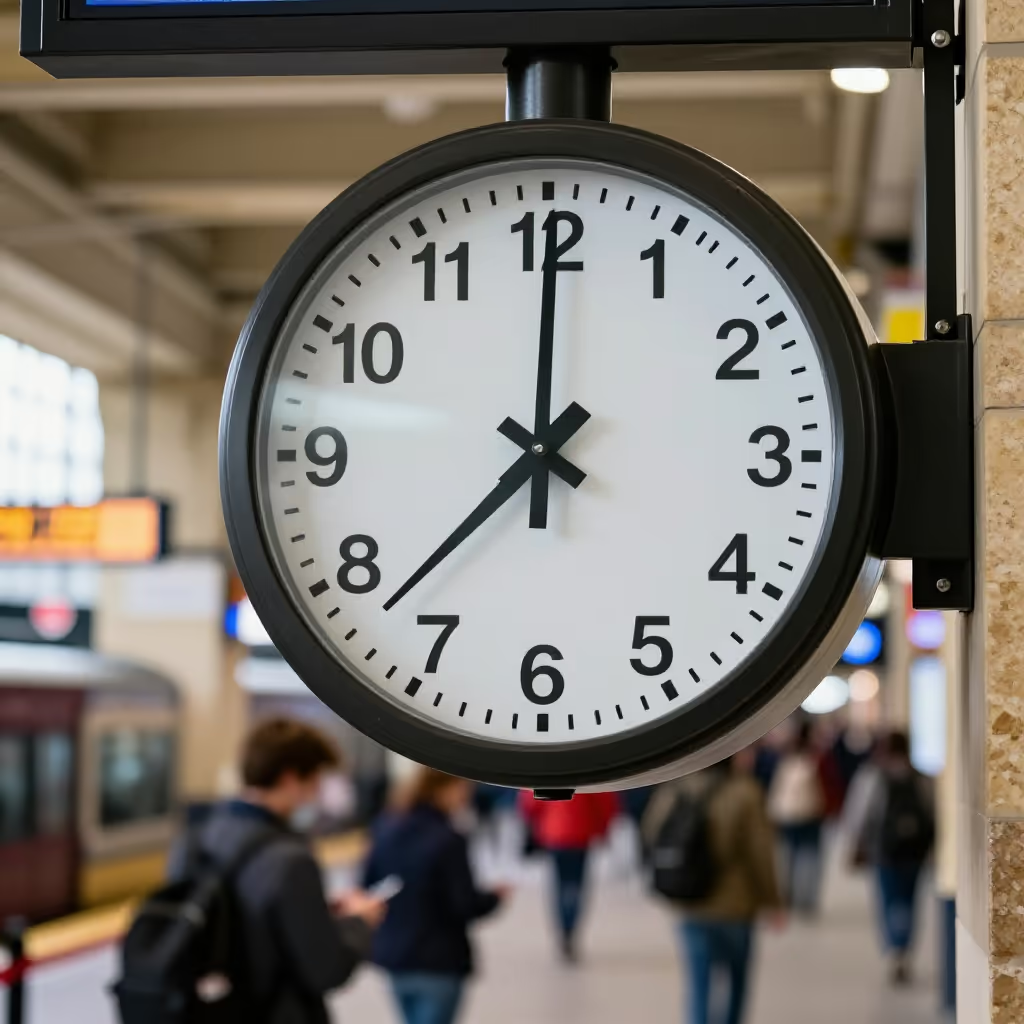
Bitte wählen Sie für den Termin eine passende Tageszeit, zum Beispiel den Abend.
Please choose a suitable time of day for the appointment, such as the evening.
Bitte nennen Sie für den Termin eine genaue Uhrzeit, zum Beispiel 18 Uhr.
Please give an exact time for the appointment, such as 6 p.m.